


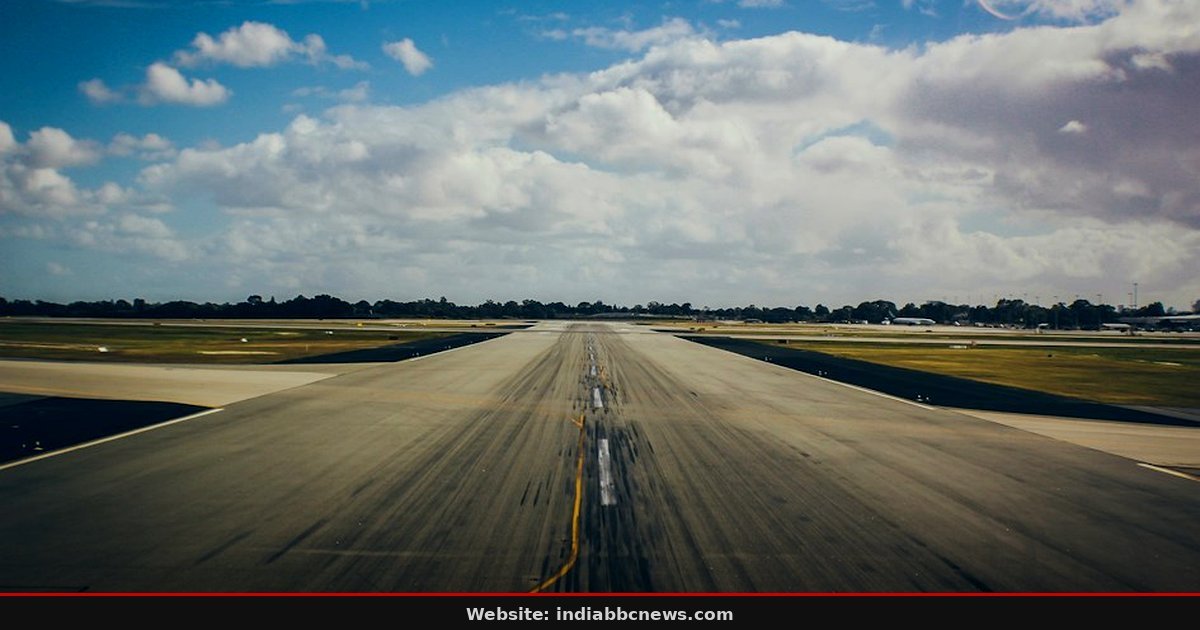
7,000 planes sat on tarmac. No engines running. No wheels turning. Just metal, silence, and the hum of generators trying to keep the lights on.
The Federal Aviation Administration pulled the plug on the entire US airspace on Friday, an unprecedented move that left travelers stranded in security lines that stretched back into the terminals. It wasn’t a weather event. It wasn’t a security threat. It was, according to Transportation Secretary Sean Duffy, a “communication issue.”
Those three words did a lot of heavy lifting in the press conference room.
They explained everything and nothing at once. FlightAware, the industry-standard tracking platform, confirmed that nearly 7,000 flights were either delayed or canceled almost instantly after the order went out. The chaos was immediate. The disruption was total.
And the question everyone in the country was asking was simple: how did it happen? We’ve seen airports close for snowstorms. We’ve seen them close for volcanic ash. We’ve even seen them close for political protests. But a nationwide ground stop?
That’s a different beast. It means the system that keeps 44,000 daily flights safe and on time simply failed to speak to itself. Duffy told reporters the problem impacted all Air Route Traffic Control Centers simultaneously. He claimed FAA technicians were already on the ground, digging into the code and the cables.
But the damage was done. The sky was empty. And the ground was full of angry people with missed connections and ruined weekends.
Static in the Sky: US Airspace Grinds to a Halt The Denver international airport on 6 November 2026 was a study in controlled panic. Photographs from the scene showed long lines snaking through the departure lounges, people staring at departure boards that flickered with red X’s. It wasn’t just Denver. From New York to Los Angeles, the same scene played out.
The FAA’s decision to ground everything was drastic, but in aviation, safety trumps schedule every single time. If you can’t guarantee the planes won’t hit each other, you don’t let them fly. That’s the rule. That’s the law.
And that’s why the order was absolute. No exceptions. No VIP lanes. No military exemptions.
Just a hard stop. The silence on the radio channels was deafening. Controllers who usually juggle dozens of aircraft per hour were left waiting for instructions that never came. It’s a rare moment when the machinery of modernity stalls completely.
And it leaves you wondering how fragile the whole thing really is. The “Communication Issue” That Grounded a Nation
Sean Duffy didn’t mince words, though he didn’t have many to work with. He labeled the glitch a “communication issue impacting all Air Route Traffic Control Centers.”
That’s a broad brush. It could mean a software update went wrong. It could mean a hardware failure in a central node.
It could mean a cyber intrusion, though no evidence of that has surfaced yet. Duffy said the FAA’s technicians were looking into the matter, but he didn’t offer a timeline for a fix. That’s a harder sell than it sounds. Travelers want to know when they can go home.
Operators want to know when their planes can take off. Vague promises don’t fill empty seats. The lack of specific detail fueled speculation. People online started guessing.
Was it a hack? Was it budget cuts? The noise in the airwaves was as chaotic as the situation on the tarmac. And without a clear explanation, trust erodes.
Fast. Historical precedent is grim here. There have only been 3 other instances where all departing flights in the US were grounded for a non-weather reason. The first was 11 September 2001, a trauma that still echoes in the security protocols of every airport. The second was in January 2023, when a pilot notification system malfunctioned and paused domestic departures for less than 2 hours.
Even that shorter outage caused ripples. But this? This was all-day. This was nationwide.
This was the third major glitch in a system that is supposed to be infallible. Experts in air traffic management often warn about the “single point of failure.”
When everything depends on one network, and that network blinks, the whole world stops. We are living in that moment. And it’s uncomfortable.
Beyond the Glitch: A System Under Strain? The FAA employs more than 14,000 air traffic controllers. That’s a lot of people. But they are handling more than 44,000 flights a day. The math is getting tighter.
The demand is increasing. The infrastructure is aging. These are the headlines we’ve seen for years. Yet, we keep flying.
We keep trusting. We keep assuming the system will hold. But this event suggests it might not. Not without a major intervention.
The controllers are the hero of the story, but they are working with tools that are showing their age. When the digital backbone fails, the human element is left to guess. And guessing in the sky is dangerous. The fact that the ground stop happened quickly is a credit to the safety protocols.
The fact that it was necessary is a warning. We can’t keep running on fumes. We can’t keep pretending the old system can handle the new load. We need to build something better.
Or we’re asking for trouble. And the cost? Airlines are bleeding money. Passengers are losing time. Business deals are slipping.
The economic impact of a 1-day halt is significant, but the reputational damage is worse. People are asking if they should fly. That’s a question no airline wants to answer. It’s a question that sticks in the head.
For years, we’ve been told that flying is the safest form of transport. This event doesn’t prove otherwise. The planes didn’t crash because they stayed on the ground. But the perception is shifting.
And perception drives behavior. If people start being afraid to fly, the industry suffers. And the fear is sticky. It doesn’t wash off with a good PR campaign.
It stays. It lingers. And it changes how we move.
What This Means for India For Indian readers, this isn’t just an American problem. It’s a supply chain problem. It’s a diaspora problem. It’s a geopolitical problem.
India has one of the largest populations of people living abroad, with hundreds of thousands traveling to the US every year. A nationwide ground stop means visa interviews are canceled. It means students with start dates are stuck. It means medical tourists can’t see their specialists.
The human cost is immediate. Families are separated. Plans are shattered. The Indian government’s Ministry of External Affairs is likely tracking this closely, not just for its own citizens, but for the broader diplomatic relationship.
When the US skies close, the thread connecting the two countries tangles. And unraveling it takes time. And patience. And more than a little luck.
But there’s a deeper layer. India is positioning itself as a global aviation hub. We are building new airports. We are expanding routes.
We are talking about becoming a leader in the sky. So seeing the US, the current leader, stumble is a lesson. It’s a reminder that technology is only as good as its maintenance. It’s a reminder that scale brings fragility.
Indian officials are already looking at their own systems. Are we vulnerable? Do we have the same single points of failure? The answer is probably yes.
But the question is whether we learn from this. Or if we ignore it. If we ignore it, the next time it’s us. And we don’t have 14,000 controllers.
We have fewer. So the stakes are higher. The lesson is clear: build redundancy. Build resilience.
Don’t bet everything on one wire. Because wires break. And when they do, the sky goes quiet.
The Next 24 Hours: Waiting for the Static to Clear The FAA promised an update. They said they would announce when the system was restored. But “when” is a vague word. It could be hours.
It could be days. In the meantime, the airports are a holding pen. Baggage carts are stacked. Hotels are fully booked.
Rental car agencies are empty. The ecosystem around the airport is as paralyzed as the airport itself. Crews are resting. Planes are refueling.
Controllers are waiting for the green light. It’s a tense pause. A breath held too long. And everyone is watching the clock.
No one wants to be the last one to know. No one wants to be the one who missed the reopening. So we wait. We watch.
We hope. And we wonder if this was a mistake. Or a warning. The answer will come soon.
And it will change everything. The incident also raises questions about cybersecurity. With so much of air traffic control now digital, the attack surface is huge. A single line of bad code can bring down a nation. Experts in cybersecurity have long warned about this.
They said the systems were aging. They said the patches were slow. They said the risks were real. And now, the risk is realized.
It’s not a question of if, but when. And now that it’s happened, the focus shifts to prevention. To hardening the systems. To preparing for the next glitch.
Because there will be a next glitch. There’s always a next glitch. And the next one will be different. And the next one will be scarier.
So we have to be ready. We have to be vigilant. We have to be smart. Or we’ll be stuck on the tarmac again.
And next time, it might not be just a communication issue. It might be something worse. And we won’t have the luxury of time. We’ll have to act.
And we’ll have to act fast. Because the sky doesn’t wait. And neither do the planes.
Frequently Asked Questions Why did the FAA ground all flights in the US?The FAA issued a nationwide ground stop due to a “communication issue impacting all Air Route Traffic Control Centers,” according to Transportation Secretary Sean Duffy.
The issue prevented controllers from receiving necessary data to manage air traffic safely, necessitating an immediate halt to all departures. How many flights were affected by the ground stop?Nearly 7,000 flights were delayed or canceled, according to aviation tracker FlightAware.
This represents a significant portion of the more than 44,000 flights that typically take off from US airports each day.
When was the last time all US flights were grounded?The previous instances were on 11 September 2001, following the terrorist attacks, and in January 2023, when a pilot notification system malfunction caused a 2-hour pause in domestic departures.
This marks the third time in history that all departing flights were grounded for a non-weather-related reason. The previous instances were on 11 September 2001, following the terrorist attacks, and in January 2023, when a pilot notification system malfunction caused a 2-hour pause in domestic departures.
This marks the third time in history that all departing flights were grounded for a non-weather-related reason.
How does this affect Indian travelers in the US?Indian citizens and residents in the US are facing significant disruption, with many missing connections, visa appointments, and planned trips.
The Ministry of External Affairs is monitoring the situation to assist Indians who are stranded or affected by the cancellations. Indian citizens and residents in the US are facing significant disruption, with many missing connections, visa appointments, and planned trips.
The Ministry of External Affairs is monitoring the situation to assist Indians who are stranded or affected by the cancellations.
What is the FAA doing to fix the issue?FAA technicians are currently investigating the communication failure, according to Transportation Secretary Sean Duffy.
No specific timeline has been provided for when operations will resume, but the agency is working to restore full functionality to the air traffic control system. FAA technicians are currently investigating the communication failure, according to Transportation Secretary Sean Duffy.
No specific timeline has been provided for when operations will resume, but the agency is working to restore full functionality to the air traffic control system.
Source: Guardian World Source: Guardian World
Source: Guardian World

