

12 months. That is how long the Fed has been dancing around the same question.
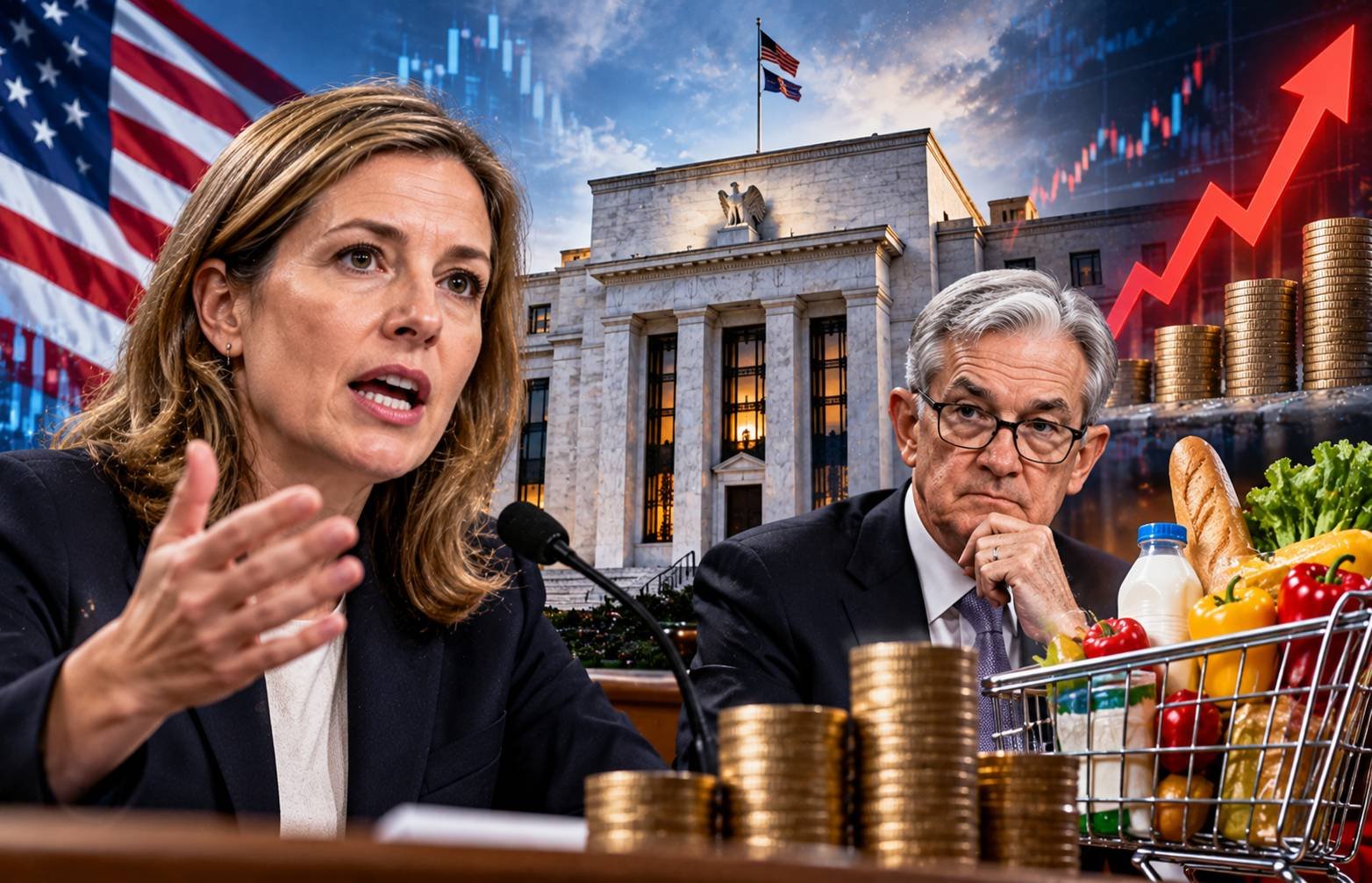
Claudia Sahm did not come to Bloomberg’s *Open Interest* to be polite. She came to be blunt. The former Fed economist, who once helped design the agency’s now-imamable unemployment triggers, sat down with Michael Santangelo and dismantled the central bank’s current posture with the quiet ferocity of someone who knows exactly where the tripwire is. Her argument is simple, and it is scary. Waiting is not a neutral act. It is a bet. And right now, the odds are shifting against Washington.
The market has spent the last 2 quarters betting on “later.” Buy the dip. Wait for the data. Wait for the Fed to blink. But Sahm warns that this tolerance for delay has a hard ceiling. If inflation stays sticky, the cost of inaction will explode. We are not talking about a rate hike or two. We are talking about a recalibration that will shock the system. The math on that doesn’t quite work out for the average household.
The Penalty for Waiting Is Already in the Price Tag
Inflation is not dead. It is sleeping. And it is sitting right on top of the economy’s pulse. Sahm pointed out that the gap between where prices are going and where the Fed thinks they should be is widening. Not narrowing. Widening. This is the core of her warning. If the Fed stays on the sidelines while input costs creep up, they are not preserving stability. They are building a target.
Consider the service sector. It’s stubborn. It doesn’t react to interest rates the way housing does. It’s dominated by labor. And labor is expensive. When wages rise faster than productivity, you get a wage-price spiral. That’s the nightmare scenario. And it’s not a distant threat. It’s happening in the restaurant industry, in healthcare, in logistics. Sahm noted that these sectors don’t wait for the Fed to give them permission to move. They move when they can. The Fed’s only leverage is the threat of pain. But if you never pull the trigger, the threat loses its teeth. That’s a harder sell than it sounds.
And the data backs her up. Core PCE has hovered above the 2% target for 14 consecutive months. That’s not a blip. That’s a trend. The market ignored it because bond yields were falling. But yields are just prices. They reflect probabilities. If the probability of a future crisis rises, the price of risk jumps. We saw that in 2022. We didn’t have the patience to remember it then. Maybe we should now.
Mixed Messages Are a Market Killer
There’s a disconnect in Washington that is starting to bother even the casual watchers. The Fed’s public statements are cautious. “Data dependent,” they say. “Patient,” they say. But the private communications, the leaks, the tone of the regional bank presidents, all point in a different direction. Sahm called it “mixed messaging.” That’s a polite way of saying they don’t know what they want. Or they are afraid to say it.
Markets hate ambiguity. They need a map. Without a map, they guess. And right now, their guesses are wrong. They are pricing in a soft landing. A gentle step down. But Sahm argues that the risk of a hard landing is being underpriced. Why? Because the Fed is afraid of admitting they were too slow. It’s institutional ego. And institutional ego is a terrible way to manage a $23 trillion bond market. Nobody in the room looked convinced that the status quo was safe. Not really. Not even the hawks.
And yet, the Fed continues to use words that soothe rather than clarify. “We are monitoring closely.” Who isn’t? Everyone is monitoring. That’s not information. That’s noise. And noise leads to volatility. Volatility leads to mistakes. Mistakes lead to crashes. It’s a house of cards, and the wind is picking up. The only way to fix it is to say what you actually mean. Then wait. That’s the advice. But I doubt the FOMC will take it.
The AI Bill is the New Fiscal Stimulus
Here is the part that doesn’t make sense on the surface. Why would artificial intelligence affect inflation? It’s software. It’s code. It’s not a factory. And yet, Sahm argues it is becoming one of the biggest forces reshaping demand. We’re talking about hundreds of billions of dollars in capex. Data centers. Chips. Cooling systems. Electric grids. This is not a digital abstraction. It’s steel. It’s concrete. It’s electricity.
The spending is massive. Tech giants are pouring cash into these projects at a scale that dwarfs traditional industrial investment. And this spending is sucking up resources. It’s driving up the price of energy. It’s competing for skilled labor. It’s boosting demand in sectors that are already tight. The result is a new kind of inflation. Not demand-pull inflation in the classic sense. More like supply-side pressure from a new, insatiable consumer. That’s a problem. Because the Fed doesn’t have a direct lever to cap AI spending. It can raise rates. But will that stop a tech company from building a data center in Phoenix? Probably not.
This is the blind spot. The Fed’s model is built on the old economy. Factories. Retail. Housing. AI is the new oil. And oil doesn’t care about your interest rate targets. It cares about profit. And right now, the profit margins on compute are huge. So the spending continues. And the inflationary pressure continues. It’s a feedback loop. And it’s accelerating. Can the Fed really ignore this? That’s the question. The answer, so far, is no. Not clearly. Not enough.
The Last Time We Got This Wrong, It Cost Us Decades
Early 1980s. Inflation was out of control. The Fed waited. They tried to manage it gently. They tweaked rates by 0.25 points. It didn’t work. It just let inflation get comfortable. And then, finally, Volcker stepped in. He hiked rates to 20%. The economy collapsed. Unemployment hit 10%. It was the worst recession in decades. But it worked. Inflation died. It took five years to recover, but the dollar was worth something again. That’s the historical precedent. And it’s a warning.
Sahm knows this history. She was young then. It shaped her. And it shapes her view of the current situation. She sees the same hesitancy. The same fear of breaking the economy before fixing it. But the stakes are different now. The debt-to-GDP ratio is higher. The fiscal deficit is larger. There’s less room for a recession. If the Fed has to hike aggressively, the pain will be sharper. There’s no cushion. That’s the risk. And it’s growing.
But is it inevitable? Not necessarily. But it’s likely. Unless the Fed changes course. And I don’t think they will. Not yet. They are too committed to the “wait and see” narrative. They have to. Admitting they were wrong would be a political disaster. So they delay. And the clock ticks. And the inflation rises. And the market gets more nervous. It’s a perfect storm. And we’re in the eye of it. Just waiting for the wind to pick up again.
Frequently Asked Questions
Why is Claudia Sahm worried about the Fed waiting?
She believes that if inflation remains persistent, the Fed will be forced to raise rates by much more than currently expected, which could trigger a severe economic downturn. Waiting increases the size of the necessary future adjustment.
How does AI spending affect inflation?
Massive capital expenditure on data centers and chips is increasing demand for energy, labor, and materials. This adds new pressure to an already tight economy, which the Fed’s current models may not fully account for.
What is the risk of “mixed messaging” from the Fed?
It creates uncertainty in financial markets, leading to mispricing of risk. If the Fed is not clear about its intentions, investors cannot accurately gauge the future path of rates, increasing volatility and potential for market shocks.
Is a recession likely if the Fed hikes rates aggressively?
Sahm suggests the risk is higher than the market expects. Given high debt levels and fiscal deficits, the economy has less buffer to absorb sharp interest rate increases, making a recession more probable and potentially more severe.
What happens next? That’s the million-dollar question. Or maybe the billion-dollar one. The next FOMC meeting is in 3 weeks. Will they blink? Will they hold their ground? Will they finally admit that the wait is over? The market will tell us. The price of Treasury bonds will tell us. The dollar will tell us. And maybe, just maybe, the Fed will listen. But I’m not holding my breath. The clock is ticking. And it’s getting loud.
Source: Bloomberg Markets
This article was compiled by the IndiaBBCNews editorial system from verified international news sources. Facts have been independently reviewed. Original reporting: Bloomberg Markets.

