

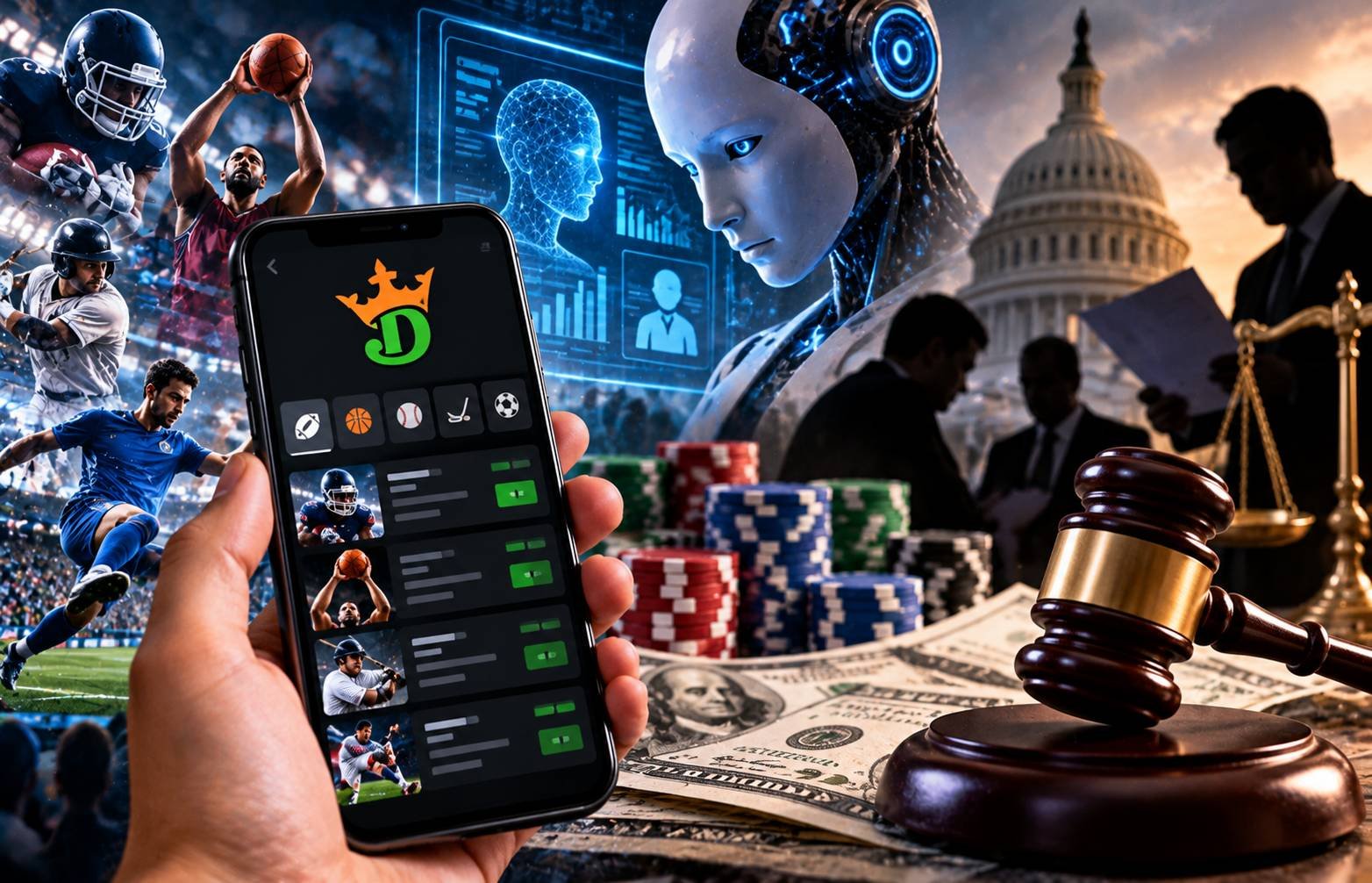
4 AM. The phone buzzes. Not an alarm, but a targeted ad from DraftKings promising a “guaranteed win” based on data the company says it collected over the last 72 hours of heavy drinking and late-night scrolling. This is the new frontier of regulation, and it is messy, loud, and deeply personal. Lawmakers in Washington and statehouses across the US are finally asking hard questions about the invisible algorithms that decide who gets nudged toward the next bet.
The pressure isn’t hypothetical anymore. It’s a subpoena. It’s a hearing. It’s a growing pile of consumer complaints that regulators can no longer wave away as user error. The core issue is artificial intelligence, or at least the machine learning models that function as its practical arm in the world of digital betting. These systems don’t just show ads; they build profiles. They predict risk. They know when you are vulnerable. And now, Congress wants to know exactly how that knowledge is being used.
The Algorithm Knows You’re Tipping Over
Here is the uncomfortable truth. We talk about AI like it’s a scary robot in a lab, but in this case, it’s a silent monitor on your device. It tracks the speed of your taps. It watches how long you hover over the “Cash Out” button. It notices when your deposits get larger and more frequent. That’s not surveillance, not yet, but it is data harvesting on an industrial scale. Companies like DraftKings, BetMGM, and FanDuel have become the most sophisticated data brokers in the entertainment sector, and they are selling back the insights to the very people they are profiling.
Regulators are worried about the “nudge” mechanics. If you win, the algorithm celebrates with you. If you lose, it offers a “second chance” bonus within milliseconds. It doesn’t sleep. It doesn’t feel guilt. It just optimizes for retention. One former regulator, speaking on condition of anonymity because the industry donors are watching, told reporters, “It’s less like a casino floor and more like a slot machine that read your brain.” That comparison is crude, but it lands. The math doesn’t work out in favor of the player, not when the other side has a supercomputer and you have a shaky internet connection and a bad night.
Congressional Inquiries and the Push for Transparency
Last month, a bipartisan group of senators sent a letter to the heads of three major sports betting operators. They wanted the source code. Well, not the actual code, that would be a national security nightmare, but they wanted the logic. How does the system decide to deploy a bonus? What triggers a “support” message versus a “bet now” prompt? The response was polite, vague, and useless. Statements said in a statement that the companies prioritize “responsible gaming” while protecting proprietary intellectual property. Nobody in the room looking at those responses looked convinced.
The letter cited a specific incident where a user reported receiving ten different offers in a single hour after hitting a losing streak. The company said it was a glitch. The user said it felt like a trap. Which is it? That’s the question no one can answer with certainty, because the black box of machine learning doesn’t explain itself. It just outputs. And right now, the output is more cash flowing into the companies’ accounts, and less of it reaching the minds of people who are struggling with addiction. The silence from the industry is deafening, and it is starting to look like an admission.
State-Level Cracks in the Shield
Washington is slow, but the states are fast. New Jersey, Nevada, and Rhode Island are all drafting rules that would ban targeted advertising based on betting behavior. That’s a huge deal. It effectively kills the “personalized” side of the business. If DraftKings can’t send you a text saying “You’re on a streak, keep going,” the model becomes dumber. Safer. Less profitable. The industry lobby is fighting this tooth and nail. They argue that regulation will stifle innovation and drive players to unregulated, offshore sites that are far more dangerous. That’s a harder sell than it sounds, especially when the alternative is a cousin’s offshore app with no customer service and no limits.
But there’s a detail here that should chill anyone who works in tech compliance. The data is already here. The cookies are already set. The history is already stored. Banning future targeting doesn’t erase the past. Regulators are now asking how long these companies keep behavioral data. The answer, according to privacy policies, is “as long as necessary.” That’s a band-aid on a bullet hole. We need hard limits. We need the right to be forgotten, or at least the right to delete the profile of your worst decisions. Right now, that data is sitting in a server farm, tagging you, scoring you, pricing you. And you can’t see the score.
The Human Cost of Data-Driven Gambling
Let’s talk about the person on the other side of the screen. They’re 24. They bet $50 on a game they watched in college. They lose. They bet another $50. The app pops up: “Double your next loss.” They do it. They lose. They feel a spike of adrenaline, then shame, then the urge to do it again. The app pops up: “You’re a champion. Don’t stop.” This isn’t malice. Or maybe it is. It’s designed to override the part of your brain that says “stop.” It’s a chemical hack, digitalized. And it works. The addiction centers I’ve visited are reporting a spike in cases where the patient says the app “knew” I was going to lose. How do you explain that to a judge? You can’t. Not yet.
And yet, the companies claim they have robust responsible gambling tools. Self-exclusion. Deposit limits. Time-outs. Sure. But you have to go to a customer service chat to set them. You have to type in your password. You have to break the trance. The friction is too high. The path of least resistance is always the button that makes the bet. The path of most safety is a labyrinth of menus and waiting times. That’s not a bug. That’s a feature. And regulators are finally starting to see it as a liability, not a user experience choice.
What Happens Next: The Regulatory Tipping Point
The next big deadline is March 15. That’s when the New Jersey Division of Gaming Enforcement presents its proposed rulemaking to the full commission. If it passes, it becomes the template. Other states will copy it. The industry will have to build a new compliance team, larger than their marketing teams. That’s a ten-figure expense. They will fight it. They will sue. They will hire the best lawyers in D.C. But the door is cracked open. For the first time, the conversation isn’t about whether online gambling is legal. It’s about whether it’s humane. And if the algorithm is the enemy of sanity, then transparency is the only weapon we have.
We need to see the weights. We need to know what variables are being fed into the decision to prompt a bet. If the system is using “time of day” and “recent loss amount” as primary inputs, that’s evidence of predatory design. If it’s just “user preference,” that’s a fair fight. Right now, we’re guessing. And in a game of chance, guessing is how you go broke. The regulator’s job is to make sure the house doesn’t have all the cards. It does. Until they show us the hand, we’re just praying the limit isn’t hit.
Frequently Asked Questions
Is it illegal for betting apps to use AI to target me?
Not yet. There is no federal law specifically banning AI-driven personalized gambling ads. However, state laws are changing. Some states require notification when an ad is personalized, but enforcement is spotty. The law lags the tech by years. If you see a targeted ad, you can’t sue the company, but you can file a complaint with the state attorney general. That complaint builds the record.
Can I stop the app from tracking my betting habits?
You can request a data deletion or opt-out of marketing, but the technical reality is grim. The algorithm has already learned your pattern. Deleting the history doesn’t unlearn the model. It’s like trying to un-ring a bell. You can stop future data collection, but the profile remains active until you self-exclude, which is a heavy, public-facing action within the app. It’s a barrier designed to keep you playing.
What is the difference between “responsible gaming” and “predatory targeting”?
Responsible gaming is providing the tools to stop. Predatory targeting is removing the friction to keep you going. If the app makes it hard to stop and easy to bet, it’s predatory. If it makes it easy to stop and prompts you to pause after a loss, it’s responsible. The current industry standard is skewed heavily toward the latter. The goal is retention, not well-being.
Will banning AI targeting kill the industry?
No. It will hurt their margins. They will have to rely on broader, less effective marketing. They will pay more for customer acquisition. The stock price might dip, but the demand for online gambling is structural and not just algorithmic. People want to bet. They have always wanted to bet. The issue is whether the company is helping you bet or ensuring you never stop. That distinction is all that matters for the long-term sustainability and legality of the business.
Source: NYT Business
This article was compiled by the IndiaBBCNews editorial system from verified international news sources. Facts have been independently reviewed. Original reporting: NYT Business.

