


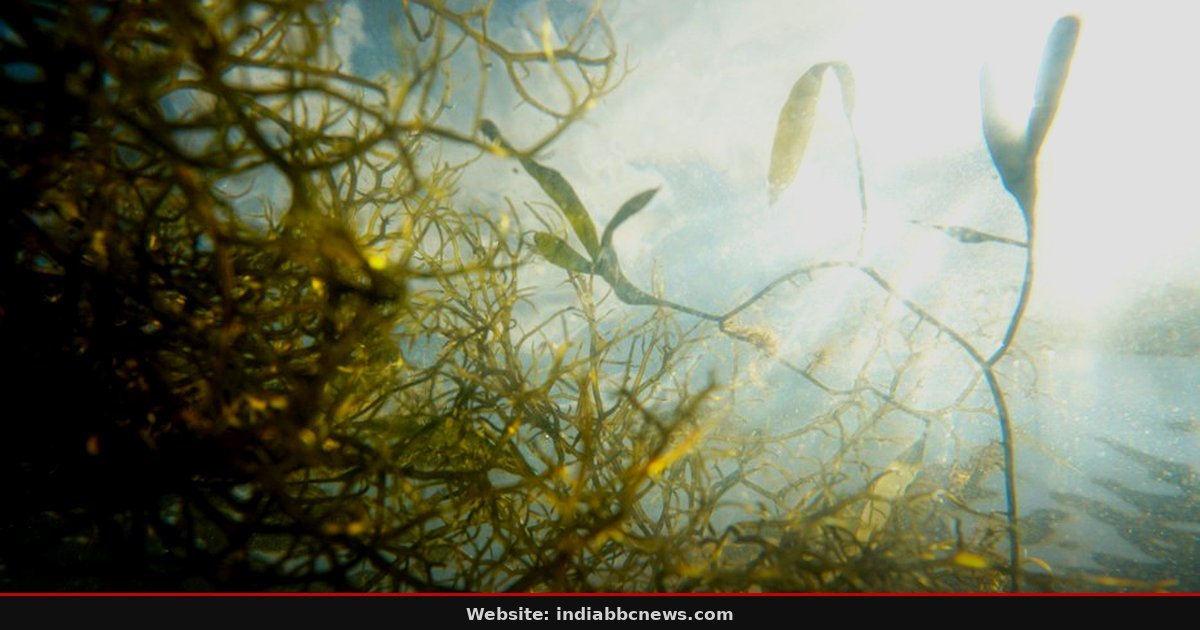
430 shoots in the mud: Cornwall’s seagrass gamble finally pays off
The number is 430. It changed everything in a single afternoon survey.
Conservationists in Cornwall have found hundreds of new seagrass shoots in the Fowey Estuary, reversing what looked like a total failure just months ago. When the spring surveys wrapped up in April, there were only 6 seedlings. That was grim. No one in the room looked convinced that the trial would survive the winter mud.
The new growth was recorded across 50 distinct patches of seabed during summer checks by Cornwall Wildlife Trust. This isn’t just a win for local ecology — it’s proof that patience still matters in a world obsessed with instant results. Chloe James, from the trust, called the finds “hugely encouraging” after an “uncertain start to the spring.” It has thrown a cold bucket of reality on the idea that restoration is impossible if the first attempt doesn’t look perfect.
From six seedlings to a spreading meadow
The jump from 6 to 430 happened in the quiet months when no one was watching. Volunteers had planted seeds from a donor meadow in Torpoint back in autumn 2025. They sat buried in the silt through the freezing winter. Then the water warmed up in spring, and the plants woke up.
James said the new growth is a “powerful reminder” that work takes time and persistence. It’s a harsh lesson for a sector that often measures success in headlines, not hydroperiods.
Some of these patches are now spreading on their own. That’s the magic of seagrass. It doesn’t stay where you put it; it sends out runners and claims new ground. The team had been worried in early 2026 that the Fowey project would join the pile of failed ecological bets.
Instead, it’s showing resilience. The shift from a doubtful start to a robust recovery mirrors what I’ve seen in other restoration zones — the real work happens underground, in the dark, long before the green tips break the surface.
The carbon secret hidden in the mud
Seagrass looks unremarkable. You might miss it if you’re not looking for it. But this “ugly weed” is one of the most powerful carbon sinks on the planet. Previous research highlighted by the project found seagrass can capture carbon up to 35 times faster than tropical rainforests.
That’s a staggering figure. It explains why governments are suddenly paying attention to wetlands and coastal zones. It’s not just about saving fish; it’s about buying time on the climate clock.
Britain has lost up to 92% of its seagrass meadows over the last century. That’s a massive demographic collapse. The loss means we’ve lost a natural engine for carbon locking and water filtration. The Fowey trial is a small patch, but the implications are big.
If you can restore 1% of what was there, you’re talking about significant metric tonnes of carbon. It’s a low-tech solution to a high-stakes problem. And it’s something we can do right now, without waiting for new technology to be invented.
Why does this matter for India?
Indian readers should care about a muddy corner of Cornwall because the science here applies directly to Indian coasts. India has lost nearly 30% of its mangrove cover in recent decades, driven by aquaculture expansion, port construction, and mangrove forest degradation. The Fowey trial shows that targeted, volunteer-led restoration can work even after initial setbacks. For India, this is a blueprints for reviving degraded mangrove belts in the Sundarbans, the Gulf of Kutch, and the Bay of Bengal.
It suggests that large-scale government projects aren’t the only path — community-driven seeding can be viable. If Cornwall can bring back 430 shoots in a small estuary, India can restore critical coastal carbon sinks that protect its 7,500km coastline from storm surges and erosion. The model here is replicable and urgently needed in Indian states like West Bengal and Kerala, where coastal farming communities depend on healthy estuaries for livelihoods.
There’s also a market angle. As carbon trading rules tighten globally, verified blue carbon projects like seagrass and mangrove restoration are becoming valuable assets. Indian agencies and private firms are beginning to explore this space, but the regulatory framework is still murky. The Cornwall success story provides a case study for credibility — showing that monitoring and long-term tracking are essential for certification.
It’s a harder sell than it sounds, but the economics are shifting. Banks and impact investors are starting to look at coastal ecosystems as financial instruments. India needs to get ahead of this curve if it wants to monetize its own rich but threatened estuarine systems.
Setbacks are part of the plan
This story is not just about the 430 shoots. It’s also about what went wrong. In the Helford Estuary, another part of the same project, algal growth wiped out planted seedlings at one site. It’s a brutal reminder that nature doesn’t follow a script.
Only 3 plants survived there, and they’ve started spreading. That’s a near-total loss, yet it’s being framed as a data point. The team uses these failures to tweak their methods. It’s a lean startup approach applied to marine biology.
Restoration is messy. It’s not a garden. You can’t control the temperature, the salinity, or the algae blooms. The project began in 2022 as “Seeding Change Together,” a partnership with Seasalt Cornwall.
Early attempts were experimental. They were testing what worked and what didn’t. The Helford setback shows that even with the best intentions, you can lose the battle. But you keep fighting.
The willingness to “keep learning,” as James put it, is what separates a real project from a press release. It’s a humbling process. And that humility is what makes the results credible.
What happens next in the Fowey?
More seeds are due to be planted in both the Fowey and Helford estuaries. The team isn’t stopping now that they’ve had a win. They want to scale up. The next big checkpoint is spring 2027, when further monitoring will show if the 430 shoots have matured or if they’ve been lost.
It’s a long game. The volunteers will be back in the water. The researchers will be back with their probes. The grid will be resurveyed.
If the growth holds, it could become a model for other UK estuaries. The trust is hopeful, but cautious. They know that a good summer doesn’t guarantee a good winter. The plants will face storms, pollution, and temperature swings. The project’s success will depend on continuity.
Will the funding hold? Will the volunteers stay? It’s a delicate balance. For now, the estuary is green.
That’s the most important thing. The rest is just data collection. And it’s worth every penny spent on the mud boots.
Frequently Asked Questions
How many seagrass shoots were found in Fowey Estuary?
Conservationists recorded more than 430 new seagrass shoots across 50 patches of seabed. This is a massive increase from the 6 seedlings found in April. Seagrass captures carbon up to 35 times faster than tropical rainforests. It locks the carbon into the seabed sediment, where it can stay for thousands of years.
Why is seagrass important for the climate?
What did the project do when the first seedlings died?
The team analyzed the failure and continued planting. They treated the low survival rate in April as a data point rather than a stop sign. The summer growth proved the seeds could germinate.
How does this affect Indian coastal conservation?
The study offers a scalable model for restoring India’s degraded mangroves and seagrass beds. It supports the argument for community-led initiatives to combat carbon loss and coastal erosion. The next full monitoring phase is planned for spring 2027. Until then, the team will continue planting more seeds in both estuaries to boost the population.
When will the next major survey take place?
Source: BBC Science
Source: BBC Science

