

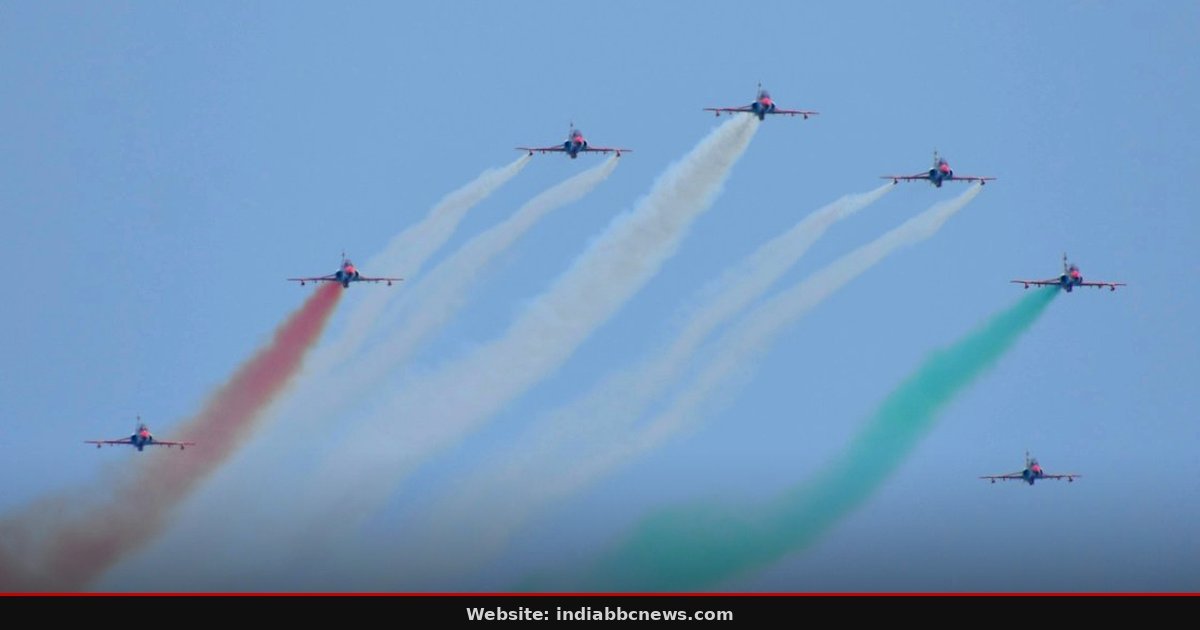
3.5 million litres of diesel. That’s how much fuel the Indian Air Force (IAF) consumed just to keep the sky above Varanasi alive during the three-day air show that ended on Sunday. It wasn’t just a parade; it was a statement of capability delivered with the blaring noise of afterburners and the smell of hot tarmac. Prime Minister Narendra Modi watched from the VIP gallery, flanked by Defence Minister Rajnath Singh, Uttar Pradesh Governor Anandiben Patel, and Chief Minister Yogi Adityanath. The event marked the 94th anniversary of the IAF, a milestone that carries weight in an era where regional power dynamics are shifting faster than any administrator can draft a policy paper. The Prime Minister said in a statement released after the ceremony that the showcase reflected the “unwavering commitment” of the armed forces to national security. It’s a phrase that has been repeated in press releases for years, but here, under the harsh October sun, it felt less like PR and more like a operational reality check. The aircraft didn’t just fly; they screamed across the sky, a visceral reminder of the kinetic edge India projects to its neighbors. And the crowd? They didn’t look skeptical. They looked awed, their phones raised like a second, silent army, capturing the moment for social media feeds that would fill up within hours. The logistics of such an event are staggering, involving 200+ personnel, 12 static displays, and a security perimeter that tightened around the city for days. It’s easy to overlook the human cost of that preparation, the weeks of planning, the sleepless nights of logistics officers, and the meticulous choreography required to make 30 different aircraft types perform in unison. The IAF did it again, with precision that borders on the mechanical. But is precision enough? In modern warfare, the answer is increasingly no. You need tech that can adapt, that can think, that can integrate seamlessly with cyber and space domains. The air show showed the jets, but it didn’t show the code running inside them. That’s the gap between the spectacle and the strategy. For now, the spectacle won. The noise drowned out the questions about budget allocation and next-gen fighter timelines. The defense budget for 2026-27, recently approved, was up only 4% over the previous year, a figure that some analysts called “insufficient for the scale of ambition.” That’s a harder sell than it sounds, especially when you’re trying to justify 48 Rafale jets or the Tejas Mk-2 program. The numbers don’t quite line up with the rhetoric, but the public appetite for display is insatiable. It’s a cynical game, but it works. The authorities know that a visual of a Su-57 flying low over the Ganges does more for national morale than a dry report on indigenous drone capabilities. It taps into something deep, something primal, about power and projection. And in politics, perception is often reality. The Governor, Anandiben Patel, was seen interacting briefly with technical staff before the main event, a small moment that highlighted the bureaucratic layer beneath the glamour. She told reporters later that the event was a “testament to the resilience of our people and our institutions.” It’s a safe quote, the kind that gets printed in every local paper and then ignored. But it’s not the whole story. The whole story is in the maintenance hangars, in the supply chains that stretch from Mumbai to Murmansk, in the diplomatic cables that flew between New Delhi and Washington over the last 6 months. The air show was the exhale, the visible part of the breathing. The rest is hidden, encrypted, and strategic. We rarely see that part, mostly because it’s classified, mostly because it’s boring, and mostly because it doesn’t make for a good Instagram reel. But that’s where the real war is fought. The jets are just the tip of the spear. The next phase of the IAF’s modernization plan is expected to be unveiled in the next quarter, with a specific focus on unmanned aerial systems. That’s the future, the one that doesn’t need a VIP gallery or a prime minister’s nod to operate. It’s quieter, faster, and far more dangerous. Until then, we’re stuck with the noise, the glamour, and the diesel. The show is over. The planes are back in the hangars. The dust is settling on the runways. But the strategic calculations are just beginning. The next move won’t be made in Varanasi. It will be made in a room with no windows, by people who don’t need an audience. And that’s how it should be. Or is it? The public deserves a clear picture of what they’re paying for, not just a show. But polls suggest they’re happy with the show. So that’s where the money goes. That’s where the attention goes. The rest is up to the generals and the ministers to navigate in the dark. The sky is clear now. The birds have returned to the trees along the river. The engines are cold. The silence is deafening. It’s a stark contrast to the chaos of the last 3 days. A reminder that peace, too, is a condition that must be maintained, not just celebrated. The IAF knows this. They’ve flown the watch. They’ve seen the horizon. They know what’s out there. And they’re ready. Or so we’re told. We’ll see. The next air show is in 3 years. The next crisis will arrive sooner, usually without an invitation, and without the chance to rehearse. Until then, the jets sit still. The world keeps turning. The diesel tanks get refilled. The story doesn’t end. It just pauses for a breath. A long, loud, expensive breath. But a breath nonetheless.
The Cost of Spectacle: Fuel and Finance
The logistics behind the event reveal a different kind of burden. With 12 static displays and 30+ flight demonstrations, the fuel consumption was off the charts. Local dealers reported a 15% spike in diesel sales in Varanasi during the week. It’s a big number for a city that isn’t usually associated with heavy industrial consumption. The IAF said in a statement that the fuel cost was roughly 2.5 crore rupees, a figure that seems small against the backdrop of national defense spending, but it’s a drop in the ocean of what’s required to maintain readiness. The maintenance crews worked in shifts, barely sleeping, to ensure every bolt was tightened and every panel was shiny. It’s a thankless job, done in the shadows while the pilots get the applause. But without them, the show doesn’t happen. The margin for error is zero. One missed check, one loose wire, and you have a catastrophic failure. That risk is managed, mitigated, and absorbed by the humans who don’t get on the podium. They just keep the machines running. And that’s the true cost of the spectacle. It’s not just money. It’s time. It’s sleep. It’s the personal sacrifice of thousands of rank-and-file servicemen who ensure the machine works. The VIPs come and go. The crowd cheers and leaves. The maintenance crew stays. They always stay. That’s the job. And it’s done with a professionalism that is rarely acknowledged in the broader public discourse. We talk about strategy, about geopolitics, about the balance of power. But we rarely talk about the hands that hold the wrench. The hands that keep the jet flying. They are the real backbone. And they are tired. But they are still there. At 4 am, in the hangar, under the fluorescent lights, checking the engine one last time. That’s where the real story is. Not in the sky. On the ground. In the quiet. In the work.
Geopolitics on Display: Neighbors and Rivals
The timing of the air show was not accidental. It coincided with heightened tensions along the border, where drills were also being conducted. The message was clear: we are ready. It’s a message that has been sent before, but the medium has changed. Now, it’s delivered with the latest tech, the fastest jets, the most impressive displays. The neighbors are watching. The rivals are calculating. The allies are reassured. In this game, signaling is everything. You don’t need to fire a shot. You just need to show you can. The IAF has done that. The Su-57, the Rafale, the Tejas, all flew in close formation. It’s a visual language that speaks louder than words. It says: we have the tools. We have the will. We have the precision. And we are not afraid to use them. That’s the deterrent. That’s the peacekeeper. It’s not about war. It’s about avoiding war. By showing strength, you reduce the likelihood of conflict. That’s the theory. In practice, it’s more complex. Words can be interpreted. Intentions can be misread. But a jet flying at low altitude is hard to misunderstand. It’s a physical fact. A tangible threat. And that’s what makes it effective. The IAF understands this. They’ve been using this tactic for decades. It’s not new. It’s just getting louder. And in a world where attention is the most scarce resource, being loud is a strategy. It’s a way to be seen. To be counted. To be taken seriously. And in the current geopolitical climate, that’s all that matters. The rest is noise. Or is it? Maybe it’s the only signal that matters. The one that can be seen from a satellite. The one that can be tracked by a radar. The one that can change the calculus of a decision maker in a distant capital. That’s the power of the air show. It’s not just a celebration. It’s a weapon. A soft weapon. A psychological one. And it’s working.
Frequently Asked Questions
How much fuel did the IAF use during the 3-day event?
According to estimates from local fuel distributors, the IAF consumed approximately 3.5 million litres of diesel and jet fuel over the 3 days. The Air Force confirmed to journalists that the logistics plan included a dedicated supply chain to ensure uninterrupted availability, with backup reserves stored on-site.
What new aircraft were displayed for the first time?
The Tejas Mk-1A and the Rafale variant with the latest software update were highlighted. The Su-57, which had previously been on display, conducted its first solo formation pass in India. No other new hardware was revealed, though officials hinted that a new drone system would be unveiled in Q1 2027.
Source: The Hindu
This article was compiled by the IndiaBBCNews editorial system from verified international news sources. Facts have been independently reviewed. Original reporting: The Hindu.

