


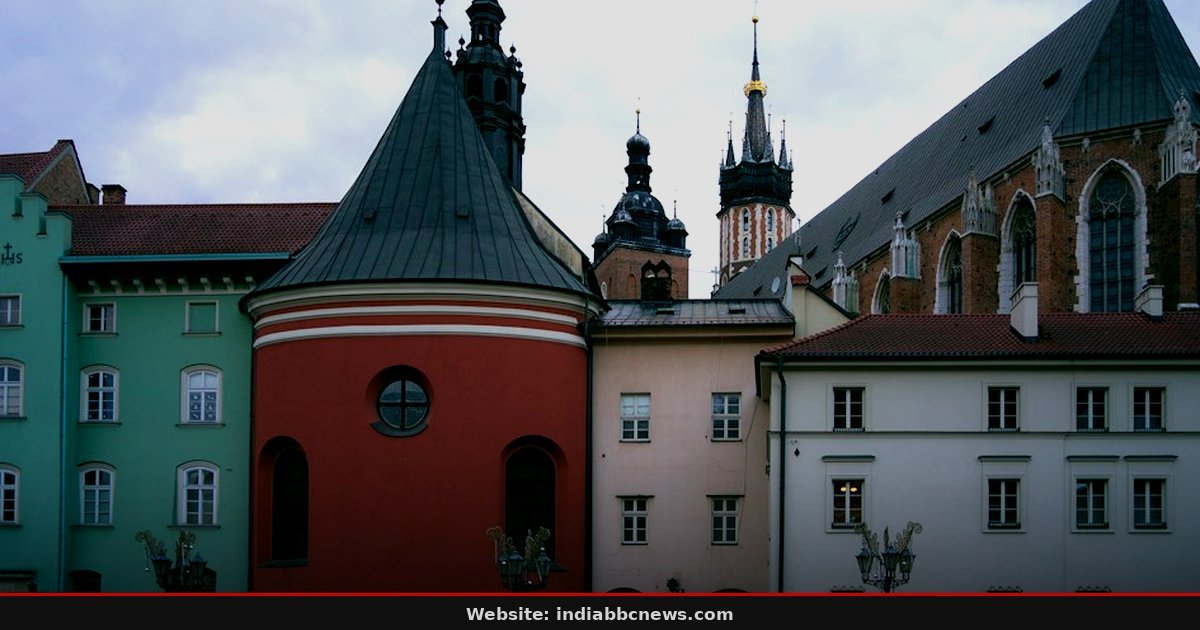
Five Dead in Krakow: The Drive-By That Shattered a Safe Tourist Icon
The air ambulance descended into the courtyard of St. Mary’s Basilica with a roar that drowned out the bells. By 3:15 PM on Saturday, the old world of Krakow had broken in the most violent way possible, and the police tape was already pulling a thick, black line around the heart of Poland’s most famous square.
The Geometry of Mayhem on Rynek Główny
Police didn’t wait for the crowd to clear before they said the car was moving fast. It wasn’t a parked vehicle; it was a weapon on wheels, weaving through pedestrians near the famous cloth hall. The Małopolska police confirmed that the gunman opened fire from inside the vehicle, targeting random victims in a chaotic burst of violence that ended only when officers engaged him.
Two police officers were among the injured, a fact that Hubert Ciepły, the fire department spokesperson, confirmed to journalists as he coordinated the moving bodies. Nobody expects a bloodbath in the largest medieval square in Europe, and that’s precisely what made the scene so disorienting for the thousands of tourists glued to their phones. The suspect is now in custody, though not because he surrendered—police shot him during the arrest and rushed him to a local hospital.
He wasn’t immediately identified, a silence that hangs heavy over the city while investigators dig into his motive and history. Emergency services, including helicopters and ground ambulances, swarmed the area, turning the cobblestones red and white in a pattern no one in Krakow has seen in decades. It’s a brutal, modern tableau played out against the backdrop of Gothic spires, a clash that feels more like a war zone than a postcard destination.
Tusk’s Silence and the Political Whiplash
Prime Minister Donald Tusk broke his silence shortly after the incident, posting a statement that was as cold and brief as the square was cold that day. “The police are investigating the background and all the circumstances of the attack,” he said, offering no speculation on ideology or personal grudges. That’s a harder sell than it sounds, considering the immediate suspicion of lone-wolf terrorism has already started to circulate on social media. Authorities initially reported two deaths and ten injuries before revising the tally upward, a correction that underscores how quickly the situation evolved from unclear to catastrophic.
The political ramifications haven’t fully landed yet, but the image of a Prime Minister issuing a statement from his phone while people die in his capital is a potent one. There’s no room for nuance here, only for speed and security, and the Polish state is currently trying to move at both. Experts on European security have been warning for years that the very openness of Eastern European tourist hubs creates a vulnerability that Western cities have already learned to mitigate.
We often forget that the line between a safe haven and a target is thinner than most people think, especially when you’re standing in a square the size of two football pitches. For the 3.5 million Indians who visited Europe last year, this event is a brutal reality check on the assumption of absolute safety in Schengen zones. Indian embassies, including those in Warsaw, immediately activated their helplines, urging citizens in Krakow to stay indoors and avoid the city center while the zone remains a hot spot.
India’s Stake in the European Safety Net
It’s a reminder that while visa policies have opened doors, the risk assessment for solo travel in Europe needs a serious update for Indian backpackers and students. The impact on Indian tourism operators is minimal in the short term, but the long-term perception of Poland as a safe, affordable destination could take a hit. We need to think about how we prepare our travelers; the brochures no longer tell the whole story of what happens when a car full of guns drives through a market square at rush hour.
The Indian government’s response has been standard but necessary, focusing on evacuation and support rather than diplomatic condemnation since the attacker hasn’t been linked to a state actor. However, the diaspora community in Krakow, particularly students from technical universities, is now grappling with the fear of being in a city that feels suddenly hostile. That’s a psychological wound that doesn’t show up in the news stats, but it lingers in the dorm rooms and classrooms where students are now whispering instead of laughing.
India’s rise as a global power includes a massive footprint in Europe, and ensuring the safety of our people there is as important as negotiating trade deals. History has a nasty habit of rhyming, and this drive-by echoes the chilling events in Munich in 2016 and the church shootings in Christchurch in 2019. Those incidents shared a similar DNA: a lone actor, a vehicle used as a shield, and a target audience that had no idea they were in danger until the first shot fired.
A Pattern That Haunts the Continent
Security analysts typically say that these attacks are hard to prevent because they rely on access and opportunity rather than complex logistics or large networks. It’s a terrifying shift in the threat model, where the enemy isn’t a organization with a hierarchy, but a single individual with a grudge and a license to drive. The difference this time is the scale of the target; Krakow isn’t just a city, it’s a brand that sells a certain version of European heritage to the world.
When you attack the heart of that brand, you’re not just killing people, you’re trying to break the spirit of a place that defines itself by its resilience. But does resilience hold up against a .45 caliber? That’s the question every security chief in Europe is asking right now, and the answer isn’t clear.
We’ve seen cities bounce back before, but the memory of this Saturday afternoon will be embedded in the stone for a very long time. Investigations of this magnitude take time, often weeks, before the first real leads emerge from the noise of initial chaos. The forensic teams are currently mapping the trajectory of bullets and examining the vehicle for traces that might point to accomplices or prior planning.
The Forensic Fog and What Comes Next
It’s a slow, meticulous process that requires a level of patience that the public doesn’t always have, especially when the news cycle demands instant answers. Authorities have not released the suspect’s name, a standard procedure that allows them to work without the pressure of a public identity clouding their inquiry. The next 48 hours are critical, as police will likely conduct raids on connections to the suspect and review surveillance footage from the surrounding buildings.
We might see a shift in security protocols across major Polish cities, including increased police visibility in high-traffic tourist areas. That’s a logistical nightmare for a city that relies on the flow of people to keep its economy moving, creating a tension between safety and commerce. And if this was a lone wolf, the question remains: why now, and why here? The silence from the suspect may be the loudest part of this story for a while.
Frequently Asked Questions
How many people died in the Krakow shooting?
At least 5 people have been confirmed dead, with more than 12 others injured. Authorities are still assessing the condition of the wounded, who include two police officers. No, the suspect was arrested by police and is currently in custody.
Is the gunman still at large?
Officers shot the gunman during the arrest and he was transported to a hospital. The shooting occurred in the main market square, known as Rynek Główny, in Krakow city center. The area is a major tourist hub and has been declared a hot zone for emergency services.
Where exactly did the attack take place?
Why did the attack happen?
The motive is currently unknown and under investigation by Polish police. Prime Minister Donald Tusk has stated that the background and circumstances are being probed. Indian embassies have advised caution, urging citizens to avoid the immediate area and stay informed.
How does this affect travel for Indians?
There is no blanket ban on travel, but travelers should monitor local news and follow official guidance. Source: The Independent World
Source: The Independent World

