

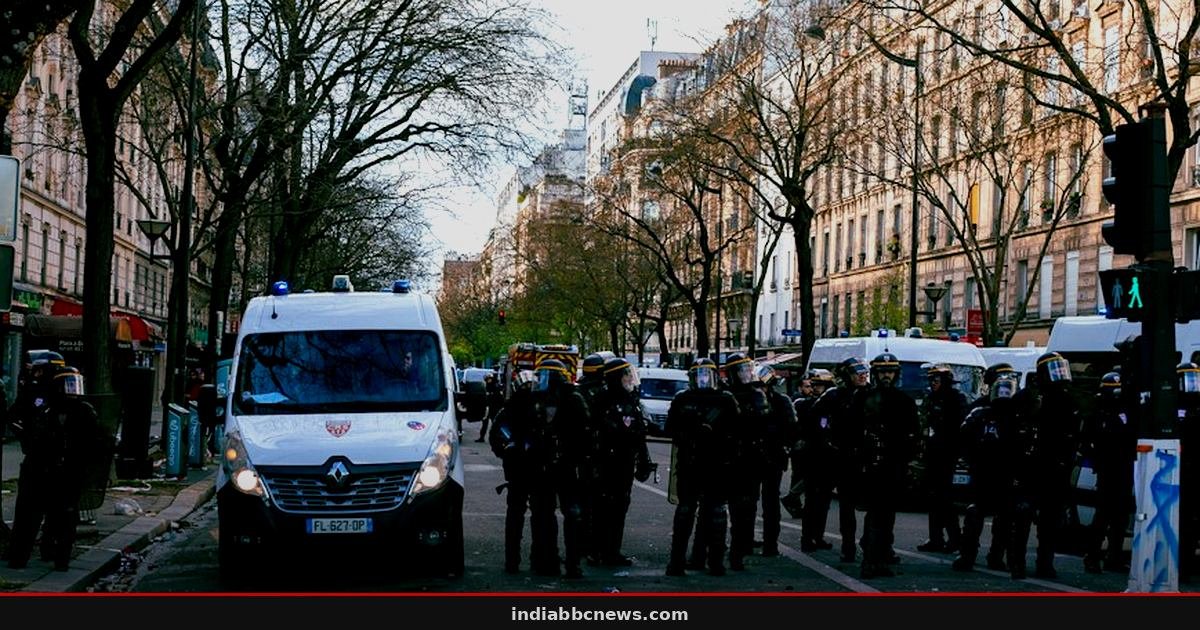
Paris streets will fill with 70,000 police officers this weekend, a deployment figure that dwarfs previous mobilizations and signals the French state is treating student unrest as a security crisis, not just a social one.
Interior Minister Bruno Retailleau confirmed the numbers to journalists on Tuesday morning, noting that the force level matches the peak security posture used during the 2023 pension reform riots. The trigger for this escalation is specific: high-school students who initially protested overcrowded classrooms and a lack of teaching staff have morphed into a broader movement. Now, the anger has spread nationwide, fueled by a deep-seated resentment over the rising cost of living that has squeezed households for three consecutive years.
The Math of Mobilization
70,000. That is the raw number. To put it in perspective, France has a total police force of roughly 145,000 national police officers. Deploying nearly half of them in a single weekend is an extraordinary logistical strain. Retailleau admitted that he is drawing from reserves and even some gendarmerie units to fill the ranks. “We are preparing for the worst,” he stated, a phrase that has historically preceded some of the most chaotic days in recent French urban history. The government isn’t just predicting protests; it is preparing for a siege of the major urban centers. If the turnout matches the 2023 benchmarks, Paris alone could see 30,000 demonstrators. That is a sea of people in the 11th and 13th arrondissements, areas that have become symbolic flashpoints for student activism.
“We Are Not Scared”
Despite the heavy security blanket, the student leadership shows no sign of backing down. Léa Martin, a 17-year-old representative from the principal student union, told reporters outside her school in Lyon that the police presence was a “theater of intimidation.” “They think if they surround us, we will disappear,” Martin said, her voice steady but tight. “They didn’t. We are not scared. We are here because we are tired of being told to wait while our futures get cheaper.” Her comment highlights the shift in tone. This isn’t just about textbooks; it’s about dignity. The students argued that the government’s response to educational decay is to simply add more police, a point that critics say highlights a fundamental disconnect between the state and its youth.
Economic Echoes in Classrooms
It’s hard to separate this from the kitchen-table math that French families are doing every month. Food prices are up 12% year-on-year. Energy bills haven’t dropped. For many parents, the anger at the classroom conditions is actually anger at their own wallets. When a teenager complains about a class of 40 students, they are often echoing a parent who can’t afford to pay for a tutor. The movement has tapped into this broader economic anxiety. Union leaders have noted that participation isn’t just from students; it’s from teachers, parents, and even retirees. The convergence of these groups makes it harder for the government to dismiss the protests as a niche issue. It has become a cross-generational complaint about the value of public services in an increasingly expensive society.
Logistical Nightmares and Local Tensions
The deployment isn’t without its own headaches. Local mayors in smaller cities have complained that they are being asked to host police units already stretched thin. In Toulouse, the mayor told local media that he didn’t have enough police to secure the city center and the schools simultaneously. This creates a dangerous gap. If the police are all watching the big rallies in Paris, who is watching the local schools? There is a fear of “bottle-neck” protests forming on the periphery, where smaller groups might escalate more easily due to a lower police presence. The interior ministry has not addressed these local concerns directly, relying instead on a national command structure that critics say is too rigid for local realities.
The Deadline Is Sunday
The next major decision point is Sunday, October 25. That is the day the national student union has scheduled their general assembly to decide whether to continue strikes. If they vote to pause, the police will likely stand down by Monday. If they vote to continue, the government has signaled it will tighten curfews in key cities. The ball is in the students’ court, but the pressure is immense. The government wants a quick de-escalation. The students want concrete budget increases for education, not just promises. This weekend will determine if the truce holds or if the fire spreads to new sectors of the economy, like transport and healthcare, which have been watching the student movement with a mix of solidarity and apprehension.
Frequently Asked Questions
Why is France deploying so many police for student protests?
The French government is deploying 70,000 officers because the protests have escalated from localized school issues to a nationwide movement involving broader social and economic grievances. The interior ministry views the potential for public order violations as high, matching the security levels used during the 2023 pension strikes.
What are the students actually demanding?
Initially, the demands were specific to learning conditions, such as reducing class sizes and hiring more teachers. However, the movement has broadened to include demands for increased funding for public services in general, as students and supporters link educational decay to the broader rise in the cost of living and perceived neglect of public goods.
Source: The Hindu International
This article was compiled by the IndiaBBCNews editorial system from verified international news sources. Facts have been independently reviewed. Original reporting: The Hindu International.

