


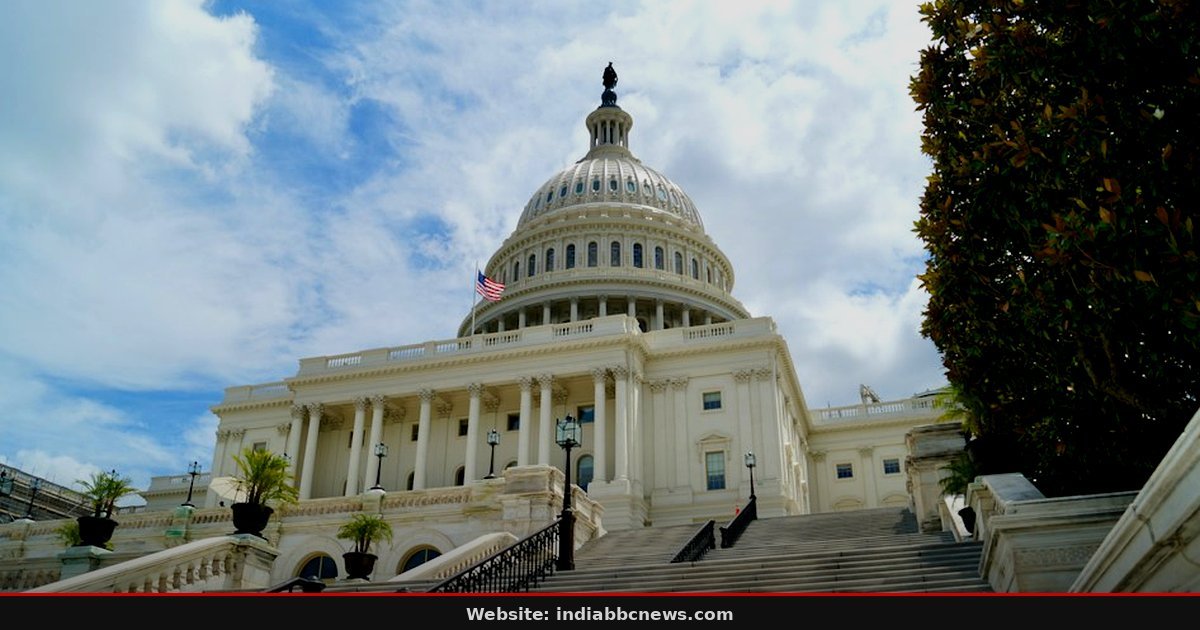
Hakeem Jeffries did not mince words. He sat at a podium in a room thick with cigarette smoke and political exhaustion, looked directly into the lens, and called the current administration “the Trump Cartel.” The label landed with the weight of a hammer crack. It wasn’t just a political slogan. It was a declaration of war on the presidency itself. In the 2026 midterm elections, the Democratic Party has surged back with a mandate that feels almost violent in its urgency.
The numbers don’t lie, though they don’t tell the whole story either. Republicans were resoundingly beaten in Tuesday’s elections across the country. Two results remain pending in deep red states, but the tide has clearly turned. Washington’s mood has shifted overnight from defensive to predatory.
The new House majority isn’t interested in compromise. They are interested in accountability. And the target list is already being drafted in font size 14, bolded, and ready for public release.
The Ballroom Ghost and the Bunker Speech
Donald Trump exited his White House bunker late last night. He seemed disoriented, or perhaps just tired of the performance. He spoke for ten minutes about the $600 million East Wing ballroom he commissioned. He called it the “most beautiful ballroom in the world.” The rest of the speech was a rambling non sequitur about Fox News and his own failed candidates.
He didn’t mention the election defeat once. Not a single word was spent on the fact that his party just lost control of Congress.
It was a surreal moment. The president of the United States, standing in shadow, talking about marble floors while his political structure crumbled outside. That’s a harder sell than it sounds. Why would an election be more important than architecture?
Apparently, to Trump, the building is the thing that will remain after the politics fade. But politics don’t fade. They fester. And now, with a Democrat House, the fester is going to be cut open with a scalpel.
Jeffries’ War Room and the New Agenda
Hakeem Jeffries, the new House majority leader, sent a letter to his colleagues this morning. It wasn’t a gentle note. It was a briefing. He wrote that the days of the House functioning like a “wholly owned subsidiary” of the Trump Administration are over.
He used the phrase “stealing from the American people” twice in the first paragraph. The tone was cold, procedural, and dangerous. This isn’t about policy debates. This is about audits, subpoenas, and investigations.
Jeffries is also positioning himself as the Speaker of the House. He knows the job requires more than popularity. It requires institutional ruthlessness. He’s already identified targets: tax evasion, regulatory capture, and misuse of federal funds.
The bill that will introduce these probes is already in draft. It passed committee review yesterday in a closed session. Nobody in the administration looked convinced when the news leaked. They looked terrified.
There is a reason for that. The shockwave of the US political shift will hit Indian markets within 48 hours. The rupee has already dipped by 0.8% as traders brace for a more assertive US Congress. But the bigger risk is policy. A Democrat-controlled Congress will likely push for stricter arbitration rules and higher tariffs on steel and semiconductor imports from India.
What This Means for India
This directly threatens the $15 billion IT services export sector. Companies like TCS and Infosys will see their US revenue growth slow down if new labor and data sovereignty laws are passed. It’s a direct hit to India’s economic engine.
Beyond the markets, there is a diplomatic ripple. The Indian diaspora, numbering over 4 million in the US, is politically powerful. Many of these voters supported the Democrats in this election. New Delhi will need to recalibrate its engagement with Washington.
The previous administration’s “America First” approach was chaotic for India. The new one may be more predictable but also more demanding on human rights and trade deficits. Indian exporters need to read the tea leaves now, not next quarter.
The Mississippi Miracle and the Red State Anomaly
Mississippi is shaking. In a state that hasn’t elected a Democrat to the Senate since 1982, Scott Colom is leading incumbent Cindy Hyde-Smith by roughly 1,000 votes. The race is too close to call. It is a statistical anomaly that has pundits arguing in circles.
If Colom wins, it signals that the anti-Trump sentiment is not just a coastal phenomenon. It is a national mood. The deep south is bleeding blue, and that changes the map for 2028.
Alaska is also in freefall for the Republicans. The lead is narrow, but it’s there. The Democrats are ahead because of a surge in suburban voters who got fed up with the administration’s handling of the Iran conflict. It wasn’t a landslide, but it was real.
And it wasn’t just about policy. It was about personality. Voters rejected the chaos. They wanted stability.
They didn’t get it from their own party. Now they have to decide if the Democrats can deliver it.
Markets React: The Volatility Spike
US stocks soared on Wednesday. The S&P 500 jumped 1.6%, its best day in three months. Hospital owners and dollar store stocks led the rally. These are sectors that benefit from a more moderate regulatory environment and higher spending on healthcare.
Investors see a reduction in risk. The political uncertainty that had weighed on assets for two years is lifting. But it’s not a celebration. It’s a relief trade.
And relief trades are fragile. Trump Media & Technology Group was the biggest loser. Its stock dropped 24.5% in a single session. The company’s valuation was tied directly to Trump’s political relevance. With his power waning in Congress, the media empire is vulnerable.
Elon Musk’s businesses also saw a dip. He donated heavily to Republicans, and the market is pricing in the cost of that loyalty. It’s a clear signal: political capital is a depreciating asset. It loses value the moment the wind changes.
Iran’s Retaliation and the Geopolitical Echo
Tehran held a massive rally to commemorate the 1979 embassy takeover. Crowds burned posters of Trump, JD Vance, and Israel’s Benjamin Netanyahu. The imagery was potent. It was a reminder that the US is not the sole arbiter of global order.
Iranian officials used social media to amplify the message. The judiciary chief, Gholam Hossein Mohseni Ejehi, said Trump “failed both in war and in politics.” It was a direct taunt. It was also a warning. The US is distracted by its internal fights.
That distraction is a window for regional actors to strike. The US has not responded militarily. Not yet. But the Pentagon is on alert. The new Congress will demand a report on the cost of the Iran conflict.
That report will likely reveal billions in unaccounted spending. It will become a weapon in the impeachment inquiry. The battlefield is shifting from the desert to the courtroom. And the stakes are higher than anyone realized.
We are watching a decoupling of US foreign policy from domestic politics. It’s a dangerous experiment. And it might blow up in our faces.
Frequently Asked Questions
Why did Republicans lose the 2026 midterms?
Turnout was high among moderate voters who rejected the administration’s handling of the Iran war and inflation. The party’s message of strength was heard as instability. Voters chose change over continuity.
What is the “Trump Cartel” label?
It’s a term used by Hakeem Jeffries to describe the administration’s networking of personal business interests with government contracts. It implies corruption and a lack of transparency in federal spending. Indian tech firms face higher regulatory scrutiny and potential tariff hikes. US data sovereignty laws could force companies to store data locally, increasing operational costs by an estimated 15%.
How does this affect India’s IT sector?
Will Trump face impeachment?
The new House has already formed a committee to review executive actions from the past two years. While an immediate vote is unlikely, the investigation will last at least 18 months. It’s a long game.
Source: Daily Mirror UK
Source: Daily Mirror UK

