


Delhi’s Buildings Keep Falling. The Plan to Stop Them Is Still on Paper
The concrete didn’t wait for the inspection report. It just snapped. In a cramped lane in East Delhi, where the air smells of burnt plastic and wet dust, another wall gave way this year, trapping families who had no other place to go but that dark, crumbling box. It is not an accident. It is a verdict.
The Architecture of Neglect: Where the Maps Fail
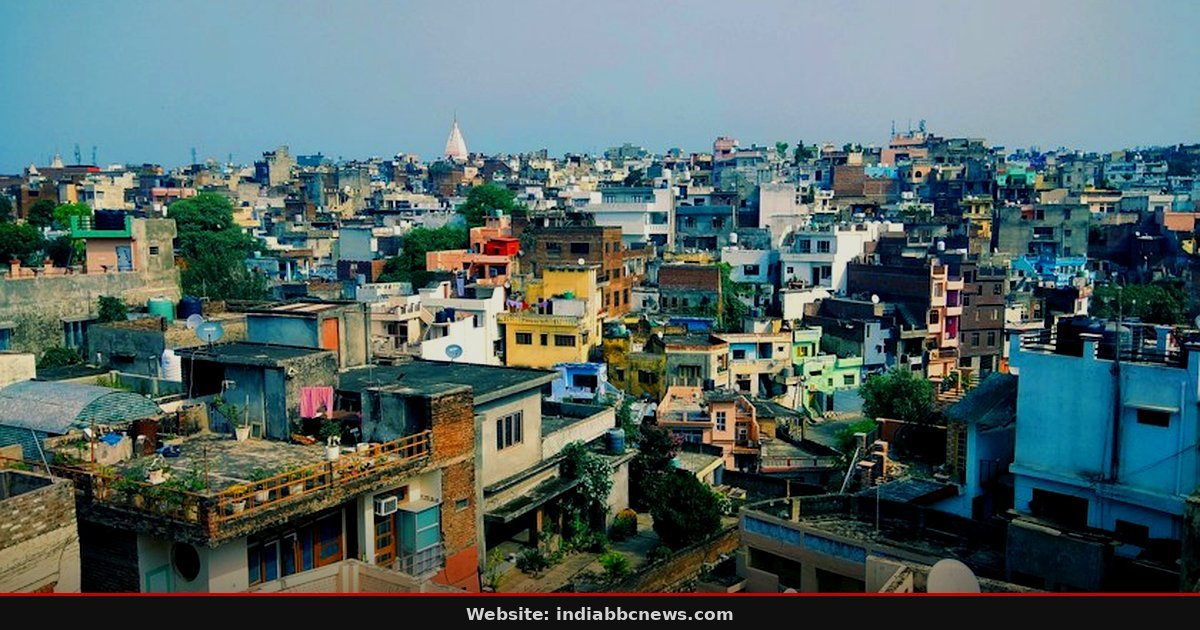
Delhi looks like a patchwork quilt on satellite imagery. The stitched-together squares of planned sectors dominate the view, but underneath them lies a vast, tangled mess of unauthorized shanties, jerry-built row houses, and the ruins of structures that never got a permit. Ashok Kumar Jain, a retired Commissioner of Planning at the Delhi Development Authority (DDA), has spent decades staring at these maps while holding a pen that was too often blocked by political hands. His recent book, “Mapping Delhi’s Past, Present and Future,” argues that the city’s collapse is not a failure of concrete but a failure of recording reality.
He says the municipal databases are 20 years out of date, meaning the government is building codes on top of a ghost town. Nobody knows who owns the land. Nobody knows if the wall is load-bearing. The result is a city that is officially planned but physically anarchy.
The gap between the permission slip and the actual structure is where lives are lost. In the informal settlements of Najafgarh or the dense clusters around Mathura Road, construction happens overnight because waiting for a DDA sanction means waiting for a decade. Builders use thin steel rods where thick ones are needed. They pour weak concrete to save money.
The authorities often turn a blind eye because enforcement means evicting thousands, a political suicide pact for any elected official. Jain notes that the city’s zoning laws are written for a 1960s metropolis, not a 21st-century megacity with 30 million souls and swelling transit lines. The infrastructure is trying to hold up a weight it was never designed to carry. And the weight keeps increasing.
Every new bridge built over the Yamuna adds stress to a system that is already fraying at the seams. The cracks are visible if you know where to look. They are in the ceilings that bow. They are in the floors that sink after the monsoon.
The city is tired. It is trying to stretch itself across a canyon of poor planning and poor will, and it is getting tired fast. The silence from the administration is deafening because the noise of the politics is too loud to hear the ground shifting.
Why the Old Guard Can’t Fix a New City
Retiring from the DDA usually comes with a sense of resigned accomplishment. But for Jain, it feels like leaving the theater during the fire drill. He points out that the decision-making process in Delhi’s urban planning is fragmented into at least 5 separate entities: the DDA, the MCD, the DLDC, the industrial estates, and the government agencies. They do not talk.
They rarely even sit in the same room. Each agency has its own map, its own budget, and its own excuse for why the project in hand is not their fault. Jain has seen senior officers spend more time in legal meetings about land acquisition than in town halls with residents. The bureaucracy is a fortress, and it is not built to protect the people inside.
It is built to keep the accountability out. That is a harder sell than it sounds. The public expects a single authority to answer for a collapsed building. The state offers them a committee.
And the committee offers them a file number. The human cost of this bureaucratic paralysis is measured in bodies, not files. Every time a building caves in under the weight of unauthorized floors, it is a testament to the failure of the system that claims to regulate it. We know the rules. We know that a 4-story building cannot legally become a 12-story vertical village without structural reinforcement.
But knowing the rule is not the same as enforcing it. The cost of enforcement is high. The cost of inaction is a headline. Until recently, the headline was cheaper.
Now, the cost is rising. Jain argues that the city needs a “structural amnesty” process that is fast, transparent, and non-negotiable. Not a pardon. Not a cover-up.
A rigorous triage. Inspect every building over 12 years old. Tag the dangerous ones. Demolish the lethal ones.
Rehouse the displaced. It is a monumental task. It requires a will that Delhi has historically lacked. But without it, the next collapse is not a matter of “if” but of “when.” And “when” has a body count attached to it.
The fear in the lanes is palpable. You can see it in the way families pack their bags before the monsoon hits. They are not just afraid of water. They are afraid of the floor.
They are afraid of the floor giving way while they sleep. That is a nightly terror that no amount of economic growth can fix. It is a fundamental breach of trust between the citizen and the city.
The Billion-Dollar Question: Is It Worth It?
Money is the most frustratingly easy part of this equation. Delhi has the budget. What it lacks is the nerve. The state government has access to central funds for urban infrastructure, yet the allocation for building safety and structural auditing remains a fraction of what is needed.
Investors are wary. Why put money into a commercial complex if the building code is a suggestion? Why build a metro station if the surrounding structures might be unstable? The economic loss from these collapses is not just in the bricks.
It is in the lost productivity. It is in the fear that drives talent and capital to Gurgaon, Noida, and Bangalore. Those cities, for all their own problems, have a reputation for order. Delhi has a reputation for chaos.
And chaos is expensive. Jain estimates that the current state of disrepair is costing the city an estimated $2 billion annually in missed economic opportunities and emergency response costs. That is not a small number. It is a lifetime’s salary for a million workers.
It is a hospital’s worth of equipment. It is a school’s worth of books. The money is there. The question is whether it is being spent.
Or is it being spent on polishing the marble floors of the secretariats while the walls of the housing projects crumble outside? The contrast is stark. The contrast is cruel. And it is widening with every passing year.
The next decade will demand a different kind of spending. A different kind of thinking. One that values a human life over a quick approval. One that sees a building not as a commodity but as a shelter.
That shift is hard. It requires a change in the executive mindset. And mindset changes slowly. Concrete cracks quickly.
The race is on. And Delhi is running on flat tires.
What This Means for India’s Urban Future
Delhi is the nervous system of India. What happens here ripples out. If the capital, with its vast resources and political clout, cannot manage its building safety, what hope is there for the next tier of cities? Mumbai, Bengaluru, Pune, Hyderabad.
They are all facing the same explosion of unplanned growth. The “Delhi Model” of urban management is seen as the template. Or rather, the broken template. Investors look at the DDA’s track record and adjust their risk assessments for the entire nation.
A collapsed building in East Delhi is not just a local tragedy. It is a signal to the global market. It says: The regulatory environment in India’s largest city is unstable. For Indian businesses, this means higher costs.
Higher insurance premiums. Higher legal risks. If you are an Indian entrepreneur trying to set up a shop in a commercial area, you now have to factor in the risk that your landlord’s building might fail an audit. You have to check for cracks that were hidden by paint.
You have to ask questions that no one wants to answer. This creates a friction that stalls growth. It creates a climate of suspicion between the tenant and the landlord, the builder and the buyer. And it poisons the well of consumer confidence.
The Indian economic narrative is often built on the strength of its urban markets. Those markets are only as strong as the foundations they stand on. And in Delhi, the foundations are shaky. The ripple effect is real.
It is visible in the flight of IT parks to Noida. It is visible in the hesitation of foreign direct investment in real estate. It is visible in the price of safe housing, which is skyrocketing because supply cannot meet demand. The demand is not for luxury.
The demand is for safety. And safety is not being sold in the capital. It is being rented, at a premium, in the peripheries. This is a structural flaw in the Indian urban story.
And it is getting deeper. The rest of the country is watching. And they are learning the wrong lessons. They are learning that the rules can be broken.
That the enforcement is optional. That the risk is low. Because Delhi, the leader, is not paying the price. Yet.
The Next Step: A Deadline for Sanity
The government has announced a new task force to audit all DDA-managed properties. This is a start. But a start is not a plan. The task force has 6 months.
In urban terms, that is a blink of an eye. It will need to hire thousands of engineers. It will need to access buildings that are occupied by people who do not trust the state. It will need to coordinate with the police, the fire brigade, and the legal agencies.
The chances of success are low. But the alternative is silence. And silence has a cost. The next collapse will be bigger.
The next fire will be worse. The next death will be more painful. Jain says he is not angry. He is tired.
He has seen this cycle before. He has seen the promises made in the morning and broken by the afternoon. He has seen the reports buried in files that never see the light of day. He has seen the victims’ families given checkbooks that do not cover the loss of a life.
He is asking for something simple. Stop pretending everything is fine. Start fixing the cracks. Start acknowledging the danger.
Start treating the city like a patient, not a project. The patient is critical. The time is now. The doctors are in the room.
But they are arguing about the billing. The patient is losing blood. And no one is applying the pressure. The clock is ticking.
And it is loud. It is the sound of concrete settling. It is the sound of a city breathing its last. Or maybe its first.
It depends on what we do in the next 24 hours. It depends on who has the courage to make the hard call. It depends on whether we value the map or the man. The map is paper.
The man is flesh. And flesh does not last as long as paper. Sometimes. It lasts longer.
It lasts until it is gone. Then it is gone. And the map remains. The map lies.
The man dies. And the map remains. Forever. Changing nothing.
Frequently Asked Questions
Why do buildings keep collapsing in Delhi?
Most incidents occur in unauthorized structures where building codes are ignored. Thin steel and weak concrete are used to cut costs, leading to structural failure under load. The DDA is the primary planning body, but its records are often outdated. It lacks the political mandate to enforce demolitions in densely populated, illegal colonies.
What is the DDA’s role in this?
Is there a new law to prevent this?
Not yet. There are proposals for a structural audit task force, but no new legislation has been passed to mandate mandatory safety inspections for all buildings. Buyers in Delhi and similar cities must now rigorously check for legal approvals and structural integrity. The risk of investing in unauthorized properties has increased significantly.
How does this affect property buyers in India?
Source: The Hindu
Source: The Hindu

