

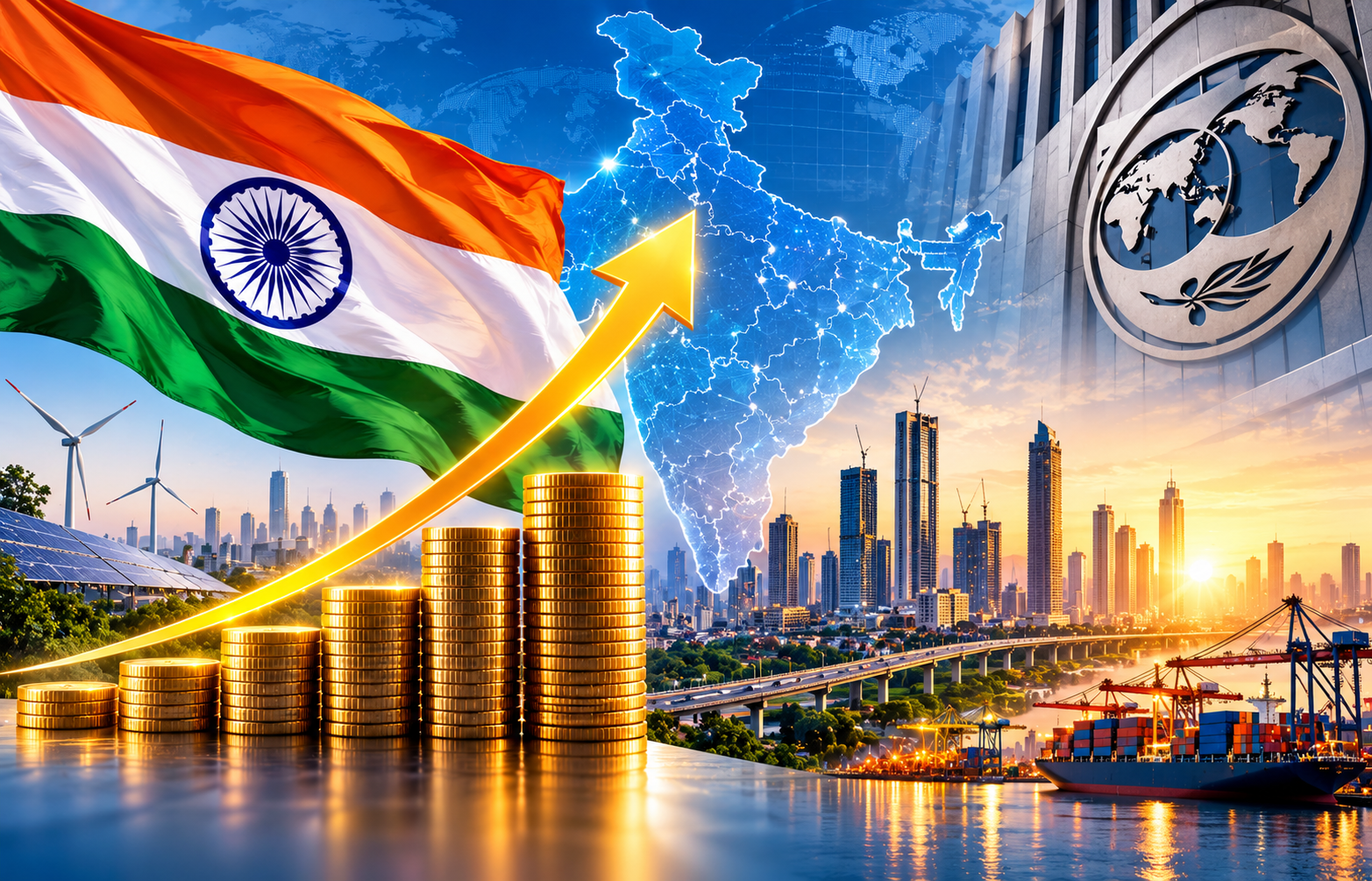
The International Monetary Fund has upgraded India’s GDP growth forecast for 2026-27 to 7.9%, making India the fastest-growing major economy in the world for the fifth consecutive year. The upgrade, announced as part of the IMF’s World Economic Outlook October 2026 edition, reflects stronger-than-expected momentum in India’s manufacturing sector, robust services exports, and resilient domestic consumption despite elevated interest rates.
What’s Driving the Growth
Manufacturing has emerged as the single biggest positive surprise in India’s 2026 growth story. The Production Linked Incentive (PLI) schemes are finally delivering at scale. Apple’s India manufacturing base — now producing 20% of global iPhone output — has been joined by Samsung, Google Pixel, and Foxconn’s generic electronics manufacturing. Together, electronics exports from India have crossed $60 billion, up from essentially zero a decade ago.
Pharmaceuticals, textiles, and automobile exports are also showing strong numbers. India’s goods trade deficit is narrowing faster than expected, reducing pressure on the current account and providing room for the RBI to manage monetary policy without being constrained by external balance concerns.
Services Sector: The Quiet Strength
India’s services exports — IT, business process management, financial services, and a growing legal and consulting sector — continue to exceed expectations. The post-pandemic remote work revolution permanently expanded the market for Indian services talent. India’s software and services exports crossed $200 billion in FY2026 for the first time, with artificial intelligence-related services emerging as the fastest-growing subcategory.
Risks the IMF Flags
The IMF’s upgrade comes with important caveats. Oil price volatility, particularly given the current Israel-Iran tensions, represents the single largest downside risk to India’s growth trajectory. Agricultural sector productivity growth remains below potential, creating food price volatility risks. And India’s fiscal deficit, while within management parameters, leaves limited room for countercyclical stimulus if global conditions deteriorate.
What This Means for Ordinary Indians
GDP growth at 7.9% doesn’t automatically translate into widely shared prosperity. India’s challenge is converting high growth into quality jobs — particularly for the 10-12 million young Indians who enter the labor force every year. The manufacturing boom helps, but India needs to maintain this trajectory for another decade to fully absorb its demographic dividend.
For readers and citizens trying to make sense of a rapidly changing landscape, the most useful approach is to track credible reporting, maintain a healthy scepticism about unverified claims, and remember that initial reports are often incomplete. The full picture takes time to emerge — but when it does, it usually tells a richer and more nuanced story than the first headlines suggested.