


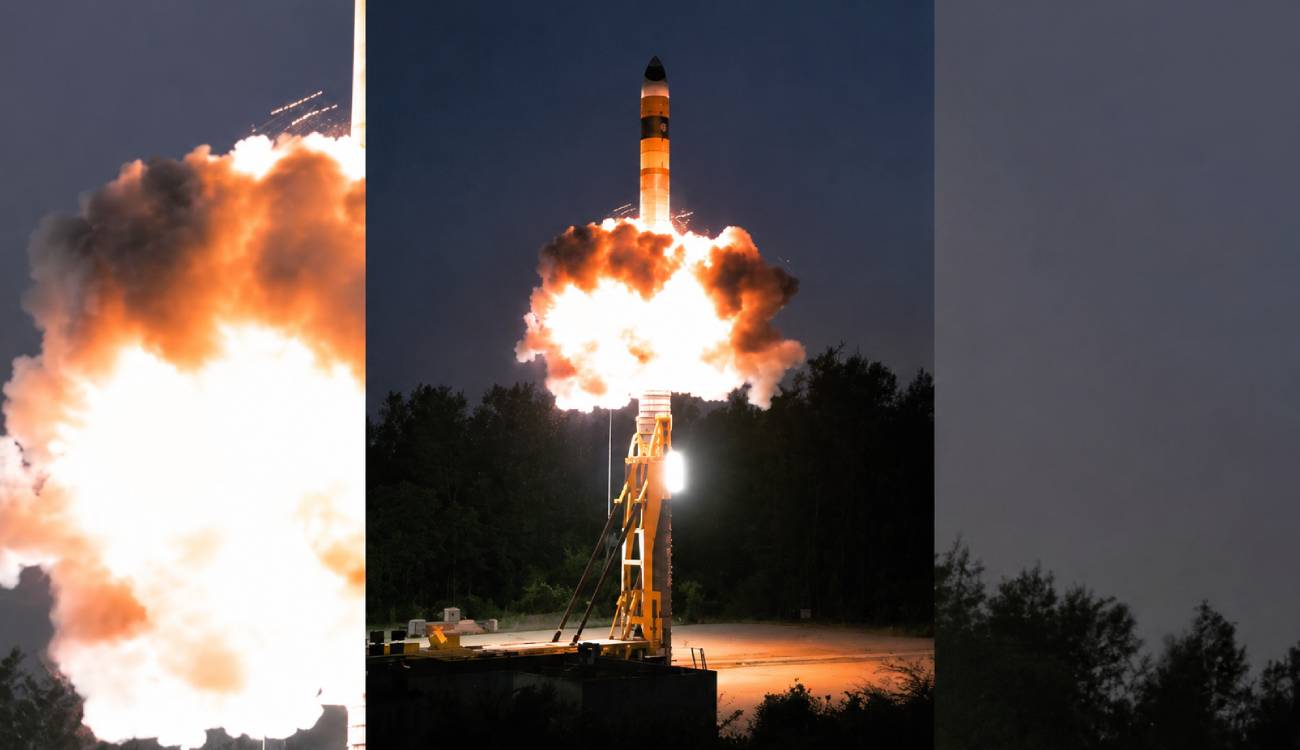
India has successfully test-fired an advanced variant of the Agni missile that extends the system’s range to cover targets at distances previously beyond its reach. The test, conducted from a facility on the Odisha coast, was confirmed by the Defence Research and Development Organisation as having met all its objectives.
The specific variant and its precise range are not officially disclosed, consistent with India’s practice of confirming tests without publishing complete technical specifications. Open-source analysis of radar and tracking data, as well as statements from DRDO officials in post-test briefings, suggests the test involved capabilities at the upper range of what the Agni family has previously demonstrated.
What This Extends and Why It Matters
Ballistic missile range, in nuclear deterrence terms, is about target coverage. A missile that can reach X kilometres covers the set of potential adversary targets within that radius. Extending that radius changes which assets can be held at risk and therefore changes the deterrence calculus.
India’s strategic environment involves two nuclear-armed neighbours: Pakistan and China. The Pakistan deterrence equation has been addressed by Agni variants for some years. The China equation — particularly given China’s geographic depth and the location of key military and economic assets in its interior — requires longer range.
The test’s significance is primarily about that second equation.
India’s Declared Nuclear Doctrine
India maintains a no-first-use policy on nuclear weapons and a credible minimum deterrence posture. The capability being tested is a second-strike asset — the ability to guarantee retaliatory capacity even after absorbing a nuclear attack.
DRDO’s Avinash Chander and his successors have consistently framed India’s missile development program in those terms: not offensive capability expansion, but assured retaliation capacity. The test is consistent with that framing.
China’s official response was measured — a statement noting the test and expressing hope for regional stability, which is the standard formulation for “we noticed and we’re not going to make a public scene about it.”