


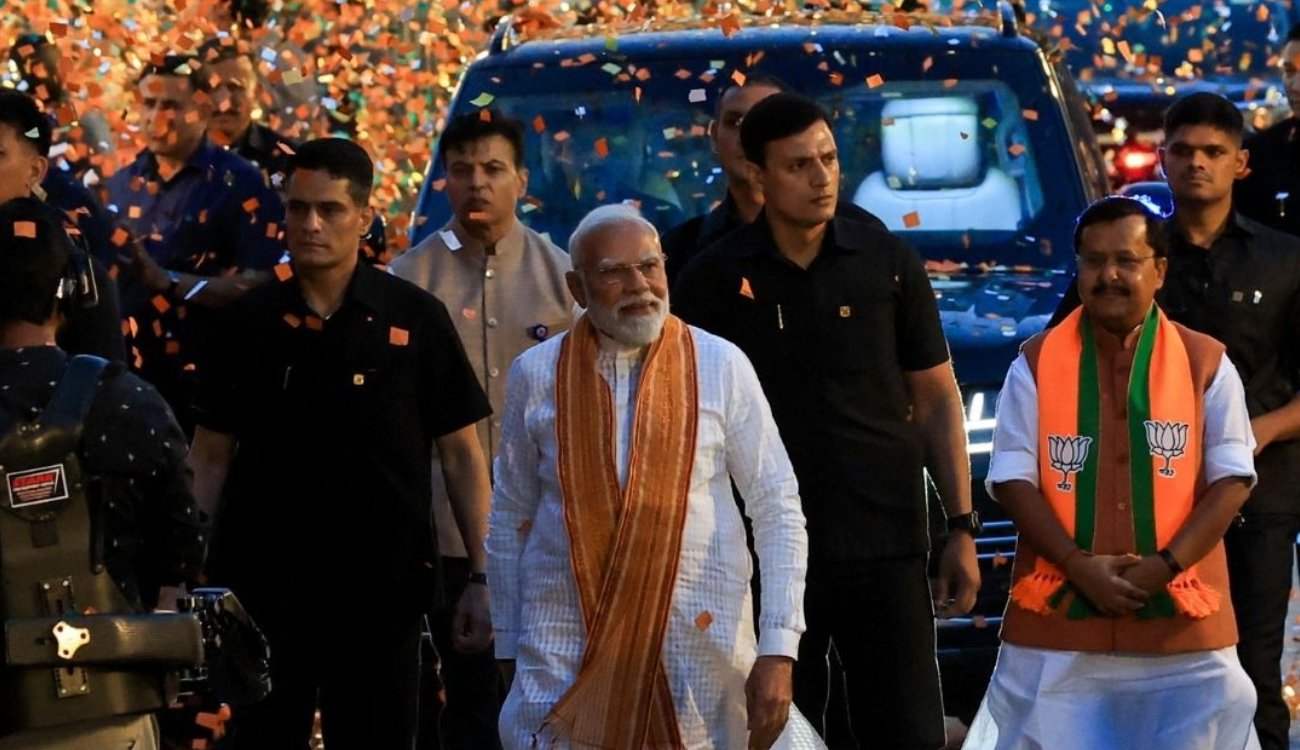
Prime Minister Modi declared on Thursday, speaking at a post-election rally in Kolkata, that Bengal is “free from fear” and has “seen poriborton” — the Bengali word for change that became one of the most politically charged terms in the state’s recent history.
The use of “poriborton” was deliberate and pointed. It was the slogan that Mamata Banerjee used when she ended the Left Front’s 34-year rule in 2011. Using it now, to describe what BJP’s improved performance represents, is an attempt to claim the mantle of the same transformative aspiration.
The “Free From Fear” Claim
BJP’s core campaign narrative in West Bengal has centred on law and order — the allegation that political violence, booth capturing, and intimidation of opposition workers has created a climate of fear in the state. The Sandeshkhali incidents, documented cases of political workers’ deaths, and a series of judicial interventions around election conduct were all cited as evidence.
Modi’s “free from fear” declaration is partly celebratory and partly aspirational — BJP hasn’t formed the government, so the claim is less about what has been achieved than what the improved result represents as a direction of travel.
TMC’s Response
TMC’s response was swift and dismissive. Party spokesperson Derek O’Brien called the “poriborton” framing “a stolen slogan being used by people who don’t understand what Bengal’s poriborton actually was.” He pointed out that the party’s own “poriborton” — the end of Left Front rule — was accompanied by an actual change of government, while BJP’s current performance still left TMC as the governing party.
The exchange illustrates one of the central tensions in Bengal politics: BJP has become a significant opposition force, but the gap between “significant opposition” and “governing party” remains substantial.
What “Bengal Free From Fear” Would Actually Require
Independent election monitoring organisations and judicial observations around the election noted both improvements and continuing concerns about political conduct in Bengal. The conditions that produce political violence — economic competition for patronage resources, entrenched local power structures, weakly independent institutions — don’t change quickly with electoral results alone.
The declaration is political messaging. The reality of what changes in Bengal’s governance culture will take longer to assess.