


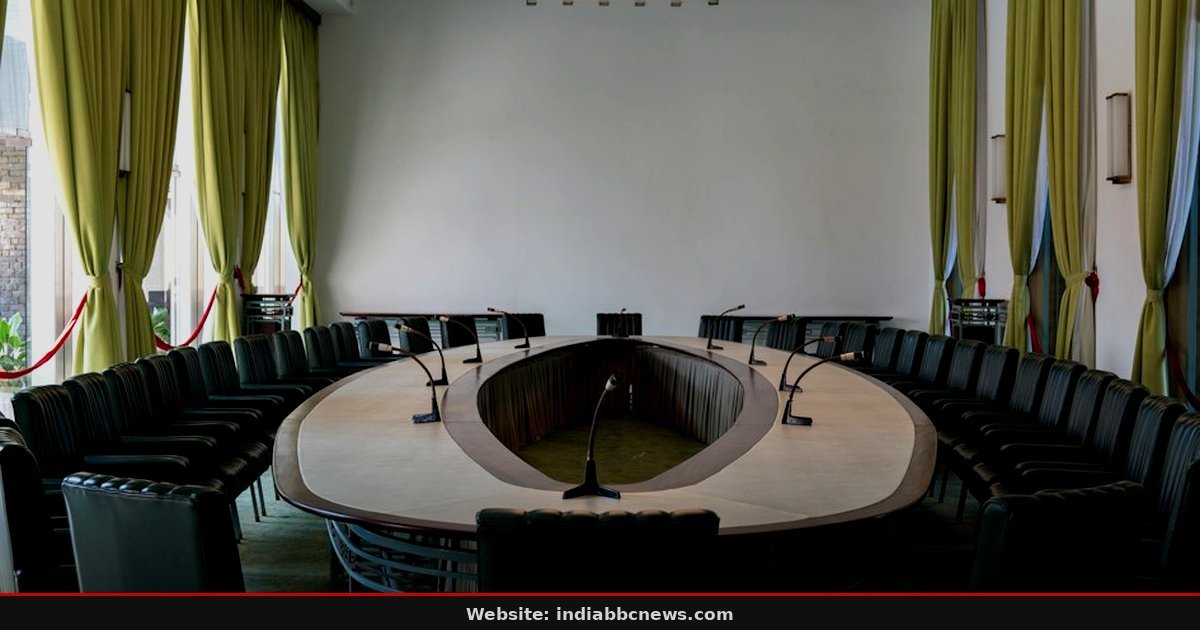
9:42 p.m. in Shenzhen, the air thick with the humidity of a coastal city in late autumn. It’s a time when most people should be home, eating dinner with their families. But in this ultramodern metropolis, the streets are eerily empty, paved over by a surge of pastel-colored banners and heavily armed security personnel clearing the way for the world’s most powerful men.
The Tarmac Embrace: Trump, Xi, and the Silent Reset
Xi Jinping hugged President Donald Trump on the tarmac Wednesday night. It wasn’t a casual affair. It was a calculated, choreographed display of warmth that signaled a dramatic shift in the geopolitical temperature between the world’s two largest economies. The embrace happened moments after the Chinese leader had just greeted Russian President Vladimir Putin, who had landed earlier that day for the Asia-Pacific Economic Cooperation (APEC) summit.
By Thursday, the three leaders are expected to hold a trilateral meeting. No such gathering has ever happened before. The stakes are high, the optics are loud, and the silence on certain issues is deafening.
The Airport Gesture That Rewrote the Rules
Xi’s decision to meet Trump at the airport was unusual. He did not come when Trump visited Beijing in May. But Trump made a point of going to Joint Base Andrews outside Washington to greet Xi in September, an uncommon move for an American president and the first time Trump had done so for a foreign visitor. In effect, Xi returned the gesture with interest.
The red-carpet greeting on the tarmac — with a crowd of people in colorful costumes waving flags and flowers and chanting “warm welcome” in Mandarin — was a performance designed for the cameras. It told the world that personal chemistry now matters more than ideological rigidity between these two giants.
This pattern of reciprocal courtesies is rare in modern diplomacy. Historically, leaders of rival powers maintain a deliberate distance to signal independence from each other’s influence. By mirroring Trump’s earlier gesture, Xi is acknowledging a new diplomatic language where personal rapport dictates state policy. It’s a harder sell than it sounds to convince domestic audiences that hugging your adversary is a sign of strength rather than weakness.
Yet, in the high-stakes world of 2026, emotional intelligence is currency. The message is clear: we are partners, not opponents, at least for now. And nobody in the VIP lounge looked convinced that this warmth would last beyond the summit.
The Trilateral Triangle: A First for History
The upcoming Thursday session marks the first-ever trilateral gathering of the leaders of the United States, China, and Russia. This is not a minor diplomatic footnote. It represents a structural reordering of global power dynamics away from the post-Cold War bipolar framework. Putin, who arrived earlier in the day, met with Xi and heard the Chinese leader hail their relationship as “steadfast as a rock through wind and rain.” Yet, Xi sent a lower-ranking official to greet Putin, while he personally welcomed Trump. This subtle hierarchy tells us everything about where Beijing’s priorities actually lie.
Russia has become a close partner in recent years, and Xi and Putin have developed a bond that transcends mere political utility. But China has a far more extensive economic relationship with the United States, one that cannot be replicated with Moscow. The trilateral meeting is less about alliance and more about management. It’s about keeping the peace while playing all sides to maximize national interest.
Can three leaders with such divergent values truly find common ground? Probably not. But they can find common enemies or, more likely, common markets. The goal isn’t friendship.
It’s stability that benefits Chinese export data. That’s a pragmatic calculation, not a moral one.
The Nvidia Scandal and the Silence in Shenzhen
Trump’s whirlwind trip to Asia has been shadowed by the Nvidia scandal. Jensen Huang, the chief executive of Nvidia, was forced to resign last week after revelations of an extramarital affair with a businesswoman whom U.S. intelligence determined was spying for China. It’s a messy, human scandal that threatens to upend the tech partnership between the two nations. Yet, Trump has said he will not discuss the matter with Xi.
This selective amnesia is a deliberate strategy. By ignoring the scandal, Trump is signaling to Beijing that he values the relationship over the specifics of the betrayal. It’s a bold gamble, relying on the assumption that economic integration will outweigh security concerns.
This approach mirrors the “strategic ambiguity” often used in alliance management, but here it’s applied to a competitor. If the US publicly denounces Huang’s affair as a national security breach, it risks alienating Xi at the worst possible moment. By staying silent, Trump gives Xi a chance to act. Will China punish its own nationals for spying?
Probably not, but the silence allows Beijing to claim victimhood or take internal action without external pressure. That’s a risky diplomatic tightrope walk. One misstep, and the trade deals discussed at APEC could evaporate overnight. The technology sector is watching closely, aware that their supply chains depend on this fragile truce.
What This Means for India
For India, this trilateral summit carries heavy implications that go beyond headline news. New Delhi has long attempted to position itself as a counterweight to China in the Indo-Pacific, often leveraging its relationship with the US to this end. But if the US and China are moving toward a normalized, perhaps even friendly, economic relationship, India’s strategic leverage diminishes. The “Quad” strategy, which included Japan and Australia, was built on the premise of US-China tension.
Now that tension is thawing, India must rethink its diplomatic posture. It can no longer rely on Washington to contain Beijing. It must find new ways to engage China directly, which is a politically difficult task at home.
Indian markets will also feel the ripple effects. A stable US-China relationship could lead to higher global demand for technology and manufacturing, benefiting Indian IT services firms. However, it also means less pressure on China to open its markets to Indian goods, a long-standing grievance for New Delhi. The rupee might see some relief if global markets stabilize, but the structural trade imbalance remains.
Indian policymakers are likely to watch Thursday’s meeting with a mix of hope and anxiety. Will the US prioritize its China partnership over its Indo-Pacific commitments? That’s the question keeping Indian strategists awake at night. The era of easy alignment is over.
Now, it’s about navigation. Shenzhen, the host city, is almost spotless this week. Its streets are bedecked with pastel banners but mostly emptied of the crowds typical of many cities in China. This is not an accident. It’s a state-of-the-art display of control.
The Empty Streets of Shenzhen
The city is a center of China’s artificial intelligence and robotics industries, and hosting the summit there is a subtle flex of technological muscle. The emptiness serves a dual purpose: security and spectacle. It ensures no disruptions while projecting an image of order and efficiency. It’s a city on pause, waiting for the leaders to make their moves.
One throwaway observation from the ground: the flowers used in the welcome ceremony were imported from the Netherlands, a detail that speaks to the globalized nature of even the most nationalist displays. It’s a small thing, but it reveals the interconnectedness that underpins this diplomacy. You can’t have a pure national narrative when your decorations are imported. The contrast between the empty streets and the vibrant, colorful costumes of the greeters is stark.
It’s a theater of statecraft, where every detail is curated to send a message. The message is: we are open, we are powerful, and we are in control. Whether that control extends to the global economy remains to be seen.
Frequently Asked Questions
Why did Xi hug Trump at the airport?
Xi’s embrace was a reciprocal gesture to Trump’s earlier decision to greet him at Joint Base Andrews in September. It signals a new era of personal diplomacy between the two leaders, prioritizing relationship-building over ideological confrontation. This move is designed to set a positive tone for the upcoming trilateral meeting with Russia.
Is the US-China relationship really improving?
While the optics suggest a thaw, the underlying tensions remain. The decision to ignore the Nvidia spying scandal indicates a preference for economic stability over security purity. However, this doesn’t mean the rivalry is over. It suggests both sides are choosing to manage the conflict rather than escalate it, focusing on trade and technology partnerships for now.
How does this affect India-India relations?
India’s strategic position is weakened if the US and China normalize their ties. New Delhi’s leverage, which relied partly on US-China friction, is diminished. India must now seek direct engagement with China to protect its economic and security interests, a complex diplomatic shift that poses internal political challenges. The focus will shift from containment to competition and selective cooperation.
What is the significance of the trilateral meeting?
The trilateral meeting is historic because it brings the leaders of the three largest economic and military powers together for the first time. It signals a move toward a multipolar world order where the US, China, and Russia interact directly. This could lead to new frameworks for global governance, trade, and security, potentially bypassing traditional Western-led institutions.
Will the Nvidia scandal impact US-China tech trade?
It’s unclear how much impact it will have, given Trump’s refusal to discuss the matter. However, the scandal highlights the deep entanglement and vulnerability in the tech sector. If public opinion shifts or if other US politicians capitalize on the story, it could disrupt ongoing tech agreements. The US government is currently prioritizing the broader relationship over this specific incident.
Source: NYT World
Source: NYT World

