


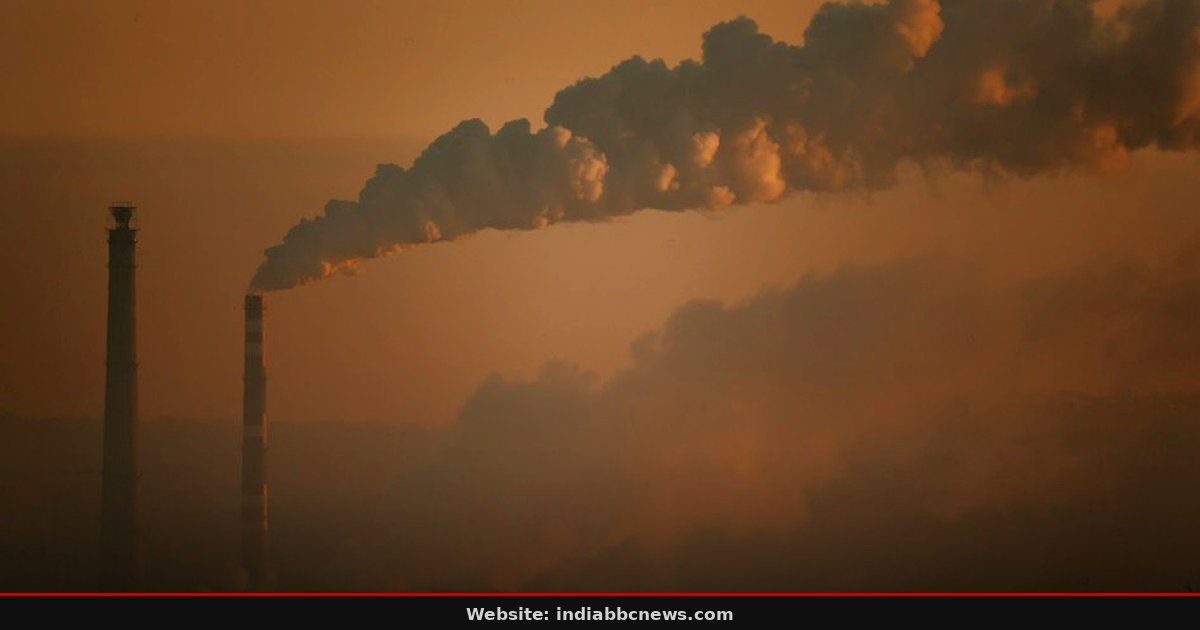
Carbon Emissions Dip 0.4% in 2026, But Scientists Blame War, Not Progress
The number is small. 42.2 billion tonnes. That is the total weight of carbon dioxide pumped into the atmosphere from burning fossil fuels in 2026, according to the Global Carbon Project. It is a 0.4% drop from 2025. A tiny blip on the radar.
Yet, the reason for the dip is not what you think it is. It did not happen because the world suddenly switched to solar panels or electric cars. It happened because an energy hub went dark. And no, we should not be celebrating this.
The War Variable
Let’s be clear about what drove this number down. The Global Carbon Project team, led by experts at the University of Exeter and others, points directly to the conflict in the Middle East. Specifically, the disruption of oil flows and industrial activity in the region during the height of the strikes. When infrastructure takes a hit, so does consumption.
It’s a grim arithmetic. Fewer barrels moved, less energy used, lower emissions. But calling this “progress” is a stretch, even by the loosest standards of climate reporting. The data shows a suppression of demand, not a reduction of supply or a shift in structure.
That’s a fragile foundation for any environmental claim. This is not the first time war has acted as a blunt instrument for carbon reduction. During the pandemic lockdowns of 2020, global emissions dropped by 5.4% as economies ground to a halt. We remember that now as a temporary pause, not a permanent solution. The post-pandemic rebound was sharp and immediate.
Economies restarted engines with a vengeance. There is a growing fear among climatologists that the 2026 dip will follow the same trajectory. Once the smoke clears and the markets stabilize, the burn rate will return. The question is not whether emissions will rise again.
It’s how fast they will come back. And is our transition infrastructure ready to absorb that shock, or are we about to watch the needle jump back up just as quickly as it fell?
Plateauing, Not Falling
Here is the uncomfortable truth that the headline glosses over. Global fossil fuel CO2 emissions have been flatlining for three consecutive years. 2024 saw a 0.8% increase. 2025 was nearly flat. Now, 2026 is down slightly. For decades, we assumed emissions would climb steadily as the world grew richer.
That assumption died around 2019. The line went horizontal. But a plateau is not a decline. It’s a stall.
It means we are generating energy as if the climate crisis isn’t happening, offset by tiny, inconsistent wins elsewhere. The major emitters — China, the US, and the EU — all saw stagnation, not deep cuts. China’s coal consumption, particularly, refused to drop despite massive renewable expansion. It’s a sign of a system stuck in first gear, revving hard but going nowhere.
Historically, a stable emission plateau is a warning siren, not a lullaby. It suggests that the easy transitions have been exhausted. The cheap, low-hanging fruit — efficiency gains, retiring old coal plants in the West — has been picked. What’s left is harder, more expensive, and politically messier.
Building new nuclear capacity. Retrofitting heavy industry. Changing how we fuel heating in northern climates. These are long-horizon projects.
They don’t show up in annual reports. They don’t make for punchy headlines. So we end up interpreting a 0.4% drop caused by war as a sign of hope. That’s a dangerous misreading.
The data doesn’t lie, but it needs context to be understood, and right now, the context is being ignored in favor of a simpler, false narrative of decline. India did not cause this 0.4% drop. In fact, India’s emissions likely grew modestly in 2026, driven by industrialization and energy demand that has outpaced new renewable capacity. However, the global dip offers a narrow window of relief for Indian policymakers. With global attention briefly diverted to the Middle East conflict, the pressure on India to accelerate its 2040 net-zero pathway may have eased slightly in diplomatic circles.
What This Means for India
This is not a victory. It’s a reprieve. Indian markets, particularly in the energy sector, should watch for a rebound in oil prices once the geopolitical situation stabilizes. If the Middle East energy hub remains damaged, Indian import costs could spike, squeezing the fiscal space needed for green subsidies.
The irony is thick. A war-driven carbon drop is bad for the global climate trust and bad for India’s energy security budget. It’s a lose-lose scenario that few are discussing loudly enough in New Delhi or Mumbai.
For Indian readers, the real takeaway is about vulnerability. Our energy mix is deeply dependent on imported oil and gas. When global supply chains wobble due to war, we feel it first in our pockets and then in our power grids. The 2026 data reminds us that we are not immune to global shocks, no matter how hard we try to insulate our market.
It also highlights a critical policy gap. India is betting big on becoming a hub for green hydrogen and solar manufacturing. But if global capital is diverted to reconstruction efforts in the Middle East and defense spending in the West, the financing for India’s green transition could dry up. That’s a harder sell to investors than it sounds.
We need to be very careful not to interpret this global dip as a sign that the race to net-zero is slowing down. It isn’t. It’s just paused. And pauses end.
The Renewable Illusion
We need to talk about what’s actually happening with renewables. Solar and wind generation hit record highs in 2026, for the first time exceeding 1 terawatt-hour daily on multiple occasions. That is a massive engineering achievement. But here’s the catch.
Those electrons only matter if they displace dirty ones. In many grids, they didn’t. Why? Because of inflexibility.
The coal plants that were supposed to ramp down when the wind blew kept running. Why? Because there wasn’t enough storage. Batteries are expensive.
Hydropower is seasonal. Interconnectors are slow to build. So we ended up with a surplus of clean energy that was curtailed or sold at negative prices, while the fossil fuel baseline remained stubbornly high. It’s a failure of grid integration, not generation.
We can build the panels. We can’t seem to build the brain to manage them.
This is the technical heart of the problem. It’s not about ideology. It’s about physics and economics. The grid is a real-time balancing act.
When solar peaks at noon, demand is often low. When coal is needed at night, the sun is gone. Without massive storage or demand response, the renewable energy sits idle. The 2026 data shows that we are producing more green energy than ever, but not reducing carbon as fast as we hoped.
That’s a nuanced distinction that gets lost in consumer marketing. It’s also a warning. If we don’t invest in grid modernization and storage, the next decade of renewable growth will be wasted. It will look like progress on paper, but the carbon curve will stay flat.
And flat is not good enough. We need a steep drop, not a plateau.
The Next Vote
So, what happens next? The next major data point comes in March 2027, when the Global Carbon Project releases its full annual report. That will include methane, a greenhouse gas far more potent than CO2 but shorter-lived. It will also break down emissions by sector for the first time in detail.
Watch that number. If the 2027 report shows a reversion to growth, it will confirm that the 2026 dip was a war anomaly. If it shows continued stagnation, the problem is structural and deep. In the meantime, the G20 climate summit in late 2026 is a key moment.
Leaders are expected to pledge on grid modernization. Will they move beyond words? That’s the question. The money needs to follow the policy.
And right now, the money is going to defense and reconstruction, not clean energy. That’s a resource allocation problem, not a technical one. We have the tools. We just haven’t agreed who pays for them.
And that’s where the real battle is. Not in the atmosphere, but in the treasury. The next 12 months will tell us if we can turn a war-driven dip into a policy-driven decline. If not, we’re back to business as usual.
And business as usual is what burned us into 2026. The drop, at 0.4%, was primarily driven by the disruption of economic activity and energy flows due to the conflict in the Middle East. It was not caused by a successful transition to renewable energy. It was a suppression of demand, not a structural change in energy supply.
Frequently Asked Questions
Why did global carbon emissions drop in 2026?
Is a 0.4% drop significant for climate goals?
Technically, any drop is better than a rise. But in the context of climate science, 0.4% is negligible. It is well within the margin of error for annual measurements. It does not change the long-term trajectory of warming unless it is part of a sustained, steep decline over the next decade.
How does this affect India’s energy sector?
India’s emissions likely continued to grow, but the global dip may offer a short-term reprieve from diplomatic pressure on India’s net-zero targets. However, the geopolitical instability that caused the drop also threatens to spike India’s oil import costs, squeezing the budget available for green energy subsidies. No, not at the speed required. While renewable generation hit records in 2026, grid inflexibility meant that coal plants continued to operate at high levels to balance the system. The lack of large-scale storage means that green energy is often curtailed, limiting its impact on total emissions.
Are renewable energy sources replacing coal successfully?
When will the next global carbon data be released?
The next comprehensive report from the Global Carbon Project is expected in March 2027. This report will include detailed breakdowns of methane and sector-specific data, providing a clearer picture of whether the 2026 dip was a one-off or part of a longer trend. Source: The Hindu International
Source: The Hindu International

