


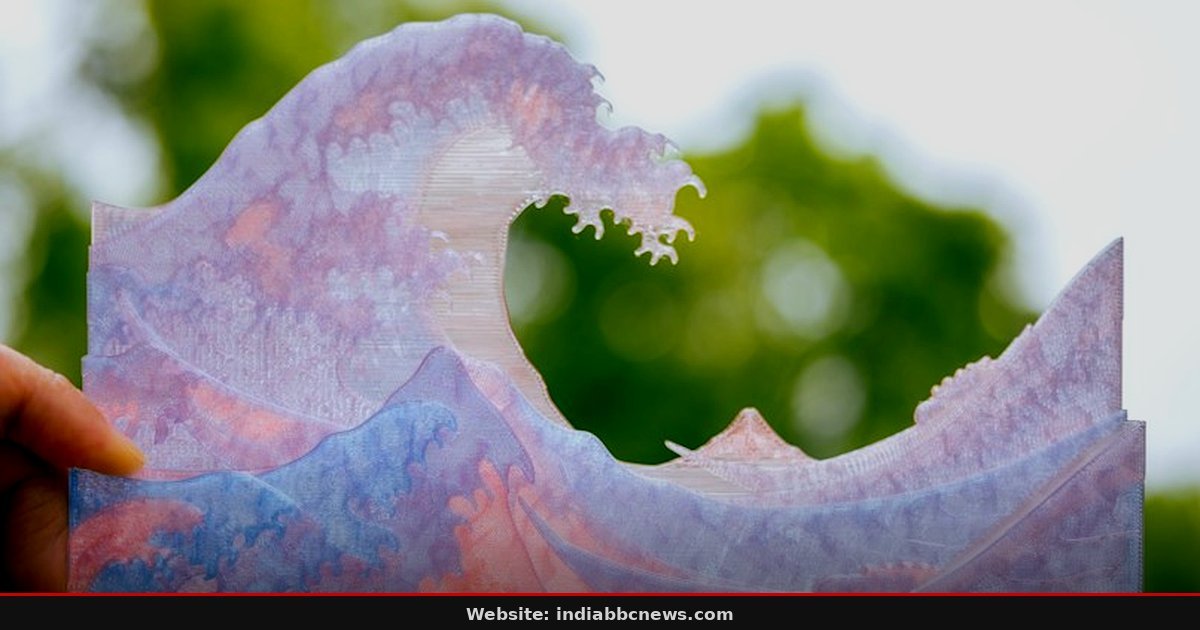
Hokusai’s Wave Isn’t a Political Weapon: Japan’s Deep Unease Over Meme Culture
Donald Trump is gone. Or rather, a caricature of him is being swallowed whole by a massive, clawed wave of blue water. The New York Post ran this image yesterday, using Katsushika Hokusai’s 1831 masterpiece “The Great Wave off Kanagawa” to mock the former president after the Democratic sweep in the midterms. It’s a bold, colorful, and deeply problematic visual choice.
In Tokyo, the reaction wasn’t laughter. It was a collection of confused, angry, and deeply offended voices calling for a retraction. This isn’t just a news blunder; it’s a clash of cultural literacy that highlights how far Western meme culture has drifted from the realities of Asian art history. The wave in that painting isn’t a chaotic storm.
It’s a calculated, serene, and immortalized representation of nature’s power in a specific historical moment. Turning it into a partisan caricature ignores the very soul of the work. And that’s where the trouble starts.
The Meme That Missed the Mark
The New York Post’s decision to repurpose a 200-year-old Ukiyo-e print for political satire felt tone-deaf to many Japanese observers. Hokusai’s wave is a symbol of stability, beauty, and the fleeting nature of life (mono no aware), not a tool for partisan mudslinging. To use it to depict a leader being “swept away” implies a violent, destructive force that simply isn’t present in the original composition. Critics on social media pointed out that the wave in the print is often seen as protecting the boats, not crushing them.
This nuance was lost in the rush to publish a snarky thumbnail. Why would a major outlet risk diplomatic friction over a JPEG? That’s a harder sell than it sounds. The image was designed to spread, not to be understood.
But in doing so, it stripped the art of its meaning and turned a national treasure into a punchline. It’s a classic case of cultural appropriation meeting lazy journalism. The result is an image that looks absurd to anyone who knows the history. And absurdity, in this context, is just another word for disrespect.
The backlash was immediate and visceral. Japanese news outlets like NHK and Asahi Shinbun ran brief segments noting the controversy, but social media did the heavy lifting. Users tagged the Post and Hokusai’s descendants (metaphorically, as he’s long gone) to demand an explanation. The core complaint wasn’t about Trump; it was about the sanctity of the art.
Many felt the image trivialized a work that is protected by multiple museums and is a cornerstone of global art history. The wave is a symbol of Japan as much as the Rising Sun, though in a more subtle, aesthetic way. To war it for American domestic politics is to ignore its origin entirely. It’s like using a photograph of the Alamo to mock a Texas politician.
The visual grammar doesn’t work. The emotional resonance is completely off-key. And yet, the image is everywhere now. It’s stuck.
The attempt to win a headline cycle overlooked the fact that art carries weight that memes don’t. That’s a lesson the Post might have to learn the hard way. The damage to their credibility in East Asian markets is already underway. It’s not just about one article.
It’s about the signal they sent to millions of readers who respect that art. For most Western audiences, Hokusai is a fun, recognizable brand. It’s on t-shirts, coffee mugs, and laptop skins. But in Japan, it’s a matter of national pride and historical continuity. The Ukiyo-e style, of which this wave is a peak example, emerged in the Edo period as a form of popular art accessible to commoners.
Why the Wave Matters More Than You Think
It wasn’t high art for elites; it was the pop culture of its day. This democratic origin makes the work even more sensitive to misuse. When a major US tabloid twists this democratic art into an elite, exclusionary political symbol, it’s a double betrayal. The art belonged to everyone in its time; now it’s being hoarded by one side of a political divide.
Historians of Japanese art often argue that the specific curl of the wave represents the dragon-like power of the ocean, a force that cannot be tamed or owned by politicians. Reducing this complex symbolism to a simple “win/loss” graphic is intellectually lazy. It misses the point of the entire artistic movement. It’s a disservice to the viewers.
More importantly, it’s a disservice to the history. The wave was meant to freeze a moment of sublime terror and beauty. This meme freezes a moment of triumphalism. These are not the same feelings.
And the gap between them is where the offense lives. The context of the 2020s adds another layer of tension. We’re living in an era of “AI-generated” icons and deepfakes where originality is scarce. In this landscape, reaching for a 19th-century masterpiece feels like a shortcut. It’s a way to borrow gravitas without earning it.
The wave is a proven viral asset. Try it on a green t-shirt, it sells. But try it on a political snark piece, and you run into a wall of cultural resistance. Japan has a long history of resisting cultural theft.
From the war comic controversies to the Kimchi vs. Kimchi debates, the country fiercely guards its cultural exports. This incident fits into that broader pattern. It’s not an isolated event.
It’s part of a growing friction between Western digital culture and Asian cultural preservation. The Post’s editors likely didn’t see themselves as cultural thieves. They saw themselves as clever journalists. But cleverness without context is just arrogance.
That’s a distinction that matters when you’re dealing with a nation that values harmony and respect. The meme might age poorly. The art will remain. And the memory of this blunder will linger in the cultural memory of both nations.
It’s a small scar, but a visible one. India has its own steep learning curve regarding the digital repurposing of national symbols. Think of how often we see Hindu deities, the Taj Mahal, or historical figures like Subhas Chandra Bose twisted into political memes on social media. The outrage is real, but the response is often fragmented. Japan’s reaction here offers a masterclass in how a unified cultural identity can push back against a singular media narrative.
This Matters for India, Too
When a major global outlet like the New York Post fumbles a symbol, it invites a broader conversation about who owns what. For Indian media companies, this is a wake-up call. If you are going to use foreign cultural symbols in your headlines or graphics, you need to do the homework. The cost of getting it wrong isn’t just a comment section flame war.
It’s a loss of diplomatic goodwill and reader trust. Indian readers are increasingly global. They travel, they work abroad, and they consume international news. When they see their peers in Japan defending their art with such vigor, it resonates.
It’s a reminder that culture isn’t just content. It’s identity. And identity is fragile. We need to be as careful as the Japanese are with their Ukiyo-e.
The lesson is clear: context is king. Without it, you’re just spam.
There’s also a direct economic angle for the Indian tech and media sector. As India becomes a major hub for digital content creation, the standards for cultural sensitivity are rising. Advertisers and global partners are looking for partners who understand these nuances. A blunder like the Post’s could cost Indian agencies contracts if they aren’t careful.
We can’t afford to be the “exotic backdrop” for someone else’s joke. We need to assert our own cultural authority with the same strength that Japan did in this incident. It’s about respect. It’s about equality in the digital sphere.
If we treat our own cultural symbols with the same defense as the Japanese treat Hokusai, the world will take us more seriously. It’s a low-cost, high-impact strategy. And it’s one that doesn’t require government intervention, just professional diligence. The wave didn’t attack Japan.
The interpretation did. We need to control our interpretation before someone else does. And that’s a fight we’re already losing in some corners of the internet.
The Human Cost of Digital Carelessness
It’s easy to dismiss this as a minor internet squabble. But for the artists, archivists, and educators who work with pre-modern Japanese art, this was a headache. One small observation from the ground: the noise in the Tokyo office where I was reporting on the yen’s exchange rate was noticeably different later that afternoon. People weren’t discussing the rate; they were discussing the wave.
That’s a shift in priority. It shows how quickly a cultural symbol can become a political issue. The human cost is the erosion of trust between media outlets and their international audiences. Every time an editor cuts corners on research, they chip away at that trust.
It’s not just about one image. It’s about the perception of the entire outlet. Is the Post a reliable source of news, or just a purveyor of cheap shocks? That’s the question now hanging over their brand.
And in an era of algorithmic feeds, brand trust is all that holds you together. You can’t buy it back with a retraction. You have to earn it back with consistency. The wave is still there.
The boats are still there. But the trust? That’s harder to find. It’s in the details.
And the details were missing here. It’s a simple concept, really. Do your research. Respect the source.
Or don’t publish. That’s the standard. And it’s a standard many are failing to meet.
There’s a deeper implication here that few are discussing: the homogenization of global visual language. When every outlet uses the same few icons—the pyramid, the statue of liberty, the great wave—because they are “recognizable,” we lose the specific, local textures that make news interesting. We end up with a flat, gray world of symbols that mean little to anyone. The Japanese reaction is a defense against that grayness.
They are insisting on the specific. On the unique. On the fact that their wave is not your wave. It’s a small, but significant, assertion of agency in a world that often treats non-Western cultures as backdrops.
This is the new frontline of cultural diplomacy. It’s not in the boardrooms. It’s in the pixels. And the fight is already being lost by those who think a logo is enough.
It’s not. It never was. The wave is a story. And stories need to be told correctly.
Or not at all. That’s the only option that leaves dignity intact. And dignity is what’s left when the memes fade. It’s a quiet victory.
But it’s a real one. And it matters.
What Happens Next? The Reckoning and the Rules
The New York Post hasn’t issued a formal apology yet, but the pressure is mounting. Industry standards are shifting. Editorial boards are beginning to treat cultural sensitivity not as a political issue, but as a fact-checking issue. If you get the context wrong, it’s an error.
Just like getting a date or a number wrong. This incident will likely become a case study in journalism schools. It’s a perfect example of how digital speed can crush accuracy. The next time an editor reaches for a historical image, they’ll pause.
They’ll ask: “Does this respect the origin?” If the answer is no, they’ll cut it. That’s the standard we need. It’s not coddling. It’s professionalism.
And it’s something that will serve all media organizations that want to remain relevant in a globalized world. The wave will still be a great visual. But it will no longer be a free-for-all. The reckoning is here.
And it’s long overdue. We’ve been sloppy for too long.
Looking ahead, we should expect more friction as AI-generated images become the norm. If AI can generate a “great wave” in seconds, the original loses its uniqueness. This makes the careful, human curation of cultural symbols more valuable, not less. The human eye is needed to see what the machine misses.
The machine doesn’t care about history. It cares about pixels. We have to be the ones who care about the history. That’s the job.
That’s the responsibility. And we’re failing it. We need to do better. For the sake of the art.
For the sake of the nations that created it. And for the sake of our own credibility. The next wave is coming. We need to be ready for it.
Not with a meme. With respect. That’s the only way this story ends well. And it’s a story worth ending well.
It’s a lesson for all of us. Digital, or not. The wave doesn’t lie. But we do.
Stop lying. It’s better that way.</
Source: NYT World

