


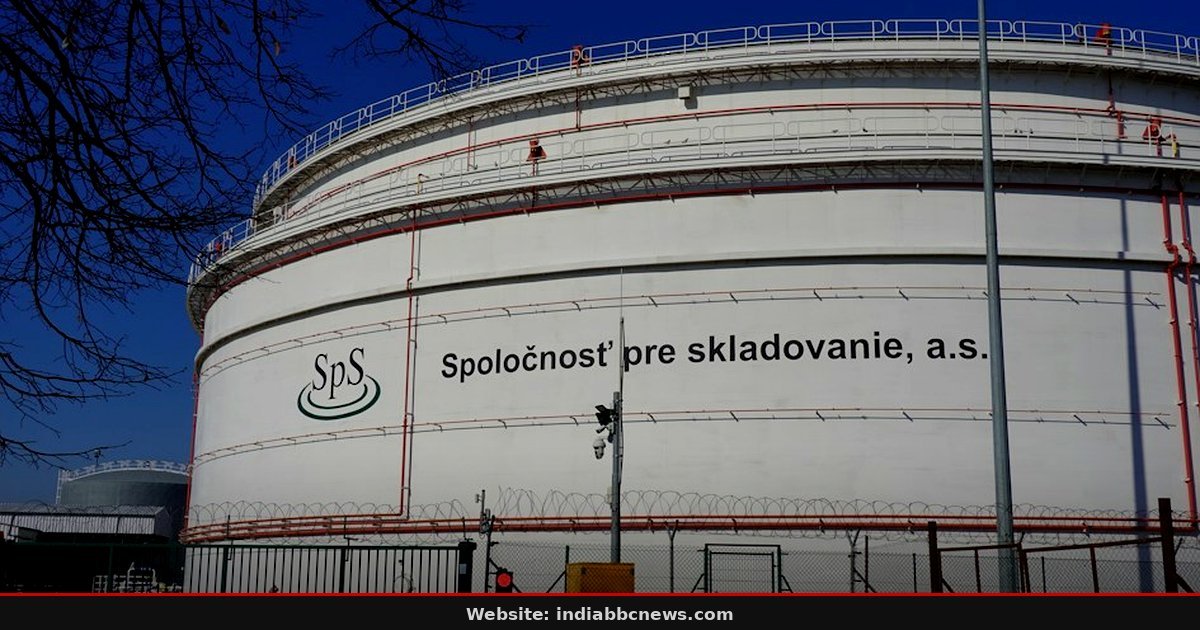
Walvis Bay, Namibia. The sun hits the massive steel tanks of the new Dangote Fuel Terminal right on the nose, reflecting a glare you can see from the highway. It is finished. The $2.5 billion facility, once a speculative line in a boardroom deck, is now concrete reality on the Atlantic coast.
This is the largest private fuel storage investment in Southern Africa’s history. Aliko Dangote, the Nigerian billionaire, didn’t just buy land here. He bought time. Time for a region that has been plagued by fuel shortages, price spikes, and logistical nightmares for the better part of a decade.
Steel Tanks Against Speculative Chaos
Dangote Group officials told reporters that the terminal will store 500,000 metric tons of petroleum products. That is a lot of diesel and gasoline sitting in one place, ready to go. The facility includes terminals for jet fuel, diesel, and motor petrol, all connected to the existing Walvis Bay port infrastructure. Before this, Namibia relied heavily on imports from Angola and other sources, but those pipelines are often plagued by maintenance issues and political friction. Now, the fuel sits in Namibia, under Nigerian capital and management.
It is a bold move, some might say reckless, but it fits a pattern. Dangote has spent the last 5 years pouring capital into West and East African energy infrastructure. He built a refinery in Nigeria that changed economics on paper if not always in practice. Here in Namibia, the logic is simpler.
Storage is the bottleneck. If you can store the fuel, you control the flow. You stop being a victim of just-in-time delivery failures that leave truckers idling at borders. Nobody in the room looked convinced that this would be a quick profit center.
They looked convinced it was a necessity. Walvis Bay is not just a port. It is the only deepwater port in the Namib Desert, serving both Namibia and neighboring landlocked Zambia through the Trans-Kariba Corridor. For years, Namibia has struggled to tap into this potential because it lacked the storage capacity to handle large-scale transshipment. This new terminal changes that equation entirely.
The Walvis Bay Logistics Pivot
It allows for bulk imports to arrive, sit there, and be distributed to Zambian and Namibian consumers on a scheduled basis rather than a panicked one. That is a harder sell than it sounds, given the existing infrastructure debt in the region.
But the geography is inexorable. Zambia needs oil. It has no coast. Namibia has the coast.
The connection between the two has historically been fragile. By embedding $2.5 billion of assets in that corridor, Dangote is betting that the flow of goods will stabilize. He is betting that the political will to keep the corridor open will outlast any single government. It is a gamble.
But it is a calculated one, based on the simple fact that fuel is oxygen for modern economies. Without it, everything stops.
What This Means for India
Indian energy traders should take note. The stability of the Namibia-Zambia corridor directly impacts the cost of fuel in Southern Central Africa, a market where Indian business interests are growing rapidly. Indian companies are increasingly looking at Southern Africa for critical minerals like lithium and copper, resources essential for the global EV battery chain. If fuel prices spike due to logistical failures, the cost of extracting and shipping these minerals goes up.
That makes Indian downstream manufacturers less competitive globally. This terminal is not just a storage tank. It is a stabilizer for the supply chains that Indian heavy industry depends on. A fuel crisis in Walvis Bay is a supply chain shock in Gujarat and Maharashtra.
There is also a strategic angle. As India pushes its “Act East” policy, it is also deepening ties in Africa. The Dangote model—private sector investment in critical infrastructure where state capacity is low—is precisely what Indian policymakers are studying. India cannot afford to lead all these projects itself.
It needs partners who are willing to take the risk. Dangote has shown he will take the risk. That makes him a potential partner for Indian energy firms looking to enter the African market without waiting for government-to-government deals to fall into place. It is a bridge, not just a business deal.
The Regional Reaction
Namibian officials have praised the investment, calling it a boost to the national economy. The Ministry of Energy and Water confirmed that the facility will be integrated into the national grid of fuel distribution. This is significant because it means the state will have a more predictable source of supply for its own needs. Previously, when imports failed, the government had to dip into emergency reserves or import spot cargo at ruinous prices.
That era might be ending. But the opposition has questions. They want to know about the tax terms. You can bet they will dig into the concession agreements.
Transparency will be the next battleground, after the steel is poured. Neighboring countries are watching closely. Botswana and South Africa have their own storage challenges, though they are more robust. The success of the Walvis Bay terminal could trigger a regional race to build similar facilities. If Namibia can do it, why can’t they?
It is a competitive dynamic. It keeps prices in check, theoretically. But it also fragments the market. Suddenly, you have multiple players with massive storage capacity, each with their own pricing algorithms.
That is good for consumer choice. It is complicated for regulators. And it is a shift from the old monopoly models that prevailed in the 90s.
Dangote’s Long Game
Aliko Dangote is 68 years old. He has been in the sugar business, the cement business, and now the fuel business. He is not an entrepreneur in the Silicon Valley sense. He is an industrialist in the old-world sense.
He builds things. He builds them big. And he builds them to last. This terminal is not a speculative IT startup.
It is a piece of infrastructure that will likely be operational for 40 or 50 years. That is the timeline he is working on. It is a timeline that ignores electoral cycles. It is a timeline that ignores currency devaluations.
That is what makes it scary, in a good way. He is playing the long game while others play the short one.
The launch event was low-key, despite the massive scale of the project. There were speeches, as you would expect. But then there was the tour, where officials showed the media the tank farms. And the sheer size of it is hard to describe.
It is a landscape of steel. It is a statement. An And a warning to competitors: this market is now being claimed. The era of fuel scarcity in Southern Africa is not over yet.
But it is being fought with better weapons. And those weapons are made of steel and capital. To solve the chronic fuel shortage issues in Southern Africa by providing massive storage capacity. It ensures a steady supply even if import pipelines or shipping lanes are disrupted. It is a hedge against logistical instability.
Frequently Asked Questions
Why did Dangote build a fuel terminal in Namibia?
How much does the Walvis Bay fuel terminal cost?
The total investment is $2.5 billion. This makes it one of the largest private sector energy projects in the continent’s history. The cost covers the tanks, the pipelines, the port connections, and the land.
Does this project affect fuel prices in India?
Not directly in terms of consumer pricing. However, it stabilizes the critical mineral supply chains in Southern Africa that Indian industries rely on for raw materials. Lower logistical friction in Africa helps keep global commodity costs predictable for Indian manufacturers.
Who operates the Dangote fuel terminal?
The Dangote Group will own and operate the facility. It is a fully private venture, though it works in coordination with the Namibian government for regulatory compliance and national security. The local workforce will be hired to run day-to-day operations.
Is this terminal the same as the Dangote Refinery in Nigeria?
No. The Nigerian refinery is for processing crude oil into fuel. The Namibia terminal is purely for storage and distribution. It does not refine anything. It acts as a buffer zone for fuel arriving by ship or pipeline to be distributed locally.
Source: Al Jazeera
Source: Al Jazeera

