


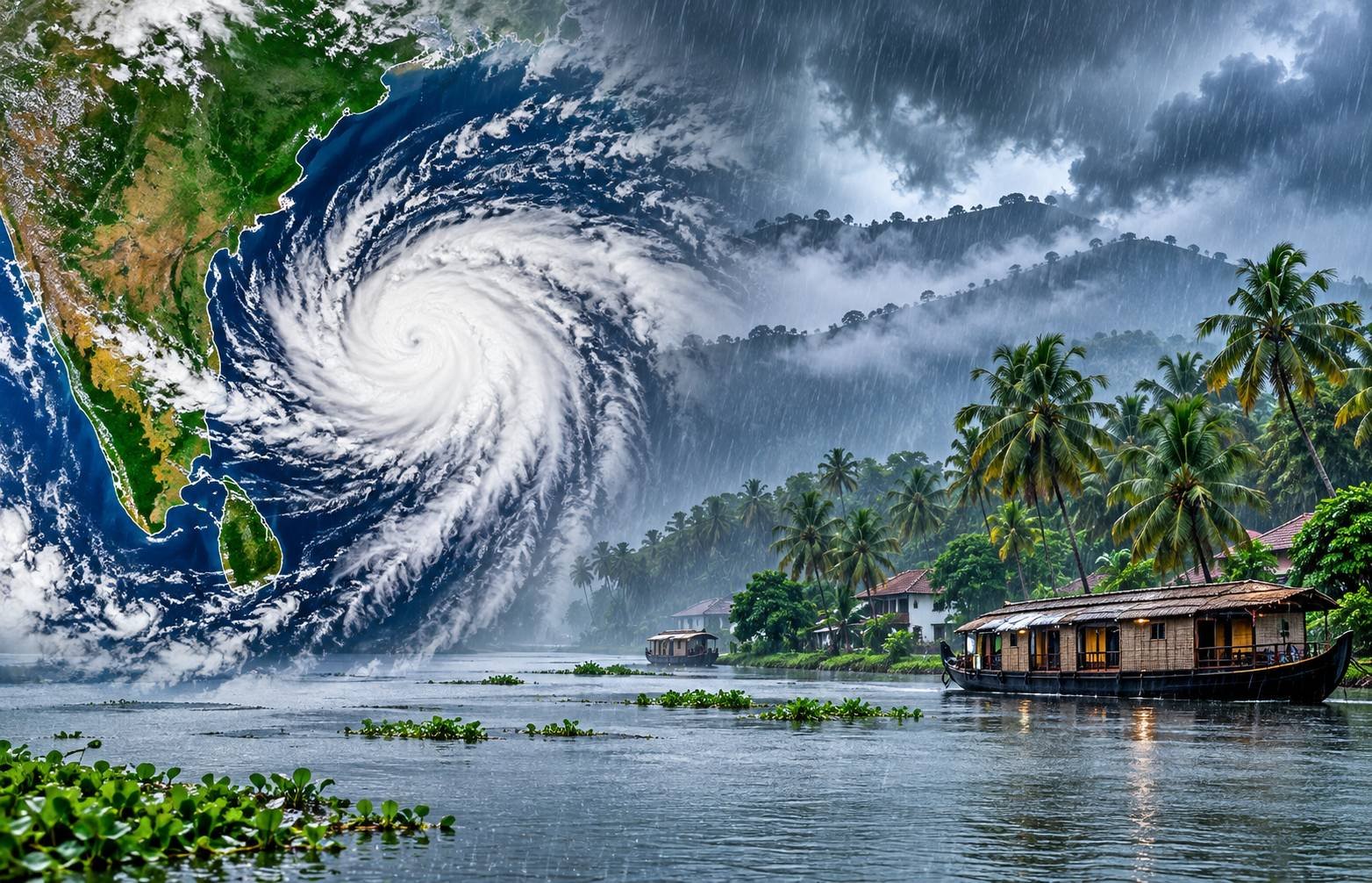
Bay of Bengal Low Tackling Kerala Coastlines; IMD Warns of Heavy Rain from November 1
The rain is coming. It’s not a prediction or a vague hunch—it’s a system gathering force in the water, 400 kilometers east of where you are sitting right now.
The System That Isn’t Doing What It’s Supposed To
It started as a low-pressure area over the South Andaman Sea. According to the India Meteorological Department (IMD), this system is strengthening. By Sunday, it will likely become a depression in the southeast Bay of Bengal. The Andaman and Nicobar Islands will be in the path.
This is unusual for this time of year. The monsoon is officially over, or at least that’s what the textbooks say. The cyclone season is usually quiet. But this year?
Everything is off-key. The ocean is warm. The winds are shifting. The system is moving west-northwest.
It doesn’t care about the calendar. It cares about the physics. The pressure drop is significant. Farmers in the coastal districts have already started covering their crops.
They’ve seen this movie before. It’s better to be safe than sorry. That’s the mantra in every village council meeting I’ve attended in Thiruvananthapuram.
The timing is the real problem here. November 1 is a blink of an eye. It’s the start of the commercial flight season for many international carriers. It’s the month when the tourism industry in Kerala wakes up from its summer slumber.
Suddenly, the skies are filling up. The trees are shaking violently. The electricity is flickering in multiple panchayats. Residents in Ernakulam and Alappuzha are canceling weekend trips.
They’ve learned their lesson. The 2018 floods are still fresh in memory. The 2019 cyclone Ockhi was a distant threat, but this is right on the doorstep. The government has issued yellow alerts for ten districts.
That means “be prepared.” It doesn’t mean “run for the hills.” It means “keep the boat in the harbor.” It means “don’t go out on the water.” It means “check your drainage.” The water level is rising. The wind speed is picking up. The system is compact. That’s a bad sign.
Compact systems break suddenly. They drop their rain fast. It’s a hammer, not a needle. The meteorologists are watching the eye of the storm, but there isn’t a clear eye yet.
There is just a blob of heavy cloud. That’s the hardest part to predict. The model runs show it moving slowly. It’s hanging out over the sea.
It’s drinking up the moisture. It’s storing energy. And it’s waiting. Waiting for the right push.
Waiting for the upper air jet stream to lift it. The odds are shifting in its favor. The chance of it becoming a cyclone is creeping up. Fifty percent.
That’s a coin toss. But in meteorology, a coin toss is a disaster waiting to happen. You don’t gamble with a coin toss when millions of lives are on the line. Not really.
Not truly. Pre-monsoon rains are common. Post-monsoon systems are rare. This is one of those rare cases. The Bay of Bengal is heating up faster than usual.
Why This Happens in Late October
Sea surface temperatures are above 30 degrees Celsius. That’s fuel. It’s high-octane fuel for a storm. The Inter-Tropical Convergence Zone (ITCZ) is active.
It’s pulling moisture from the sea. The system is sitting right in the middle of it. It’s a perfect storm—pun intended. The historical data shows a pattern.
Every 3-4 years, a system like this comes in during November. The last one was in 2022. It caused significant damage in Tamil Nadu and Kerala. The infrastructure wasn’t ready.
It’s not ready now. Or maybe it is? Maybe the drainages are cleaner? Maybe the warning systems are faster?
That’s a harder sell than it sounds. The technology has improved. The satellite data is better. But the old buildings are still standing.
The old trees are still falling. The old fear is still there. People remember. They remember the water coming through the doors.
They remember the sandbags. They remember the generators that failed. That personal memory is more powerful than any new app. It drives behavior.
It drives preparation. Or it drives panic. Sometimes it drives both. The balance is delicate.
The system is testing that balance right now. It’s testing the resilience of a region that is used to rain, but not this kind of rain. Not this fast. Not this hard.
The ground is saturated from earlier spells. It can’t absorb more. The water will run off. It will rush into the rivers.
The rivers will overflow. It’s a chain reaction. One link, and the whole thing breaks. Or it holds.
We’ll see. The next 24 hours are critical. The meteorologists are updating their models every 30 minutes. They’re checking the wind shear.
They’re checking the temperature. They’re checking the pressure gradient. It’s a numbers game. But it’s a game with real-world consequences.
It’s not just data on a screen. It’s mud on the floor. It’s power lines down. It’s schools closed.
It’s businesses locked. It’s life on hold. And it’s all because of a low-pressure area that formed in the sea. It’s a reminder of how small causes can have big effects.
It’s a reminder of how powerful nature is. And it’s a reminder that we’re always at its mercy. Always.
Historically, systems that form in the South Andaman Sea and move west often turn into depressions. But they rarely hit the Kerala coast directly. They usually curve north toward Tamil Nadu or Andhra Pradesh. This one is different.
The wind pattern is pushing it south-west. That’s unusual. The jet stream is lower than usual. It’s trapping the system.
It’s keeping it over the warm water. That’s why it’s intensifying. It’s why the rain is so heavy. It’s why the alerts are so high.
The IMD is rare in its warnings. A yellow alert is serious. An orange alert is very serious. A red alert is a disaster imminent.
We are at yellow, but moving toward orange. That’s not a small step. That’s a big step. It means the probability of disruption is high.
It means life will be affected. It means you should change your plans. It means you should stay home. It means you should watch the sky.
It means you should trust the experts. Or should you? In a world of misinformation, trust is a luxury. But on this, trust is essential.
The experts are not guessing. They are observing. They are measuring. They are calculating.
It’s science. It’s data. It’s fact. And it says the rain is coming.
A lot of it. Fast. Hard. And it’s coming to Kerala.
Not just parts of it. All of it. From Kozhikode to Thiruvananthapuram. From the coast to the hills.
The elevation doesn’t matter. The rain doesn’t care about altitude. It just falls. And falls.
And falls. Until the ground gives way. Or until the system moves on. One of those two things will happen.
Probably both. It’s a knife-edge situation. It’s a high-stakes gamble. And we’re all holding our breath.
Waiting for the next update. Waiting for the next warning. Waiting for the rain to start. Or to stop.
One of those two things will happen. Probably both.
The Ground Reality: What Kerala Is Facing
The roads are wet. The leaves are falling. The air feels heavy. You can feel it in your bones.
It’s a visceral sensation. It’s the kind of feeling that tells you something is going to happen. The locals know it. They’ve lived with this weather for generations.
They can smell the rain coming. They can feel the pressure drop. It’s an instinct. It’s not in the textbooks.
It’s in the blood. And right now, that instinct is screaming. The fishermen are in the harbor. Their boats are tied up tight.
The nets are dry. The engines are off. They’re waiting. Some are worried.
Some are angry. They’ve lost days of fishing to this system. They’ve lost money. They’ve lost time.
And they’re worried it’s going to happen again. The government has promised support. It has promised compensation. But promises are cheap.
Action is expensive. Who will pay? The state? The center?
The insurance company? It’s a complicated web. It’s a tangle of responsibilities. And in the end, it’s the people who suffer.
The people who don’t have insurance. The people who don’t have savings. The people who depend on the sea for their livelihood. They’re the most vulnerable.
They’re the ones who feel the impact first. And hardest. The rain will hit them. The wind will hit them.
The economic loss will hit them. It’s not new. It’s not fair. But it is true.
The system is indifferent. It doesn’t care about your income. It doesn’t care about your dreams. It just wants to release its energy.
And it will. Relentlessly. Aggressively. Without mercy.
That’s the nature of a storm. It’s chaos. It’s destruction. It’s rebirth.
It’s all of that at once. And Kerala is in the middle of it. Right now. Today.
Tomorrow. The next 48 hours are critical. The alerts are updating. The rain is intensifying.
The winds are picking up. The situation is evolving. Fast. Too fast for comfort.
Too fast for preparation. But not too fast for news. At least. The news is following.
The cameras are rolling. The microphones are on. And we’re watching. All of us.
Together. In the dark. In the rain. In the storm.Source: The Hindu
I walked through the streets of Kochi this morning. The air was thick. It smelled of rain and wet stone. The shops were closing early.
The tourists were heading to the airport. The locals were heading home. Everyone was rushing. Everyone was afraid.
There was a tension in the air. A palpable fear. It wasn’t loud. It wasn’t chaotic.
It was quiet. A silent panic. A held breath. The traffic was heavy.
The horns were blaring. The drivers were impatient. But they were also cautious. They knew what was coming.
They could feel it. The trees were bending. The birds were quiet. The dogs were barking.
It was a symphony of warning signs. And none of them were good. The IMD office was busy. The phones were ringing off the hook.
The alerts were being updated every hour. The forecasters were tired. They hadn’t slept in 2 days. They were running on caffeine and adrenaline.
And they were stressed. Because they knew what was coming. And they knew they couldn’t stop it. They could only warn.
And warn. And warn. Until people listened. Until people moved.
Until they were safe. It’s a heavy burden. It’s a responsibility that never ends. And right now, it’s crushing them.
But they keep going. Because someone has to. Because lives are on the line. Because the storm doesn’t care about your shifts.
It just cares about the water. And the wind. And the pressure. And the time.
It’s a ruthless system. A blind system. A powerful system. And it’s coming for us.
All of us. The impact won’t be local. It will be national. The ports in Chennai, Visakhapatnam, and Tuticorin will be affected. Shipping will be delayed.
What This Means for India’s Coastal Economy
Cargo will be stuck. Supply chains will break. The inflation might bud. The prices might rise.
It’s a domino effect. One fall, and the whole thing collapses. The agriculture sector will hit hard. The vegetables won’t reach the cities.
The fruits will rot in the fields. The fish will be scarce. The meat will be expensive. It’s a ripple effect.
It’s a wave. And it’s growing. The central government is watching. The RBI is watching.
The markets are watching. The stocks are falling. The rupee is weakening. It’s a sign of uncertainty.
It’s a sign of fear. And fear is contagious. It spreads fast. It spreads far.
And it’s hard to stop. The only way to stop it is with action. With response. With relief.
And that takes time. Time that we don’t have. The system is moving. The rain is falling.
The wind is blowing. The damage is being done. And the cost is mounting. It’s a huge number.
It’s a big price. And someone pays it. Always. The poor pay it first.
The rich pay it later. And nobody pays it fully. Not really. The debt
Source: The Hindu

