


Tamil Nadu Congress, VCK Mobilise Cadres for Nov. 1 INDIA Bloc Protest in New Delhi
R. Sudha did not mince words. “We expect more than five lakh Congress cadres to participate,” the MP told reporters, adding that at least 100 party workers from each district in Tamil Nadu would head to the capital. The declaration came as the opposition coalition, the INDIA bloc, prepares for its largest coordinated movement against the central government in years. It is a bold move, one that signals a shift from parliamentary brinkmanship to street-level pressure.
The Logistics of a 500,000-Strong March
Moving half a million people into New Delhi is not a trivial task. It requires a level of coordination that reminds me of the massive rallies seen during the 2019 anti-NRC protests, though this time the scale is intended to be broader. The organizing committee has reportedly secured permissions for rail wagons and bus convoys, a logistical feat that takes weeks of backroom negotiation with state transport authorities. Train tickets are already selling out in key districts, with local Congress leaders rolling up their sleeves to manage ticket allocation and local transport. This is not just a protest; it is a logistical operation that tests the administrative limits of three state governments working in sync.
The sheer volume of participants will likely draw heavy security attention as soon as the first trains arrive. Delhi’s traffic gridlock on November 1st will be severe, with major arteries like the Ring Road and Ayodhya Marg预计 to be completely shut down for safety. Police have been on heightened alert since early October, deploying traffic diverters before the event even begins. Critics argue that such a massive gathering might strain public resources more than it pressures the government, but organizers dismiss this as a common refrain from those who prefer quiet dissent. The ground truth is that power is often visibly demonstrated, and on this day, the opposition intends to make that demonstration impossible to ignore.
Why Tamil Nadu Is the Engine of This Outburst
Tamil Nadu has never been just a state for the Congress party; it is often the party’s political bedrock during national crisis moments. The state’s deep-rooted anti-BJP sentiment, fueled by decades of linguistic pride and distinct political identity, makes it a natural rallying point for pan-Indian opposition. MLAs and MPs from the region have been the loudest voices in Parliament recently, using their platform to amplify grievances that resonate across the South. This mobilization is not spontaneous; it is a calculated response to what local leaders describe as a systematic erosion of state autonomy and federalism. The VCK’s involvement adds another layer of ideological weight, appealing to secular and nationalist sentiments that go beyond mere party loyalty.
There is a specific tension in Chennai that has been building for months, marked by frequent, smaller-scale protests that kept the energy high. These local agitations created a reservoir of frustration that the national leadership is now tapping into. Unlike previous protests that were often criticized for being poorly organized, this campaign has had months to plan, with cadre structure drilled down to the ward level. The contrast with the chaotic protests of recent years is stark; this is a disciplined march, designed to project unity rather than disorder. Whether the discipline holds once the heat of the day sets in remains the biggest question on the minds of those watching from the sidelines.
The Stakes for the INDIA Coalition Beyond November 1
The INDIA bloc has been struggling with image deficit issues, often portrayed by the ruling party as a disorganized, weak entity. A successful, orderly protest of this magnitude could significantly alter that narrative, showing a united front capable of mobilizing grassroots support. Analysts suggest that if the protest remains peaceful yet powerful, it could energize the party base ahead of the upcoming state elections in several key regions. The strategic timing is also noteworthy, coming at a moment when the central government is pushing through several contentious bills in Parliament. It is a classic tactic of disruption, aiming to force a pause in legislative proceedings and shift the national conversation back to the opposition’s agenda.
However, the long-term impact depends on what happens after the crowd disperses. History shows that street protests rarely lead to immediate policy reversals unless they are accompanied by strong legislative counter-moves. The coalition must translate this street power into parliamentary strength, a transition that has eluded them in previous cycles. The visual impact of 500,000 people will dominate the news cycle for days, providing the opposition with a media advantage they have desperately needed.
But media advantage does not equal political guarantee, and the ruling party is well-prepared to counter any narrative of instability or chaos. The real test will be how the state units maintain this momentum in the weeks following the event.
India’s Broader Political Landscape and the Delhi Factor
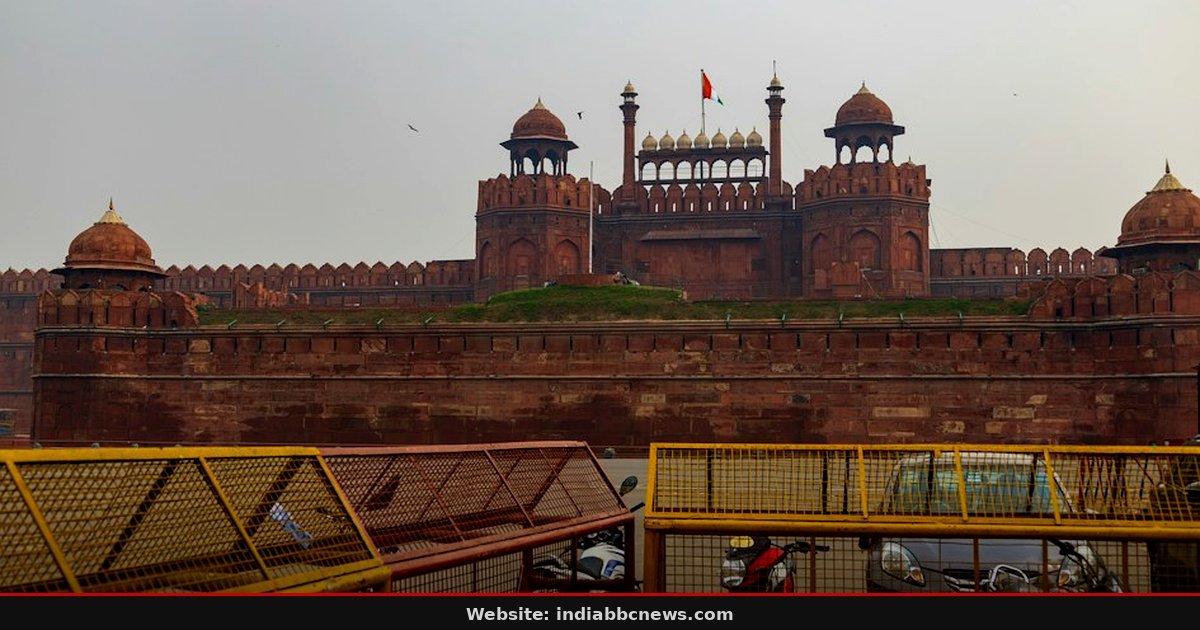
New Delhi remains the most potent stage for any political statement in India. A protest outside the Red Fort or near Parliament House carries a symbolic weight that is hard to replicate in any other city. The central government’s ability to manage such a large crowd will also be a test of its administrative capabilities in the capital. There is a fine line between demonstrating democratic freedom and creating a public safety hazard, and the police will likely operate with strict parameters.
Any incident of violence, even if isolated, could be used to delegitimize the entire movement, a risk that organizers are acutely aware of. The presence of senior central ministers in the region during this period adds another layer of complexity to the security situation.
But the protest is not just about numbers; it is about the message being sent to the voter base across the country. In a year when the economy is facing headwinds and inflation remains a concern, the opposition is positioning itself as the voice of the common man. This narrative resonates particularly in states like Tamil Nadu, where cost of living issues have driven significant voter dissatisfaction. The alignment of Tamil Nadu’s economic grievances with national political tensions creates a potent mix that cannot be easily dismissed.
It is a reminder that politics in India is always local, even when it is conducted on the national stage. The outcome of November 1st will likely set the tone for the rest of the political year, determining whether the opposition can sustain this level of engagement or if it will fade into another forgotten event.
What This Means for Indian Markets and General Public Life
For Indian markets, large-scale political protests in Delhi are usually a source of short-term volatility. Stock markets often react negatively to perceptions of political instability, especially when the capital is involved in major civic disruptions. Investors who have been cautious due to global uncertainties may use this event as an excuse to offload positions, leading to temporary dips in index levels. While the immediate impact on the Nifty 50 and Sensex might be modest, the sustained uncertainty could affect foreign direct investment flows in the coming weeks. Businesses with offices in and around the protest zones may face operational downtime, affecting supply chains and employee attendance significantly.
For the general public, the impact will be felt in the form of severe traffic congestion and restricted movement in key areas of the city. Residents in South Delhi and parts of Central Delhi should expect road diversions, noise, and limited access to public transport options during the peak hours of the protest. It is a disruption that many citizens will have to endure for the sake of democratic expression, a trade-off that is often debated in Indian society. The economic cost of such disruptions, measured in lost productivity and increased travel time, is hard to quantify but is real. Yet, in the broader scheme of things, the ability of citizens to gather peacefully, even in the heart of the capital, is a fundamental democratic right that these events serve to reinforce, regardless of the political affiliation of the organizers.
Frequently Asked Questions
How many people are expected in the Delhi protest?
Congress MP R. Sudha has estimated that over 500,000 cadres from the INDIA bloc will participate. Tamil Nadu alone is expected to send at least 100 workers from each district, indicating a massive mobilization effort.
When and where is the protest happening?
The protest is scheduled for November 1st, 2026, in New Delhi. Specific venue details are being kept confidential for security reasons, but major central government buildings are expected to be the focal points. The INDIA bloc, led by the Congress party, is the primary organizer. The VCK (Dravidar Kazhagam) and other regional allies are also contributing cadres to the cause.
Which parties are participating in this mobilization?
Will there be traffic disruptions in Delhi?
Yes, severe traffic disruptions are expected in and around the protest zones. The Delhi Police have advised the public to avoid the area and plan alternative routes for travel. The protest is primarily against central government policies that the opposition claims violate federalism and state autonomy. Specific policy demands are being raised by various bloc members, focusing on economic and administrative rights.
What is the main demand of the protest?
Source: The Hindu
Source: The Hindu

