


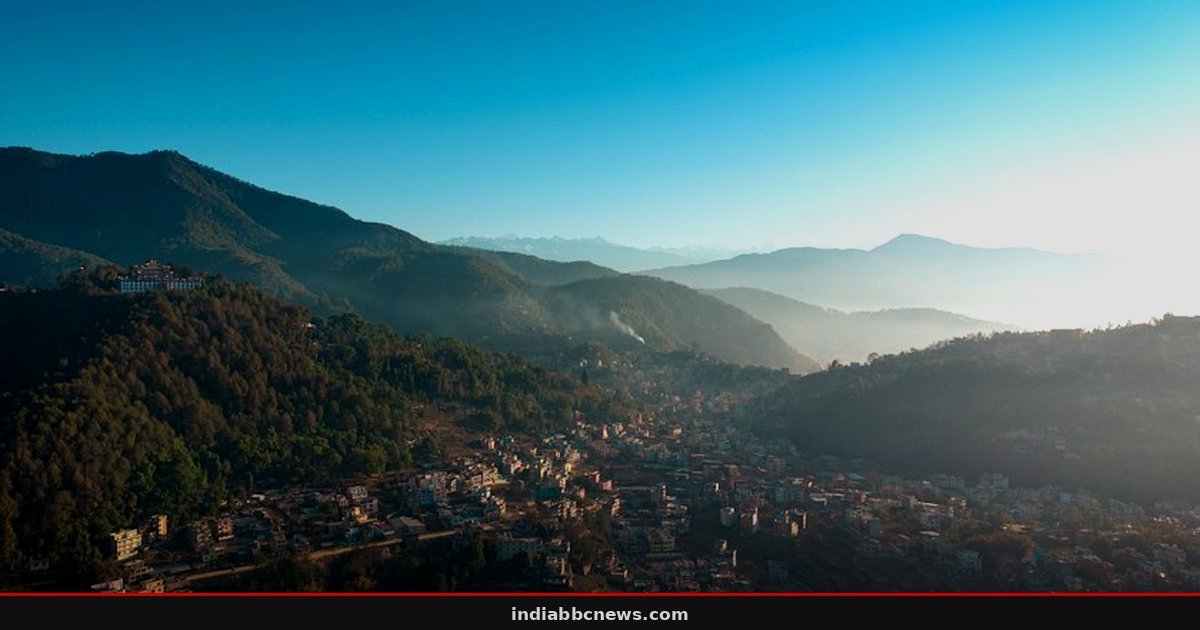
The United Nations Loss and Damage Fund has just released its first major tranche of cash, and Nepal is among the primary recipients. This marks the moment the fund moved from a political promise in 2022 to a functional financial instrument, delivering tangible resources to nations disproportionately affected by climate shocks.
Why does this matter now? Because the gap between climate promises and climate reality has never been wider. As of March 15, 2026, 27 countries had pledged a total of $822.06 million (approximately ₹7,809.6 crore) to the fund. Of that, $629.70 million (₹5,982 crore) is designated as grant contributions, meaning it does not need to be repaid. For a nation like Nepal, where glacial lakes are expanding dangerously and monsoon patterns are becoming erratic, this is not charitable aid; it is survival infrastructure.
The Mechanics of the First Payout
The money didn’t arrive in a single check. The fund operates on a tiered disbursement model, prioritizing immediate needs over long-term projects in this initial phase. Nepal’s application focused on stabilizing communities in the high-altitude districts of Solukhumbu and Dolakha, where flash floods have displaced thousands in the last two hydrological years.
“Grants are the backbone here,” said Dr. Anjali Shrestha, a climate economist at Tribhuvan University, analyzing the terms. “Loans would crush these local governments. But grants? They allow for quick, decisive action on early warning systems and embankments.”
The specifics are granular. The payout covers the retrofitting of seismic and flood-resistant housing for 12,000 families. It also funds the deployment of 450 new sensors in high-risk river basins. These sensors, manufactured in South Korea but installed by local engineers, will feed data directly into a national early warning platform. It’s a small detail, but it changes everything. Instead of waiting for a flood to happen to know it’s coming, authorities now have a 72-hour lead time. That window is the difference between a displaced family and a safe one.
Who Put Money on the Table?
The $822.06 million figure looks large until you break it down. The European Union has committed the largest chunk, $184 million, driven by its strategic interest in stabilizing South Asia’s northern border. The United States, initially hesitant, added $95 million after the 2025 Geneva Climate Accord. Japan contributed $72 million, focusing heavily on technology transfer for water management.
Nepal’s share is calculated based on a vulnerability index that weighs GDP per capita, population density in hazard zones, and historical loss data. The country’s low GDP per capita ensures it sits at the top of the priority list. This isn’t charity; it’s a contractual obligation under the fund’s guiding principles.
Officials from the Nepal Climate Change Council confirmed that the funds will be routed through the National Adaptation Fund, bypassing some of the bureaucratic layers that typically delay such projects. “We’ve streamlined the approval process for this specific tranche,” a ministry spokesperson told reporters on Tuesday. “The money hits the ground within 30 days of approval.”
Why Grants, Not Loans?
The distinction between the $629.70 million in grants and the remaining $192.36 million in concessional loans is critical. Loans carry interest rates, even if low, and require debt service payments that can strain a budget already stretched thin by healthcare and education.
For Nepal, the grant portion is the lifeline. It covers the non-recoverable costs of disaster recovery: rebuilding a school that washed away, replacing a bridge that collapsed, or compensating a farmer whose land is now permanently underwater. The loan portion, meanwhile, is earmarked for infrastructure that has a return on investment, such as new hydropower intake structures that can withstand higher water volumes.
There’s a political dimension here, too. Accepting grants reinforces the narrative that climate change is a global debt, not a local failure. It shifts the burden of financing adaptation away from the victims and onto the emitters.
The Next Deadline: June 2026
This first payout is a test run. The next major decision point is the fund’s board meeting scheduled for June 2026, where the allocation for the second tranche will be voted on. Countries like Bangladesh and Vietnam are also in the queue, meaning competition for the remaining grant pool will intensify.
Nepal’s advantage is its speed. By demonstrating that the initial funds were deployed efficiently and transparently, it positions itself strongly for additional support. The board is expected to review the impact data from the first tranche before releasing more cash. If the sensor network works, if the housing holds, the case for continued funding becomes undeniable.
Frequently Asked Questions
How much money has Nepal received from the UN Loss and Damage Fund?
Nepal is part of the initial cohort receiving funds from the $822.06 million pledged by 27 countries. While the exact split per country varies based on the vulnerability index, Nepal’s allocation is focused on the $629.70 million grant pool, ensuring no debt burden is added to its fiscal obligations.
When will the next round of funding be available?
The next allocation decision is scheduled for the UN Loss and Damage Fund board meeting in June 2026. This meeting will review the impact of the first tranche and vote on the distribution of subsequent funds, with a focus on countries that have demonstrated effective implementation of previous grants.
Source: The Hindu International

