


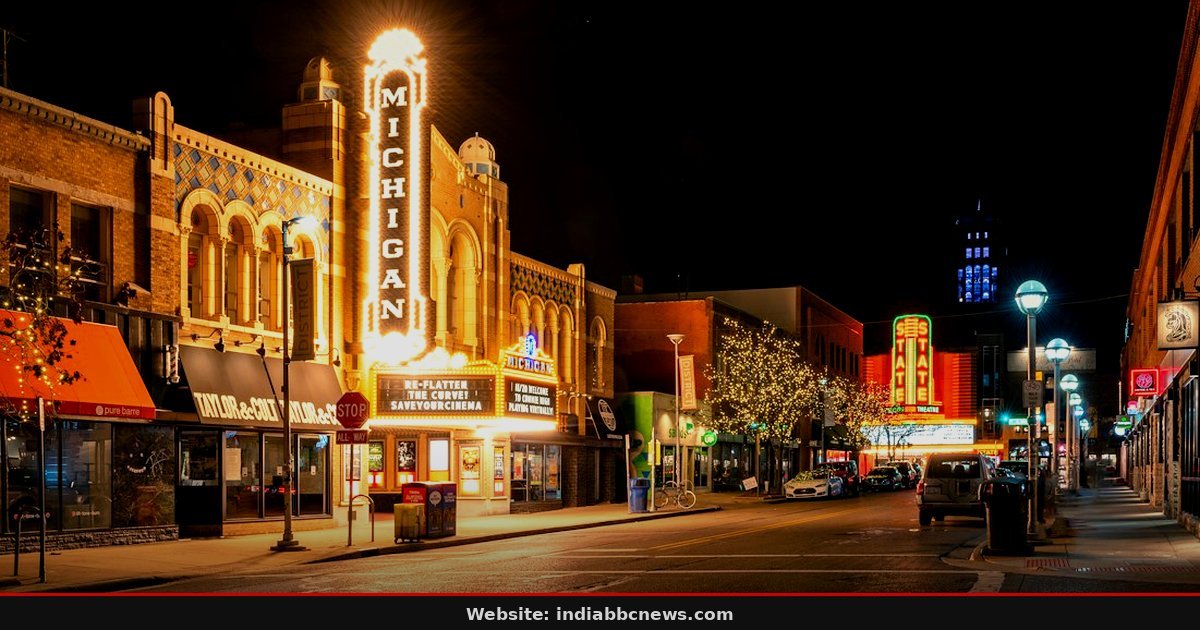
Detroit, Michigan. The church service was supposed to be a moment of peace. Instead, it became a referendum on who actually owns the Democratic Party in the Midwest. Haley Stevens, a congresswoman who is still licking the wounds of her primary loss, walked into a sanctuary in Detroit on Sunday while her party’s nominee, Abdul El-Sayed, was miles away at a different service with the likes of Jim Clyburn. The split was not subtle.
It was visible on camera, on cable news, and in the text messages flying across the state. Stevens sat in the pews with Mike Rogers, the Republican candidate for Senate. The optics were bad. They were worse than the polls suggested they would be.
Why the AIPAC Connection Changed the Game
The friction between Stevens and El-Sayed did not start with the Israel dispute. It started with money. During the August primary, a Super PAC affiliated with the American Israel Public Affairs Committee poured tens of millions of dollars into supporting Stevens. El-Sayed, a former public health official who had built his brand on unity, took a specific issue with an outside ad that accused him of disrespecting women.
That ad, funded by the same network, became a lightning rod. It shifted the local debate from a contest of personalities to a fight over influence. The presence of that money made Stevens a target. It also made her a critic.
Stevens’ fiancé told The Detroit News last week that he plans to vote for Rogers. He claimed El-Sayed had failed to adequately address the concerns of the Jewish community in Michigan. This is a hard sell, but it is a real one. Jewish voters in suburban Detroit are a critical part of the coalition.
Losing their confidence is a strategic error of catastrophic proportions. The split is not just personal. It is demographic. If the party cannot hold the center, it risks losing the suburbs.
That is a lesson learned the hard way in 2020 and 2022, but it seems no one is listening this time. Debbie Dingell, the junior senator and a veteran of this state’s politics, tried to fix it. She wanted a joint appearance with Rep. Jim Clyburn to signal that the party was together. It did not work.
The Cost of a “Unity” Event That Wasn’t
Dingell said she personally asked Stevens to step back because the tension was “way too distracting.” The bishop at the church was upset. This was a religious service, not a political rally. The attempt to perform unity exposed the fracture underneath. It looked bad to the few people watching and worse to the thousands who saw the headlines.
El-Sayed responded by gathering his own group at a separate service. Prominent Democrats from across the country were there. They tried to project strength. They talked about the issues.
But the camera kept panning back to the empty seats where Stevens should have been. The contrast was stark. It was a visual argument. It said that the party is broken.
It said that the old rules of post-primary solidarity are dead. And it raised the question of whether they can win on Tuesday without pretending everything is fine. Nobody in the room looked convinced that the damage was reversible.
What This Means for India’s Global Standing
For Indian readers, this crisis offers a chilling mirror. The US is watching, and India is watching the US. A divided American politics, where primary rivals refuse to reconcile and instead attack each other over foreign policy like Israel, signals instability to New Delhi. India’s diplomatic strategy relies on a steady, predictable Washington.
If the Senate control shifts or the party infrastructure collapses under the weight of internal factional warfare, it creates uncertainty for India’s trade and defense deals. The Israel-Palestine issue is a flashpoint for Indian voters, particularly the large diaspora in the US. Seeing Indian-American communities pulled into US domestic partisan fights complicates India’s ability to maintain its “bridging” role in global South diplomacy.
Furthermore, the economic implications ripple through export-linked sectors in India. A chaotic US political environment often leads to volatile markets. Indian tech firms, many of which are listed in the US, face higher compliance and regulatory uncertainty when the political establishment is fractured. The conflict in Michigan shows that the American voter base is deeply polarized on issues that directly affect India’s core interests.
This is not just a story about one seat. It is a stress test for the trans-Atlantic alliance. And India needs that alliance to be strong if it hopes to balance its relations with China and the US without choosing sides. The noise in Detroit is a warning signal for policymakers in New Delhi to prepare for a more transactional, less ideological, and potentially less stable American partner.
The Real Fight Is Over the Suburbs
Wayne County and Oakland County are the battlegrounds. Stevens won both in the primary. She did so by rallying Black and Jewish voters. Now, she is standing across the aisle from the man trying to win those same voters for the Republican.
It is a strange twist of fate. It is also a tactical nightmare for El-Sayed’s campaign. If Stevens’ endorsement validates Rogers among suburban moderates, El-Sayed loses the cushion he needs to win the state. The race is already tight.
Every percent point matters. The internal feud is bleeding those points away. It is a self-inflicted wound that no advertisement can heal.
Rogers, the ex-congressman, is loving every minute of it. He is a polarizing figure. He is not a moderate. He is a Trump loyalist.
But in Michigan, that label can be an asset in the suburbs if the Democratic nominee is seen as “too far left” or “too critical” of Israel. The narrative is being shaped in real-time. The Democrats are trying to talk about healthcare and inflation. The Republicans are talking about the feud.
The electorate will decide which story matters more. But the groundwork is being laid now. Every headline reinforces the idea that the Democrats are a house divided. That is a dangerous place to be two days before an election.
Who Actually Wins This Mess?
There is no clear winner in Detroit right now. El-Sayed remains the nominee. He has the party machinery behind him. But the machine is clogged.
Stevens has her own base. She has her voice. She has her network. And she is not shutting up.
As long as she is releasing statements and appearing on TV, the issue remains the issue. The party leadership wants to move on. They want to talk about Tuesday. But voters are watching the fight.
They are sensing the fragility. That fragility is what Rogers is exploiting. He does not need to win on policy. He just needs the Democrats to fight.
And they are. The final two days of the campaign will be defined by this tension. Will the voters punish the conflict? Or will they ignore it? History suggests that voters in swing states often punish the party that appears unstable.
The Michigan race is a microcosm of a larger problem. The party is struggling to define its identity in a post-Trump, pre-2028 landscape. They are trying to hold two things at once: their progressive base and their suburban moderates. It is a tightrope walk.
And right now, they are slipping. The outcome will be decided in the early morning hours of Tuesday, but the damage is already done. The unity is gone. The question is whether the vote will survive it.
Frequently Asked Questions
Why did Haley Stevens support Mike Rogers?
Stevens feels that Abdul El-Sayed has not adequately addressed concerns of the Jewish community in Michigan. Her fiancé stated he intends to vote for Rogers, and Stevens endorsed the Republican candidate in response. This move reflects deep disagreement over El-Sayed’s past rhetoric on Israel.
What is the connection between the Michigan race and India?
The political instability in the US creates uncertainty for India’s diplomatic and economic interests. India relies on a stable US partner for trade and security, and internal fractures in the US Democratic Party can lead to unpredictable foreign policy shifts. It also complicates the position of the Indian diaspora in the US, who are being drawn into domestic partisan fights over international issues like Israel.
Who is Jim Clyburn and why is he involved?
Jim Clyburn is a prominent US Representative from South Carolina and a key figure in the Democratic Party. He was scheduled to attend a joint church service with both Stevens and El-Sayed to promote party unity. His presence was intended to signal that the primary fight was over, but the event fell apart due to the ongoing dispute.
Can Abdul El-Sayed still win the election?
It is possible, but the challenge has increased. El-Sayed still has strong support in urban Detroit and from the party establishment. However, the conflict with Stevens has complicated his ability to win over suburban moderate voters, which is essential for carrying the state of Michigan.
What is the role of AIPAC in this story?
AIPAC, the American Israel Public Affairs Committee, funded a Super PAC that supported Haley Stevens in the primary. This funding, along with an ad accusing El-Sayed of disrespecting women, created a lasting tension between the two candidates. The aftereffects of this primary spending are now driving the current public feud.
Source: The Independent World
Source: The Independent World

