


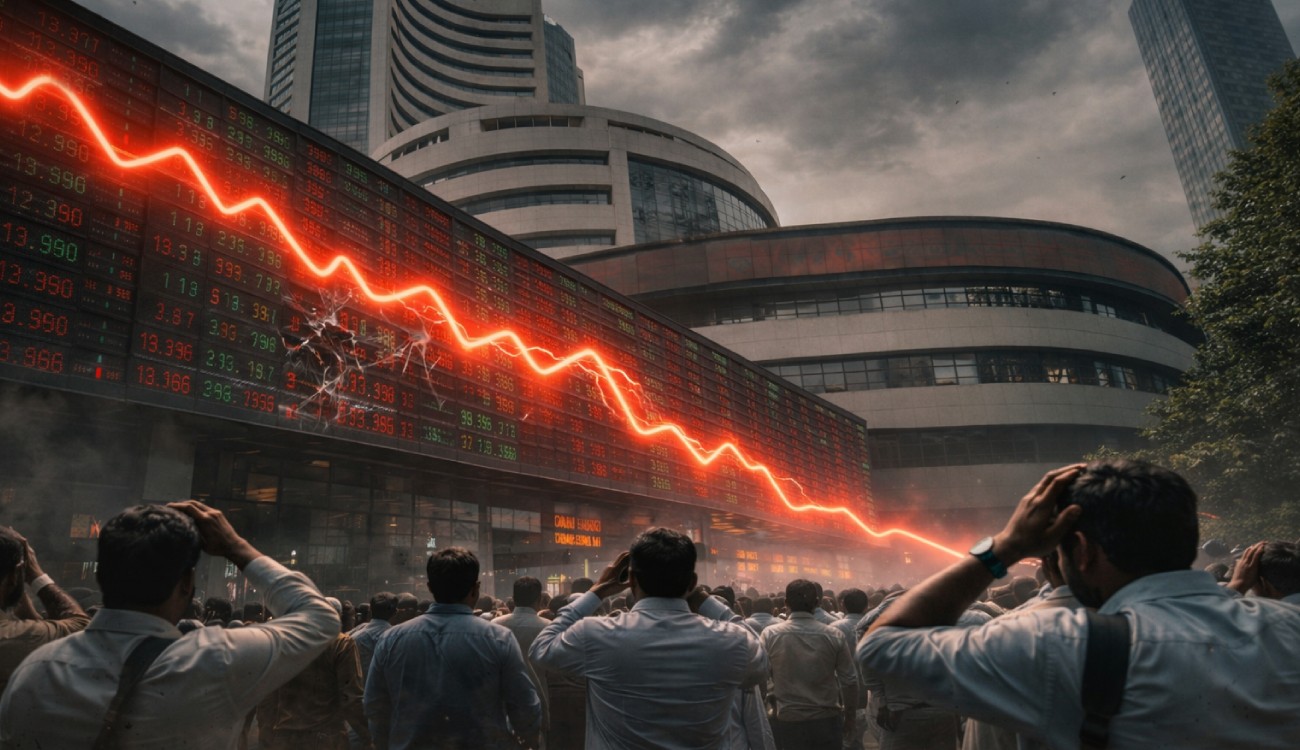
The Sensex lost ₹71,000 crore in market capitalisation in a single session on Thursday — one of those days when the financial news anchor’s voice takes on a slightly different register, and the question that matters is whether this is a correction or a change.
It’s a correction. Here’s why that distinction matters.
What Happened on Thursday
A combination of factors converged. Global cues were weak: US markets had their own turbulent session the previous night, driven by Federal Reserve commentary that was read as “higher for longer” on rates. Oil prices moved sharply on geopolitical concerns — specifically around the Hormuz situation. Foreign portfolio investors were net sellers.
The midcap and smallcap indices, which had been running significantly above their historical valuation averages, saw larger falls than the Sensex and Nifty 50 — a pattern consistent with investors reducing exposure to higher-risk positions first when sentiment turns.
What “₹71,000 Crore Wiped Out” Actually Means
Market capitalisation losses in a session are largely a paper figure — they reflect the change in the value of shares that are still held. Investors who didn’t sell on Thursday didn’t “lose” ₹71,000 crore in any realised sense. The loss is real only for people who bought at the peak and sold at the lower price.
That framing doesn’t minimise the significance of a large down day. Sentiment, margin calls, and liquidity conditions can turn paper losses into real ones if the decline continues. But the dramatic figures in the headline require this context.
The Bigger Picture
Indian equity markets have had a strong multi-year run by most measures. A session like Thursday’s, painful as it is in real-time, is within the normal range of volatility for a market at these valuation levels. Whether it marks the beginning of a more sustained correction depends on factors — US rate trajectory, domestic earnings, global risk appetite — that won’t be clear from a single session.
Investors who made long-term allocation decisions based on Indian growth fundamentals have seen many sessions like Thursday before. The ones who tend to regret them are those who made short-term decisions with money they needed to preserve.