


Tian Yang didn’t have a podium. He had a whiteboard and a marker that was running out of ink. In a recent Bloomberg podcast segment, the CIO of Variant Perception’s VPX fund leaned in, his voice dropping to a near-whisper as he sketched out what he calls the “Sovereign Impossible Trinity.” It’s a grim arithmetic problem, not a political slogan. The US and China are trying to do three impossible things at once, and physics — cold, hard physics — is going to decide which one breaks first.
Yang’s thesis is blunt. Great powers want guns, butter, and sound money. In a world of interconnected supply chains, you could maybe get two. Today?
With decoupling accelerating and AI compute becoming the new uranium, you pick two and lose the third. It’s not a policy preference issue. It’s a resource constraint. And right now, Nvidia is the bellwether screaming that the constraint has hit the ceiling.
The Physics of Decoupling
For distinct decades, the global economy ran on a simple engine: arbitrage. If it was cheaper to make a chip in Texas, we did. If it was cheaper to assemble a phone in Shenzhen, we did. That efficiency is gone.
Yang argues that the US and China are no longer playing the same game; they’re playing different games on incompatible boards, and the transition costs are staggering. The US thinks it can maintain military supremacy and domestic social welfare while keeping the dollar king. China thinks it can self-sufficient its tech stack while keeping its citizens employed. Both are betting against the same zero-sum equation.
The math doesn’t lie, and it’s getting ugly fast. This isn’t just about bureaucracy. It’s about atoms. To build a 3nm chip, you need specific minerals, specialized lithography, and billions in capital. To build a sovereign AI stack, you need data centers that consume electricity like a small city.
The trade-off isn’t abstract; it’s physical. If you spend the surplus on missiles, you don’t have the surplus for pension funds. If you subsidize local chip fabs to counter US bans, you distort the price of money. Yang suggests we’re seeing the first real cracks in this trilemma.
The “butter” — social spending and consumer goods — is the first thing to get squeezed when the “guns” budget explodes. And that’s a vote-saying problem for any democracy that cares about its middle class.
Why Nvidia Is the Canary in the Coal Mine
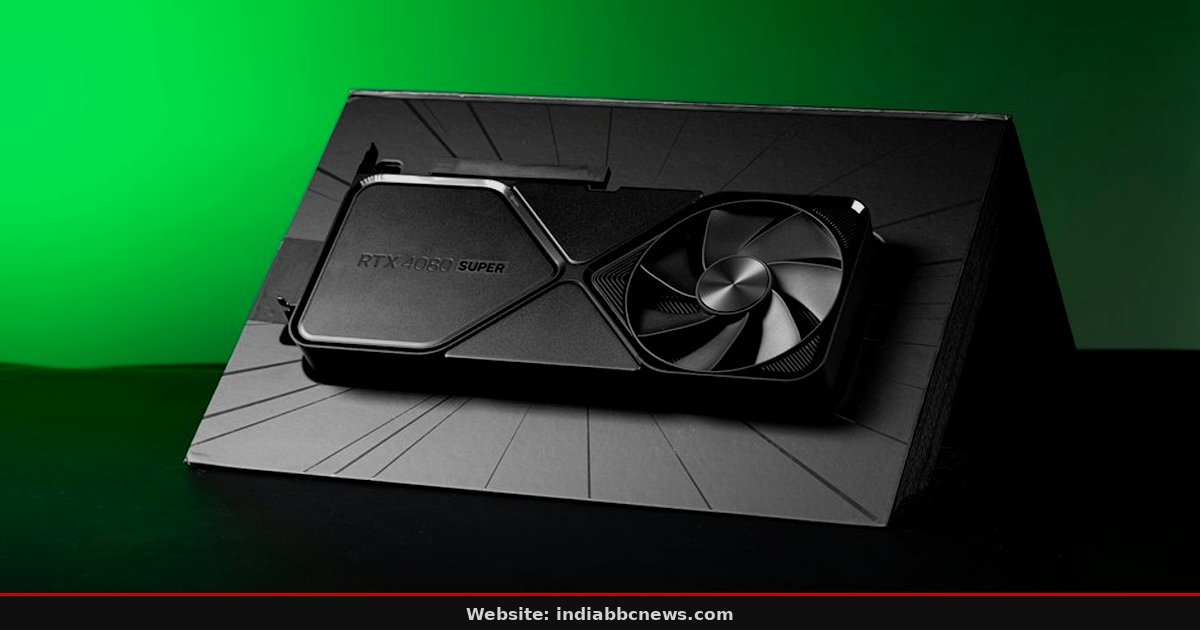
Nvidia isn’t just a tech company; it’s the proxy for this entire geopolitical standoff. The chip’s price movement is now more indicative of Sino-US tension than it is of semiconductor demand. When export controls tighten, the stock dips. When rumors of a loosening surface, it rockets.
This volatility is a direct readout of the trilemma’s stress test. If the US tries to starve China of compute, it’s strengthening its “guns.” But that action inflates the cost of “butter” for American businesses that rely on global efficiency. It’s a self-inflicted wound inflicted in the name of security. And the market knows it.
They know the bill comes due eventually. Here’s the nuance Yang pushes: the constraint is on compute itself. AI isn’t magic; it’s math. And math needs hardware. If the world splits into two incompatible hardware ecosystems — one Western, one Chinese — the cost of innovation doubles.
It’s like running two separate internet protocols. You lose the network effects that made the last 30 years so profitable. For investors, this means the era of easy, scalable growth in tech is over. We’re entering an era of frictional growth, where every step forward requires overcoming a political barrier.
That’s a harder sell than it sounds, especially to a retail investor who still expects their mobile game to run on the same GPU as the SpaceX launch computer. India is the accidental wildcard in this trilemma, and it’s not a comfortable seat. New Delhi wants the “guns” for its own sovereign defense and the “butter” for its massive social budget, but it lacks the critical mass for “sound money” in the high-tech sector. More importantly, India is trying to build its own semiconductor backbone to escape the gravity of both Shanghai and Silicon Valley. But the trilemma says you can’t just pick a side and expect the industry to follow.
The India Angle: Caught in the Squeeze
The US is pushing India to align with its supply chain, but China is still India’s largest trading partner. If the US forces a choice, India loses its export market. If it stays neutral, it loses its access to cutting-edge compute. It’s a dilemma with no clean answer, and it’s forcing Indian policy to walk a tighterrope than it’s used to.
The cost of neutrality is rising, and it’s showing up in the form of slower infrastructure development and higher borrowing costs for state-owned tech ventures. For Indian readers, this means the dream of becoming the “trifecta” leader — manufacturing, services, and tech — is hitting a wall. You can’t be the world’s factory if the world is splitting into two hostile camps. India is betting that by building domestic fabs, it can avoid getting caught in the crossfire. But Yang’s report suggests that building a sovereign stack is exponentially more expensive than buying one from the global market.
That’s because you lose the economies of scale. For an emerging market with a thinner capital base, the cost of sovereignty is a tax on future growth. And that tax has to be paid by the taxpayer. It’s a quieter crisis than a war, but it’s just as draining.
We need to watch the Indian government’s next budget carefully to see how they’re balancing these competing demands, because the math leaves little room for error. Historians love to draw parallels to the Cold War, but that comparison is flawed and dangerous. In the 1960s, the US and USSR were separate blocks with distinct currencies and trade routes. There was no interdependence to break. Today, the entanglement is total.
What History Gets Wrong About This
You can’t decouple two power grids without causing blackouts. Yang’s trilemma is fundamentally about the death of interdependence. The West is trying to retain the benefits of globalized trade while denying the costs to the East. That’s a contradiction that doesn’t resolve itself.
It creates friction. And friction generates heat. The question isn’t whether the trilemma exists; it’s whether we have the political will to accept a lower standard of living to maintain our security posture. Most voters don’t.
That’s the problem. There’s a deeper implication here that most analysts miss: the trilemma is a demand-side shock. If productivity growth slows because innovation is fragmented, inflation becomes sticky. You can’t print your way out of a supply constraint. This is different from the 2008 crisis, which was a demand collapse.
This time, the supply side is breaking. That means central banks have less power to fix things. They can’t lower rates to stimulate an economy that is constrained by physics and politics. It’s a harder problem to solve.
And it’s one that keeps policymakers up at night. The noise in the markets is a sign that the consensus has fractured, and everyone is trying to figure out how to price in a world that is becoming less predictable and more expensive.
The Road Ahead: No Clean Exits
So, what happens next? There is no great reset. There is no sudden breakthrough in quantum computing that fixes everyone’s problems. The trilemma persists.
Yang suggests that we should expect more tariff surprises, more export controls, and more “friend-shoring” initiatives that are less efficient and more expensive. The next six months will be critical as the US and China finalize their respective tech strategies. Watch the Nvidia earnings call not just for revenue numbers, but for the language around “geopolitical headwinds.” That’s where the real story is. The market is going to keep whipsawing as it tries to find a new equilibrium in a fragmented world.
And until the trilemma is resolved — which may never happen — volatility is the price of admission. It’s not a bug; it’s a feature of the new geopolitical order.
This is a longer, more painful adjustment than the mid-2000s tech bust. Back then, the problem was overcapacity. Now, the problem is under-capacity in the sovereign sector. We’re building redundant systems, which is a recipe for waste.
But it’s the kind of waste that states find acceptable when they think their survival is at stake. The question for investors is: how much of this waste can you absorb in your portfolio? If you can’t, you need to adjust your expectations. The era of risk-free alpha is over.
Now it’s about navigating a minefield where every step could trigger an explosion. And the blast radius is global. We’re all in this together, whether we like it or not.
Frequently Asked Questions
What is the Sovereign Impossible Trinity?
It’s Tian Yang’s term for the idea that great powers can only maintain two of three things at once: military strength (“guns”), social welfare (“butter”), and financial stability (“sound money”). When decoupling accelerates, the physical costs of maintaining all three become impossible to bear simultaneously. The trilemma forces governments to choose which sacrifice they can live with.
How does this affect Nvidia stock?
Nvidia has become a geopolitical proxy, so its stock price reflects export control risks as much as actual demand. If the US tightens restrictions on chip sales to China, Nvidia’s revenue outlook drops, triggering a sell-off. Conversely, any sign of easing tension boosts the stock. The volatility is a direct readout of the trilemma’s stress on global supply chains.
Why is India particularly vulnerable to this trilemma?
India wants to be a neutral tech hub but lacks the scale to build a fully sovereign semiconductor ecosystem quickly. Relying on both US and Chinese tech creates exposure to pressure from both sides. If the great powers force a choice, India could lose access to either advanced compute or its massive export markets, making its growth path more expensive and uncertain.
Is this different from the 2008 financial crisis?
Yes, fundamentally. The 2008 crisis was a demand-side collapse fueled by financial deregulation. The current trilemma is a supply-side constraint driven by geopolitical fragmentation. Central banks have less power to fix supply issues with interest rates, making inflation more sticky and growth more capped. It’s a structural problem, not a cyclical one.
Source: Bloomberg Markets
Source: Bloomberg Markets

