


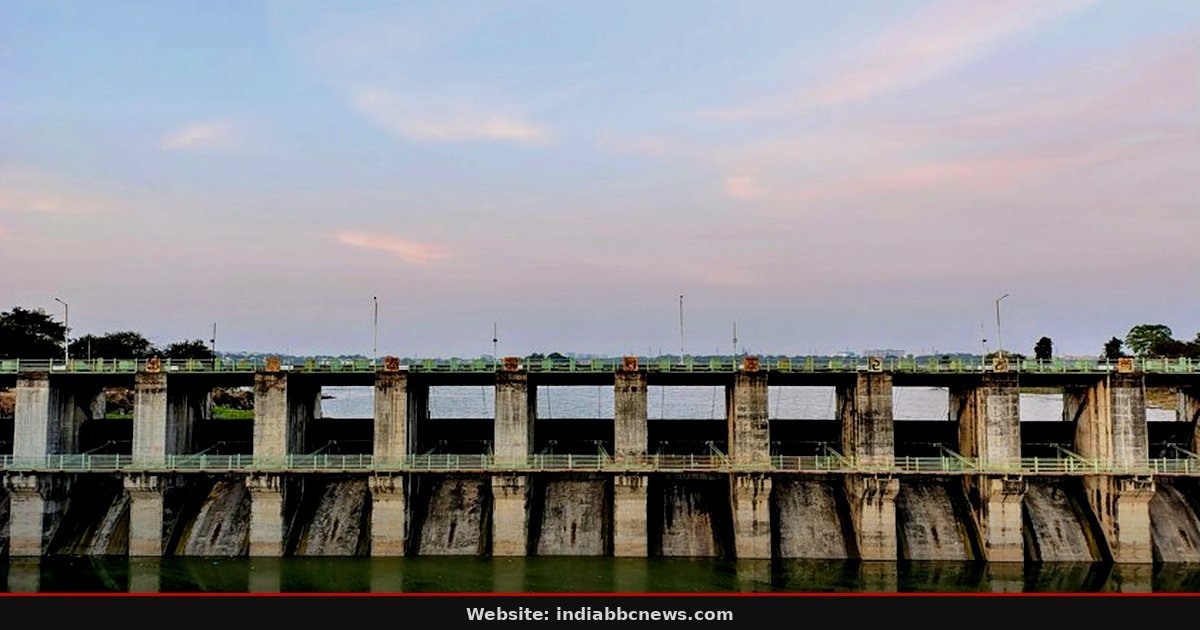
Tamil Nadu Faces Imminent Water Crisis as Reservoirs Hit Historic Lows
The numbers are bad. They are, frankly, terrifying. As of late October, the aggregate storage in Tamil Nadu’s 15 major irrigation reservoirs has plummeted to roughly 33% of their total capacity. Compare that to the same period last year, when tanks and dams were brimming at 92%.
It is a statistical cliff edge that has policymakers sweating, farmers protesting, and urban residents clutching their water bowls tightly. The state is running on fumes, waiting for the Northeast monsoon to show up and save the day. But will it?
The 60-Point Drop That Picked a Fight in Chennai
The dry spell started early this year, catching everyone off guard. It wasn’t just a delay; it was an absence for months. By late November, the Cauvery river levels were dangerously low, triggering immediate political tension between Tamil Nadu and Karnataka. Thirumoolam, the key junction near Kalladai, recorded flows lower than even the drought years of the 1990s.
Officials admit the situation is critical. They have started rationing water supply in parts of the city, a move that feels foreign to most residents who remember the “plenty” of the 2019 monsoon. The sheer velocity of this decline is what makes it so unique. We haven’t seen something this bad since 2016.
Protests have become almost nightly. Farmers from the Palkurtti region are blocking highways, demanding water release. They say they have harvested nothing; the fields are cracked and barren. The state government has issued formal demands to the Center, citing the 1993 inter-state water sharing agreement.
It’s a legal and emotional minefield. Every hectare of dry land is a vote lost, a livelihood destroyed. And every drop released from upstream is a political victory. The stakes are no longer just about agriculture; they’re about social stability in one of India’s most politically active states.
Why the Northeast Monsoon Is the Only Hope Left
Unlike the rest of India, Tamil Nadu gets its primary rainfall from the Northeast monsoon. This window is narrow: it runs from October through December. If these rains fail, there is no backup plan. The Western Ghats provide some relief, but the major reservoirs drawing water for Chennai and the agricultural belt depend on the Bay of Bengal winds.
Meteorologists are watching the atmospheric pressure patterns closely, but forecasts remain murky. There’s a chance of 120% of long period average rainfall, but there’s also a chance of less than 50%. It’s a binary outcome with no middle ground for a state this dependent on this specific weather pattern. The uncertainty is paralyzing.
The impact of a failed Northeast monsoon would be catastrophic. We’re not just talking about dry fields; we’re talking about brackish water seeping into freshwater sources. Last time this happened, Chennai had to import tankers from Bangladesh and UAE at a cost of millions of dollars a day. That scenario is back on the table.
The state’s water policy has always been reactive, pouring in infrastructure after crises rather than preventing them. Now, with the existing infrastructure running empty, there’s nowhere else to go. The sea is rising, and the sky is silent. It’s a waiting game that no one wants to play.
Chennai’s Water Rationing and the Urban Reality
For 7 million people in Chennai, the crisis is personal. The city has run out of its primary freshwater sources recently, forcing a switch to desalinated water. This is expensive, energy-intensive, and not enough to meet total demand. Rationing schedules have been tightened; some areas get water for just 2 hours a day, while others wait for tanker truck delivery.
Residents are storing water in drums, a practice that was rare just two years ago. The smell of boiled tank water lingers in households. It’s a humiliating regression for a city that sees itself as a global hub. The disconnect between the urban elite and the rural reality is widening, and it shows in the agitation.
Businesses are feeling the pinch too. Large industries, including IT parks and manufacturing units, are facing water security issues. Some have started investing in their own desalination plants or wastewater recycling systems. It’s a private fix to a public failure.
The government claims it’s on top of the situation, but the official statement released last week felt detached from the ground reality. “Augmentation efforts are ongoing,” it said. That’s a harder sell than it sounds when the taps are dry. The urban middle class, usually vocal about infrastructure, is now facing a resource scarcity that feels existential.
They’re looking at the sky and wondering if the rain will actually fall. The anxiety is palpable in boardrooms as much as it is in village panchayats.
How This Affects India’s Broader Water Security Narrative
This isn’t just a Tamil Nadu problem; it’s a warning shot for the entire Indian subcontinent. The state’s experience highlights the fragility of our water management systems. We rely heavily on monsoons that are becoming less predictable due to climate change. Tamil Nadu’s situation mirrors the water stress seen in Maharashtra and Karnataka in previous years.
The pattern is clear: extraction outpaces replenishment. We’re mining water, not managing it. The Northeast monsoon delay here is a symptom of a larger atmospheric disruption that scientists have been studying for decades. If a state of this size and economic importance can be brought to its knees by a 2-month delay, what does that say about the resilience of the national water grid?
It says we’re vulnerable. It says we need a fundamental rethink of how we allocate and store water across states.
The economic implications ripple outwards. Tamil Nadu is a major exporter of auto parts, electronics, and textiles. Any disruption to production due to water shortages adds to inflationary pressures. Labor unrest is a real possibility, as seen in the farmer protests.
The Center must recognize that this is a national security issue, not just a state administration matter. Water scarcity leads to migration, which leads to urban overcrowding, which leads to social explosion. It’s a domino effect that takes time to fall, but once it starts, it’s hard to stop. The current crisis is a test case for how India manages resource conflicts in the 2020s.
The answer, so far, has been political posturing and delayed engineering solutions. We need more concrete action, not more statements.
What This Means for Indian Markets and Policy
The stock market reaction has been muted but telling. Stocks of water treatment companies and desalination technology firms have seen a slight uptick in interest. Institutional investors are increasingly looking at “water risk” as a material risk factor for companies in resource-intensive sectors. In India, this means looking at companies operating in Tamil Nadu and Rajasthan.
The policy implication is even bigger. This crisis will likely accelerate the push for inter-state water trading and market-based mechanisms for water allocation. Currently, water is a state subject, making centralized coordination difficult. But economic necessity is forcing a rethink.
Investors are asking: who owns the water, and how is it priced? The answer today is “the state, for free,” which is clearly not working. The market is demanding efficiency, and scarcity is the ultimate price signal.
For Indian companies abroad, this adds a layer of complexity. Supply chains that rely on Tamil Nadu for raw materials or manufacturing are now riskier. Multinational corporations with operations in Chennai are diversifying their sourcing or investing in closed-loop water systems. It’s a cost, but it’s a necessary one.
The government needs to offer incentives for these private investments. Tax breaks for water recycling infrastructure could be a smart move. It’s not just about charity; it’s about domestic stability. If the state can’t guarantee water security, it can’t guarantee business continuity.
That’s a deal-breaker for FDI. The policy conversation needs to shift from political accountability to economic survival. The markets are asking for a plan, not a promise. And time is running out for both.
Frequently Asked Questions
Why is Tamil Nadu facing a water crisis in 2026?
The primary reason is a significant deficit in the Northeast monsoon rains, which account for 60% of the region’s annual precipitation. Reservoir levels have dropped to 33% of capacity, down from 92% the previous year, indicating a severe lack of natural replenishment. There is no confirmed timeline for full restoration, as it depends entirely on the arrival and intensity of the Northeast monsoon rains between November and December. The state is currently managing through rationing and emergency tanker supply.
When will the water supply be restored in Chennai?
How does this water shortage affect Indian agriculture?
It threatens the kharif crop harvest in downstream districts, leading to potential food price inflation and farmer distress. The agricultural belt in Tamil Nadu is heavily dependent on these reservoirs for irrigation, and the current dry spell has led to significant crop loss. While the crisis is most acute in Tamil Nadu, it highlights a broader risk of water scarcity across southern India, particularly in regions dependent on monsoons that are showing signs of irregularity. However, the immediate impact is concentrated in the affected state’s economy and urban infrastructure.
Is this water crisis affecting other Indian states?
Source: The Hindu
Source: The Hindu

