

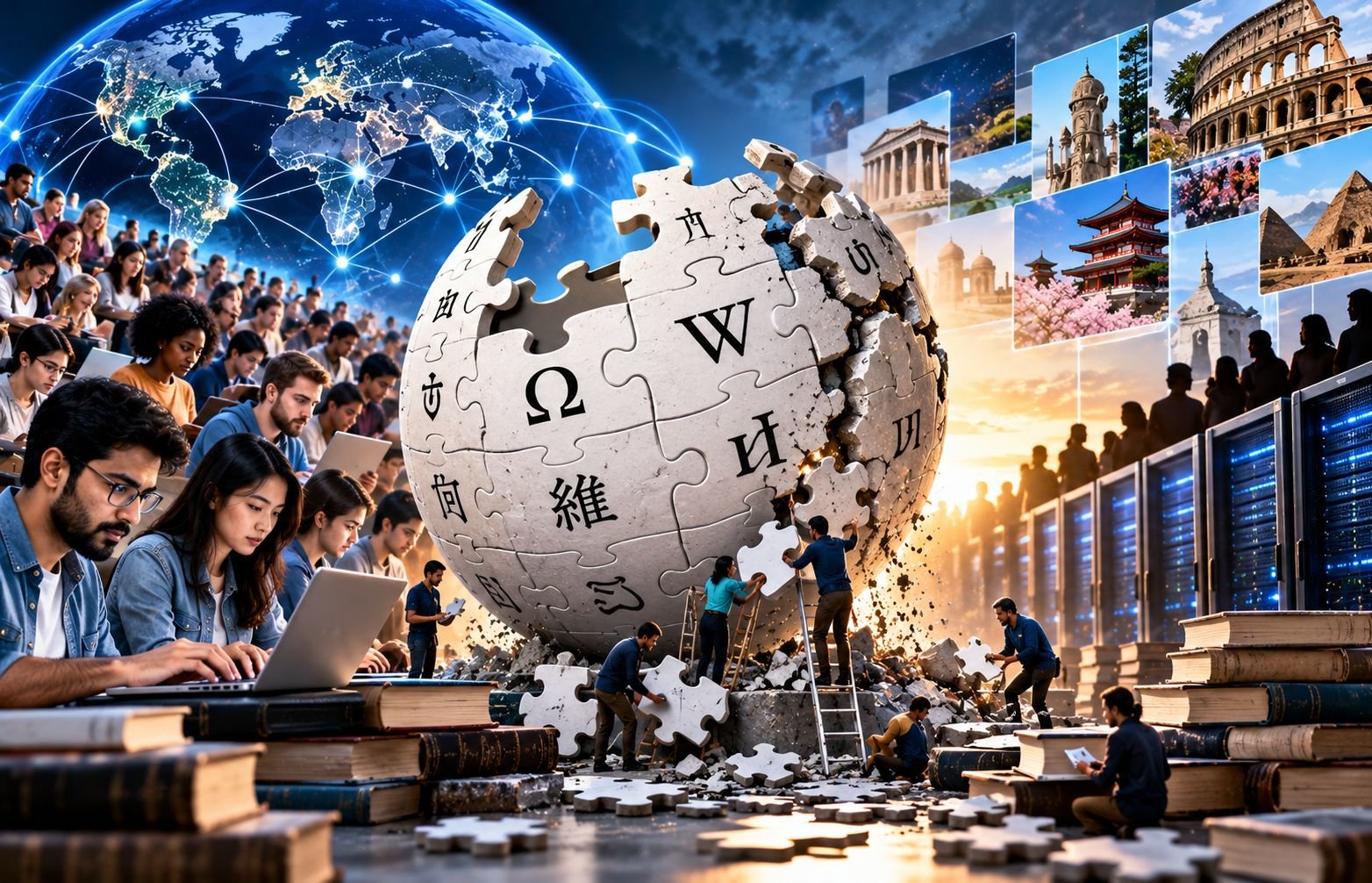
Wikipedia hit its 20th birthday this year, and the numbers are staggering. The platform now hosts 68 million articles, consulted trillions of times by billions of users. It is the most visited reference site on the planet, yet it looks exactly like it did in 2001. The interface hasn’t changed. The ethos hasn’t changed. The fragility, however, is real.
For two decades, the site has operated on a paradox. Everyone trusts it implicitly, yet the public perception remains stuck on the “free encyclopedia that anyone can edit” label. It has become invisible infrastructure, a utility we forget until the servers go down. But beneath the surface, the project is held together by a community of volunteers who are often misunderstood, underfunded, and increasingly isolated from the broader digital landscape.
Philosophy Over Code
The origins of Wikipedia were less about technology and more about a digital “republic of letters.” Co-founder Jimmy Wales didn’t hire engineers first; he hired a philosopher, Larry Sanger. This choice defined the project. “Lots of people in the dotcom boom started online encyclopedias, but Wales was the only one to hire a philosopher,” notes Richard Cooke, author of a new book on the site’s history. The result was a platform built on constructivism and the Zen concept of *wabi-sabi*—beauty in imperfection. It was never meant to be perfect. It was meant to be alive.
The Human Engine
The engine driving this machine is human, and often quirky. A former head of the Wikimedia Foundation described the encyclopedia as a “city built by Asperger’s.” This neurodiversity fuels the deep dives into train schedules, comic books, and obscure historical figures. Take Ruth Ifcher, a grammar pedant with a PhD and severe agoraphobia. Wikipedia gave her a way to contribute meaningfully to the world from her home. Or Gaytha Langlois, the first woman to edit the site, who focused on Rhode Island and standard poodles. These individuals are the backbone, yet they remain largely anonymous to the public.
A Fragile Future
The challenge now is sustainability. The “amateurish” ethos that made Wikipedia unique also makes it vulnerable. As the internet grows uglier and more commercial, Wikipedia stands as a stubborn holdout. But without significant funding and a broader, more diverse contributor base, the project risks stagnation. The gender imbalance remains stubborn, prompting initiatives like Mappa Mundi to create more balanced alternatives. The future of the world’s largest encyclopedia depends on whether the public will stop taking it for granted and start supporting the people who keep it running.
Source: Guardian Technology
This article was compiled by the IndiaBBCNews editorial system from verified international news sources. Facts have been independently reviewed. Original reporting: Guardian Technology.

