

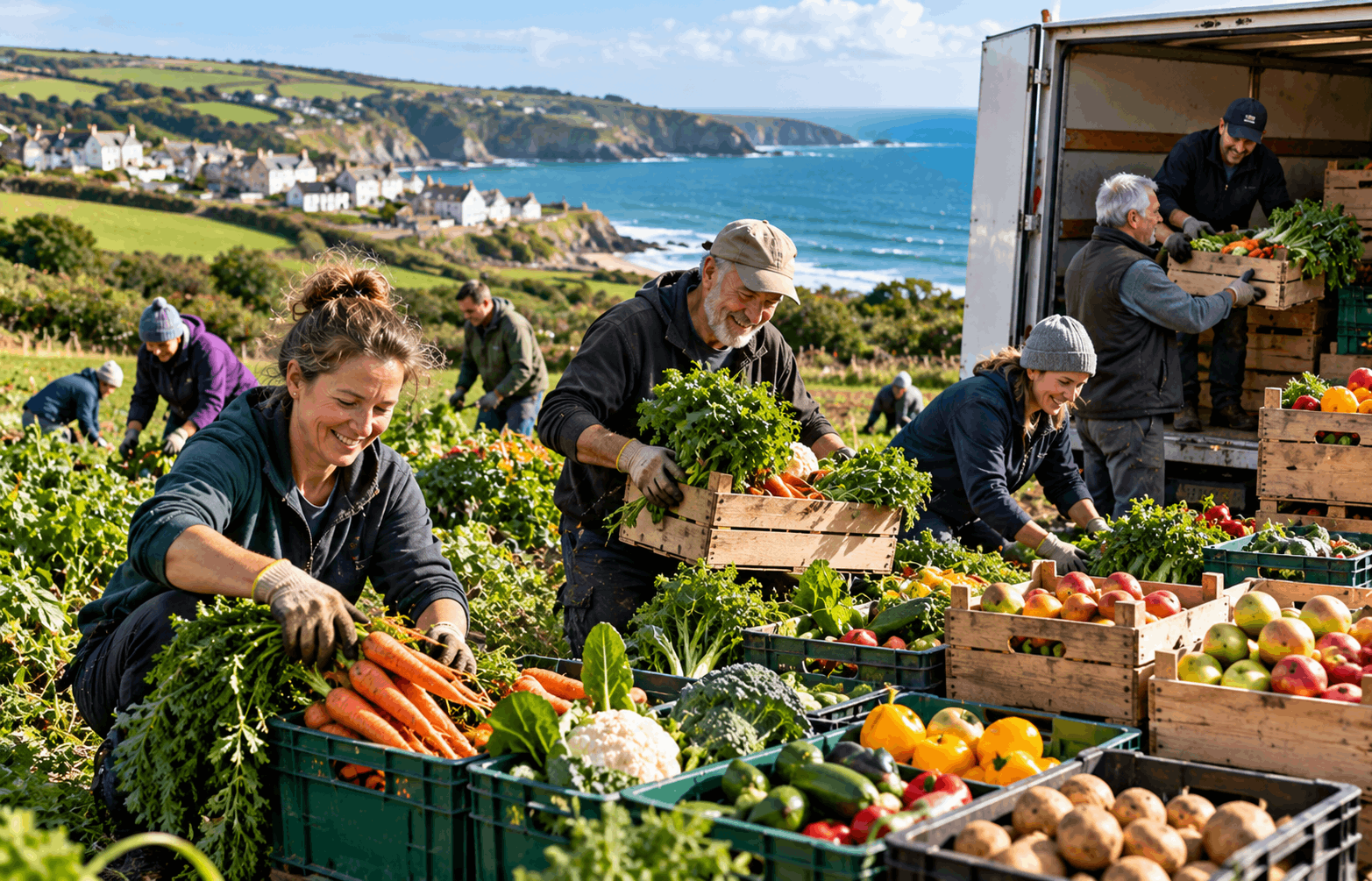
Gleaning Cornwall has rescued £1m worth of fruit and vegetables that would have otherwise rotted in the field. The volunteer-run charity delivered this produce to 160 food banks, community larders, and kitchens across the South West.
It is a massive achievement for a group that started in 2020. Yet, the milestone comes with a stark warning: the system is straining under the weight of rising costs and surging demand.
Costs Skyrocketing
Holly Whitelaw, the charity’s founder, says the economic squeeze is threatening their operations. “There is less money around and we need to do more with it,” she told BBC Business. “Our infrastructure urgently needs funding if we are to keep going.” The group has repurposed over 460 tonnes of produce since its inception, feeding 11,000 people every week. The catch? All produce must be free to recipients. Meanwhile, the bills for transport, storage, and coordination are climbing sharply.
Desperate Need
The pressure on these services is not slowing down. Data from Cornwall’s Trussell Trust shows food banks distributed more than 35,500 emergency parcels between April 2024 and March 2025. The numbers are grim. A recent study by Cornwall Council found that 30% of children in the county are living in food poverty. The number of known settings providing food aid in Cornwall has jumped from 20 in 2015 to 180 today. Whitelaw urges the public to cut down on household waste. “If we waste food, we waste the substantial energy that went into producing it,” she said. “Utilising what we already have saves money and helps the environment.” Without new funding, the gap between available produce and hungry families will only widen.
Source: BBC Business
This article was compiled by the IndiaBBCNews editorial system from verified international news sources. Facts have been independently reviewed. Original reporting: BBC Business.

