


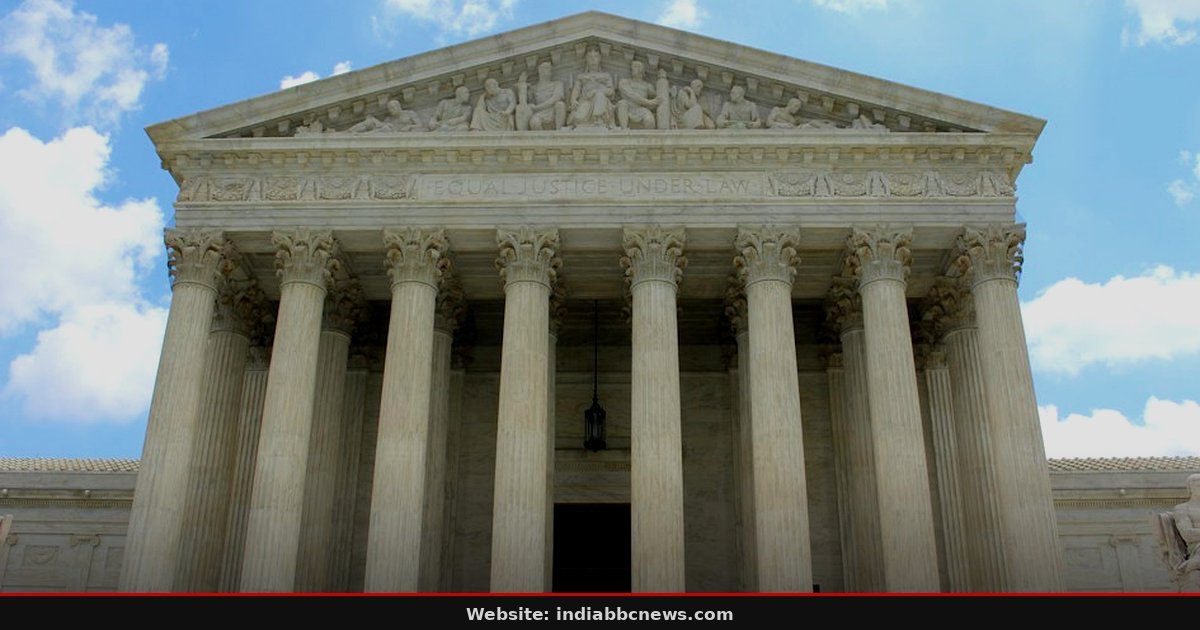
Can’t Occupy A Site Indefinitely In Name Of Protest: Top Court’s Big Remark42 days. That is how long the court allowed the protest to continue before the order landed on the table. It wasn’t a long time. Not in the grand scheme of political movements.
But for the people sleeping in the streets, it was an eternity. The Supreme Court struck down the indefinite occupation of public spaces for protest. The ruling is clear. You can demonstrate.
You can voice dissent. But you cannot turn a public highway into a permanent campground. The law, the judges said, does not bend to fit the comfort of the demonstrators.
The Legal Line In The Sand
The judgment is blunt. It doesn’t mince words about the right to assembly. Here is the thing: the court isn’t banning protests. It’s banning the hijacking of public infrastructure.
The difference matters. A one-day march is one thing. Setting up tents and blocking traffic for months is another. The judges cited past rulings, reminding everyone that public property belongs to the people, not just the loudest faction among them.
Imagine your neighbor building a swimming pool in the middle of the shared courtyard. You’d complain. You’d call a lawyer. The state acts as that lawyer for the general public.
The ruling reinforces the idea that civil disobedience has geographical limits. Once you cross that line, you aren’t protesting. You’re occupying. And occupation, the court said, requires a different legal footing altogether.
That’s a harder sell than it sounds. This wasn’t pulled out of thin air. There has been a surge in long-term site occupations across the country. Some lasted weeks. Others dragged on for months.
Why The Court Cared Now
Police presence became a nightly spectacle. The judiciary stepped in because the executive branch seemed stuck. The police couldn’t evict without provoking a clash. The government couldn’t ban demonstrations outright without hitting constitutional headwinds.
So the court drew the line. Legal scholars have argued for years that “indefinite” is a dangerous word. It creates a vacuum. Power vacuums fill quickly, usually with chaos. The court’s move is a preemptive strike against that chaos.
It also echoes older principles. Remember the cases where court buildings were occupied? The response was swift then. Why the delay now?
Because modern protests are more dispersed. They’re harder to map. The court is trying to create a uniform standard so local magistrates don’t have to guess the rules every time.
India’s Fragile Social Contract
For India, this is not just a legal technicality. It’s a test of nerve. The country has a long history of street politics. From the freedom struggle to recent anti-CAA protests, the street has been a legitimate arena for change.
But legitimacy has limits. The ruling suggests that those limits are tightening. This affects how future movements plan their logistics. You can’t just pick a spot and stay.
You have to be mobile. You have to be organized. The era of the static, immovable protest camp may be ending.
Think about the disruption. Traders lost income. Commuters lost hours. Drivers went mad.
The rule of law doesn’t just protect the government. It protects the outsider. The person trying to get to work. The ambulance trying to get to the hospital.
If a protest blocks an ambulance, who is really winning? The court’s remark forced a pause. It made leaders of these movements reconsider their strategy. Can you sustain a movement if you can’t hold the ground?
That question is now hanging over every organizer in New Delhi and across the states. Investors hate uncertainty. They hate it more when it’s physical. A blocked highway is a blocked supply chain. It’s a lost shipment.
What This Means For Indian Markets And Policy
It’s a delayed factory start. The ruling signals to the markets that the state can now clear these blockages faster. This is good for stability. It’s good for logistics.
But it also raises a concern. If the state becomes too efficient at clearing protests, does it become too eager to do so? The line between order and suppression is thin. Markets want order.
But they fear the tools used to create it. For policymakers, this is a directive. They need to find alternative spaces for dialogue. You cannot just let people camp on the Ring Road. You have to give them a room to talk.
The ruling forces the government to be more proactive. It’s not enough to wait for a protest to happen and then evict it. You have to engage before the tents go up. This shifts the burden.
From the protester to the state. Can the bureaucracy handle that? Doubtful. But the court has put them on notice.
The next election will be fought with this precedent in mind. Behind the legal jargon, there are people. Families. Students. Old men who can’t sleep on concrete.
The Human Cost Of The Standoff
The ruling is hard on them. They had nowhere else to go. The sites were their only platform. Now they have to move.
Or they have to face eviction. That’s the reality. It’s not glamorous. It’s not what you see on the headlines.
It’s wet socks and frozen fingers and the slow erosion of will. And yet, the court didn’t look convinced by the sympathy argument. Law is not about feelings. It’s about function.
If the system breaks, the law has to step in. One reporter standing near the site noticed a detail that stuck. A child was drawing in the dust on the pavement. The drawing was of a house. A normal house.
With a door. The child wasn’t drawing a protest sign. They were drawing home. That image said more than any lawyer’s brief.
It showed what was lost. Not just money. Not just time. Dignity.
The ruling acknowledges the right to protest, but it ignores the human need for shelter during that protest. That’s a gap. A big one. But the law moved on.
The drawing was wiped away by a passing truck’s tire.
Frequently Asked Questions
Can you protest on public roads in India?
Yes, but with conditions. The Supreme Court ruling says you cannot occupy a site indefinitely. You can demonstrate, march, and gather. But you must clear the space when the protest ends. Indefinite occupation is now explicitly ruled out.
What happens if protesters refuse to move?
The state can initiate eviction proceedings. The court order provides a legal basis for this action. Police will likely use force if necessary, as they are bound by the court’s directive to restore public order.
Does this affect the fundamental right to freedom of speech?
No. The court clarified that this does not ban protests. It only restricts the indefinite use of public property. The right to speak and assemble remains protected. The restriction is on the location and duration, not the message.
How does this compare to protest laws in other countries?
Most countries have similar rules. The UK, for example, has strict laws against unauthorized use of public land. However, India’s ruling is notable for its explicit focus on “indefinite” occupation. It’s a specific, high-impact clarification for the local context.
When does this ruling take effect?
It is effective immediately. Lower courts and local magistrates can now use this precedent to injunction ongoing long-term occupations. Expect legal challenges in the coming days, but the higher court’s word is final for now.
Source: NDTV
Source: NDTV

