

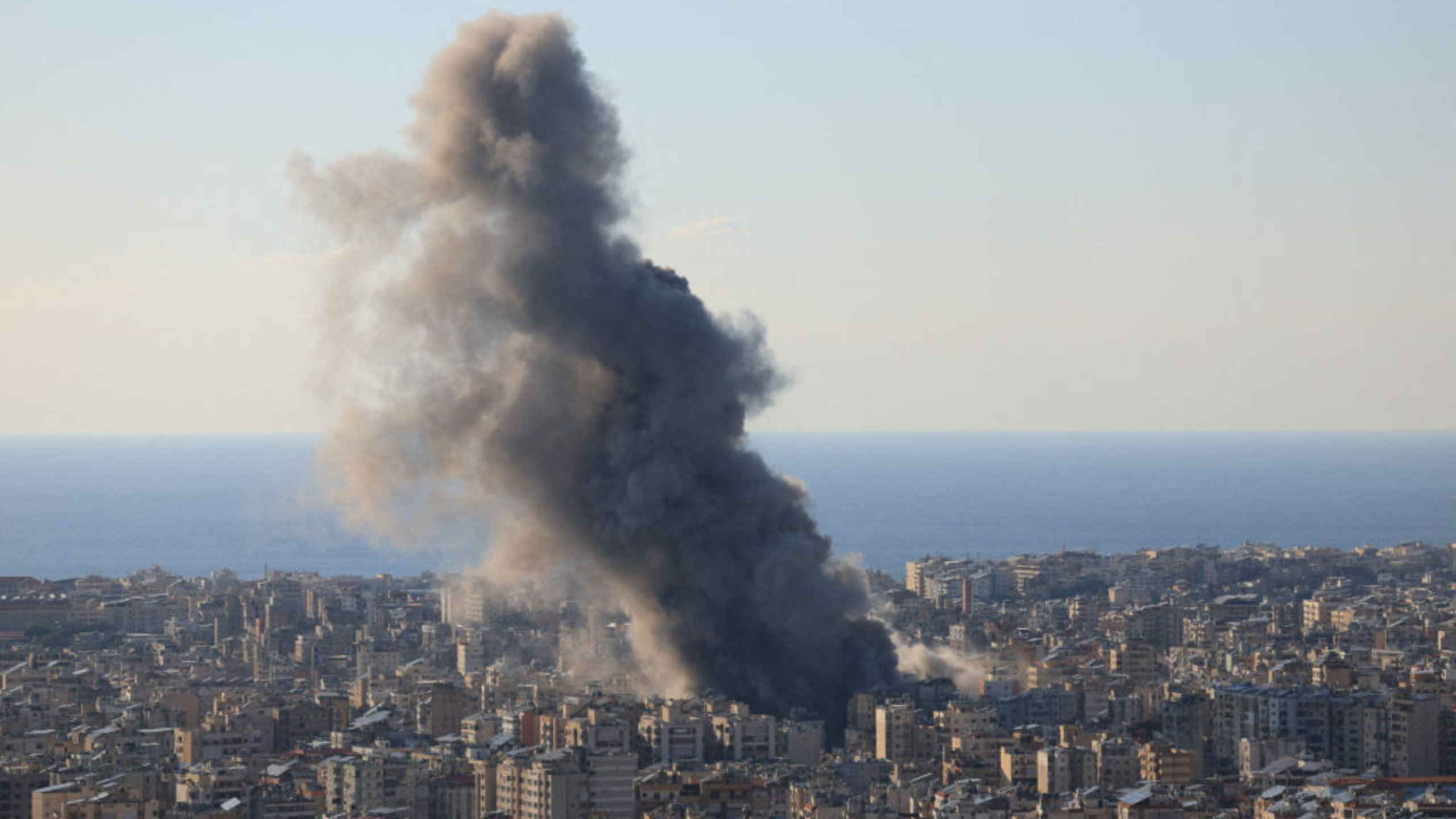
Fresh Israeli airstrikes on Beirut’s southern suburbs have delayed a proposed U.S.-Iran agreement aimed at reducing tensions across the Middle East. The strikes, launched against Hezbollah targets following attacks on northern Israel, triggered strong reactions from Iran, which warned that continued military action in Lebanon could undermine ongoing diplomatic efforts. As a result, negotiations that were reportedly nearing a breakthrough have been temporarily put on hold while regional powers reassess the situation.
The latest escalation between Israel and Hezbollah has once again highlighted how interconnected conflicts in the Middle East have become. At a moment when Washington and Tehran appeared close to reaching a limited agreement designed to reduce regional hostilities and restore stability to key shipping routes, renewed violence in Beirut threatened to derail months of diplomatic efforts.
The strikes have placed pressure on negotiators, increased uncertainty in global energy markets, and raised concerns among international observers that a wider regional confrontation could emerge if diplomacy fails.
What Happened?
Israel launched a new round of airstrikes on Beirut’s southern suburbs, particularly in the Dahiyeh district, an area widely regarded as a Hezbollah stronghold. Israeli officials said the attacks were conducted in response to Hezbollah projectiles and drone activity targeting northern Israel. Israeli military officials described the operation as necessary to prevent further attacks and dismantle Hezbollah infrastructure.
The strikes reportedly killed several people and injured others, while causing additional damage in areas that have already experienced repeated military activity during recent months of conflict. Lebanese authorities and emergency services responded to the attacks as residents sought shelter amid fears of further escalation.
When Did It Happen?
The latest strikes occurred on June 14, 2026, just hours before an anticipated announcement regarding a preliminary diplomatic understanding between the United States and Iran. Reports indicated that negotiators had been working toward a framework agreement intended to reduce hostilities and reopen critical trade and energy routes in the Gulf region.
Because of the timing, the attacks immediately became a central issue in diplomatic discussions.
Where Did It Happen?
The strikes targeted southern Beirut, particularly the Dahiyeh district. This area has long been associated with Hezbollah’s political and military presence and has frequently been the focus of Israeli military operations.
Beirut remains one of the Middle East’s most politically significant cities. Any military action within the Lebanese capital carries substantial diplomatic implications, often attracting attention from regional and global powers.
Who Was Involved?
Several key actors are directly involved in the crisis.
Israel conducted the strikes and stated that its actions were a response to Hezbollah attacks.
Hezbollah, the Iran-backed Lebanese armed movement and political organization, has continued cross-border operations against Israel.
Iran has emerged as a critical stakeholder because it maintains close ties with Hezbollah and has linked progress in negotiations with developments in Lebanon.
The United States has been attempting to broker broader regional arrangements while simultaneously negotiating with Iran.
Regional mediators, including Qatar and Pakistan, have reportedly participated in efforts aimed at reducing tensions and advancing diplomatic agreements.
Why Did It Happen?
According to Israeli officials, the strikes were carried out after Hezbollah launched projectiles and drones toward northern Israel. Israeli leaders argued that failure to respond would encourage further attacks and weaken deterrence.
However, from Iran’s perspective, the attacks represent a violation of ongoing efforts to establish a broader regional ceasefire. Iranian officials have repeatedly stated that stability in Lebanon is a prerequisite for any long-term diplomatic arrangement involving Tehran and Washington.
This fundamental disagreement explains why military developments in Lebanon have become directly connected to negotiations between the United States and Iran.
Key Facts at a Glance
- Israeli airstrikes hit Beirut’s southern suburbs on June 14, 2026.
- Israel said the operation responded to Hezbollah attacks on northern Israel.
- The strikes occurred shortly before a planned U.S.-Iran agreement announcement.
- Iran warned that continued attacks could jeopardize negotiations.
- U.S. President Donald Trump publicly urged restraint from all sides.
- The proposed agreement reportedly focused on reducing regional tensions and reopening key maritime routes.
Official Reactions
United States
President Donald Trump urged both Israel and Iran not to allow the latest violence to destroy progress toward a diplomatic agreement. He publicly called for restraint and warned that military escalation could undermine months of negotiations.
Senior U.S. officials continued to express confidence that diplomacy could eventually move forward despite the setback.
Iran
Iranian officials reacted sharply to the Beirut strikes. Tehran argued that the attacks demonstrated either an inability or unwillingness by Washington to restrain its regional ally. Iranian negotiators suggested that the incident raised serious questions about the value of continuing discussions under current conditions.
Israel
Israeli leaders defended the operation as a legitimate act of self-defense. Officials emphasized that Israel would continue responding to attacks against its territory and would not permit Hezbollah to expand its military capabilities along the northern border.
Lebanon
Lebanese authorities condemned the strikes and warned that continued military operations risk destabilizing the country further. Lebanon’s government has been attempting to maintain fragile ceasefire arrangements while avoiding a broader regional war.
Expert Analysis
Regional analysts believe the crisis demonstrates the complexity of Middle Eastern diplomacy.
Experts note that negotiations involving Iran cannot be separated from conflicts involving Hezbollah, Lebanon, Israel, Gaza, and broader regional security concerns. Even when talks focus on specific issues such as sanctions relief or maritime security, military developments elsewhere can quickly change political calculations.
Analysts also argue that the latest strikes highlight the challenge facing Washington. While the United States seeks diplomatic progress with Iran, it must simultaneously manage relationships with Israel and other regional allies whose security priorities do not always align with ongoing negotiations.
Public Response
Public reaction across the region has been divided.
In Lebanon, many residents expressed frustration that their country continues to serve as a battleground for wider regional rivalries. Social media platforms were filled with images from Beirut and calls for international intervention to prevent further escalation.
In Israel, public opinion remains strongly influenced by security concerns and fears of continued Hezbollah attacks. Many Israelis support military responses when cross-border attacks occur.
In Iran, state media and political figures criticized the strikes and portrayed them as evidence that diplomatic guarantees remain unreliable.
Why This Story Matters
This story matters because it demonstrates how a localized military confrontation can affect international diplomacy, energy markets, and regional stability.
The proposed U.S.-Iran agreement was viewed as a potential step toward reducing tensions that have disrupted trade routes, threatened global energy supplies, and increased the risk of wider conflict.
The Strait of Hormuz, through which roughly one-fifth of the world’s oil supply passes, remains particularly sensitive to geopolitical instability. Any delay in diplomatic progress can have consequences far beyond the Middle East.
Future Implications
If negotiations remain stalled, the region could face several risks.
Military confrontations between Israel and Hezbollah may intensify.
Iran could reduce its cooperation with diplomatic initiatives.
Global energy markets may experience renewed volatility.
International mediation efforts could become more complicated as trust between negotiating parties declines.
At the same time, many observers believe neither Washington nor Tehran wants a complete collapse of talks, suggesting that diplomatic channels are likely to remain open despite the setback.
What Happens Next?
Negotiators are expected to continue discussions through regional mediators in the coming days.
Diplomatic efforts will likely focus on preventing further escalation in Lebanon while preserving the framework of the proposed U.S.-Iran understanding.
Much will depend on whether additional military actions occur and whether all parties can demonstrate enough restraint to keep negotiations alive. For now, the agreement has not been abandoned, but it has clearly been delayed.
Conclusion
Fresh Israeli attacks in Beirut have created a significant obstacle for ongoing U.S.-Iran diplomacy at a critical moment. The strikes, launched in response to Hezbollah attacks, triggered strong reactions from Tehran and complicated efforts to finalize a regional agreement aimed at reducing tensions.
Although diplomatic channels remain active, the incident illustrates how fragile peace initiatives can be in the Middle East. Whether negotiators can overcome the latest setback will help determine not only the future of U.S.-Iran relations but also the broader stability of the region in the months ahead.
FAQ
The agreement was delayed after Israeli strikes on Beirut increased tensions and prompted Iran to question the viability of continuing negotiations.
The latest attacks took place on June 14, 2026.
The strikes targeted Beirut’s southern suburbs, particularly the Dahiyeh district.
Israel said the strikes were a response to Hezbollah projectiles and drone attacks against northern Israel.
Iran condemned the strikes and warned that continued attacks could undermine diplomatic efforts.