

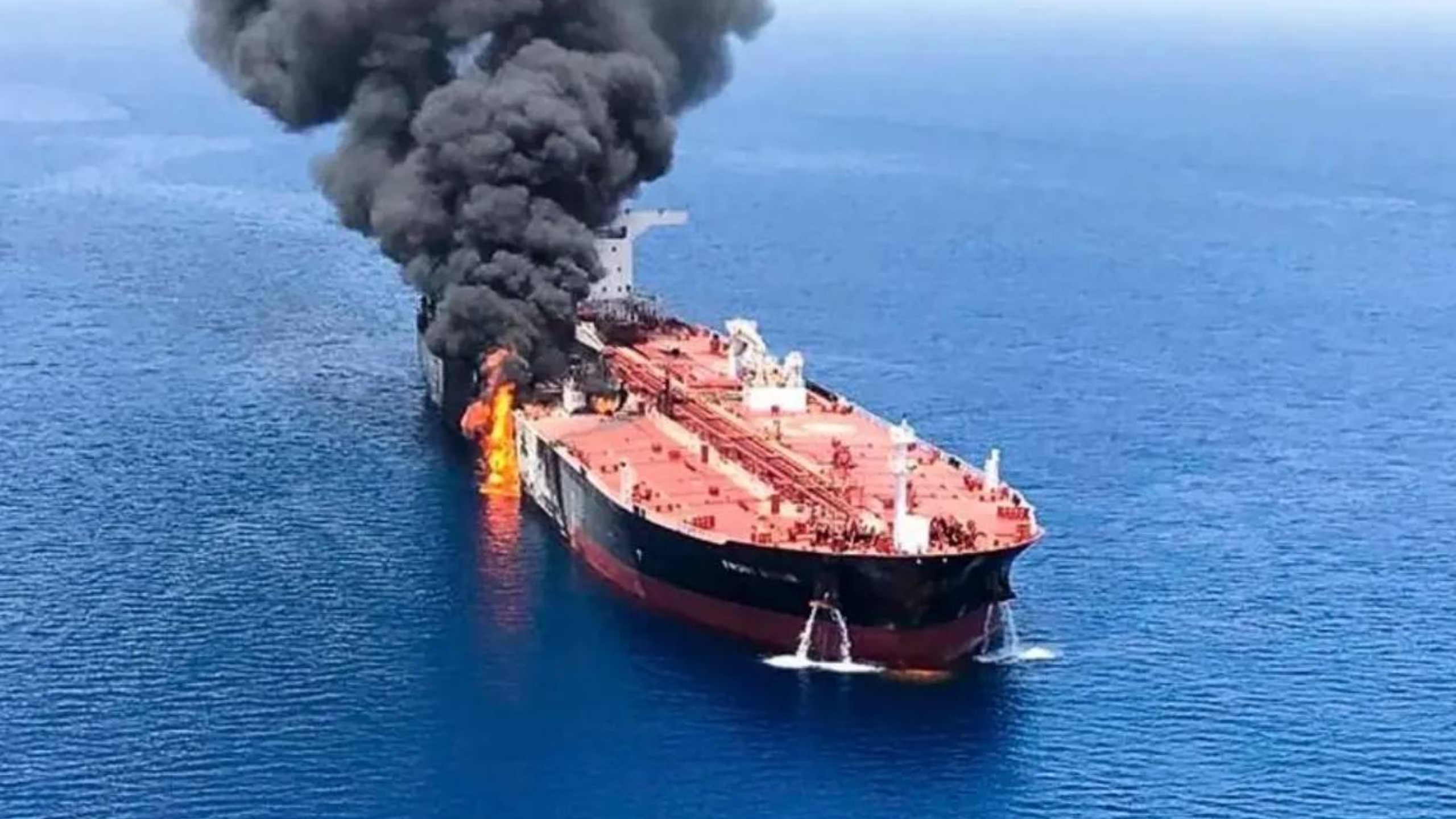
Three Indian sailors died after a United States military strike targeted the Palau-flagged oil tanker MT Settebello near the coast of Oman and the Strait of Hormuz in June 2026. The US military said the vessel failed to comply with directions issued under its enforcement operations against Iranian oil shipments. India confirmed the deaths of the three seafarers, strongly protested the incident, and demanded greater protection for civilian maritime workers. The tragedy has raised concerns about shipping safety, international law, and escalating tensions in the Gulf region.
The deaths of three Indian sailors aboard an oil tanker struck by US forces have triggered diplomatic tensions between India and the United States while drawing global attention to the growing risks faced by civilian seafarers operating in conflict-prone waters.
The incident occurred in one of the world’s most strategically important maritime corridors near the Strait of Hormuz, through which a significant portion of global oil supplies passes. As tensions involving Iran, the United States, and regional shipping routes continue to escalate, the loss of civilian lives has become a major international concern.
What Happened?
The tanker involved in the incident was the MT Settebello, a Palau-flagged commercial oil tanker carrying a multinational crew that included 24 Indian nationals.
According to US Central Command, the vessel was allegedly attempting to transport Iranian oil in violation of an American-enforced maritime blockade. US forces reportedly fired precision munitions at the ship’s engine room after the tanker failed to comply with repeated instructions from American military authorities.
The strike caused significant damage and a fire aboard the vessel. Rescue operations involving Omani authorities and maritime agencies were launched immediately after the attack.
Initially, three Indian crew members were reported missing. Indian authorities later confirmed that all three sailors had died.
When Did It Happen?
The attack occurred on June 10, 2026, in waters off the coast of Oman.
The deaths were officially confirmed on June 11, 2026, after recovery and search operations were conducted following the strike. Indian officials announced that the missing crew members had not survived the incident.
Where Did It Happen?
The strike took place in the Gulf of Oman near the Strait of Hormuz.
The Strait of Hormuz is among the most important shipping chokepoints in the world. Roughly one-fifth of global oil consumption passes through this narrow waterway, making it a critical route for international energy supplies.
Because of its strategic significance, the region has frequently been the focus of military tensions, maritime disputes, and geopolitical confrontations.
Who Was Involved?
Several major stakeholders were involved in the incident.
The United States military, specifically US Central Command, carried out the operation.
The tanker MT Settebello was a Palau-flagged commercial vessel.
The crew included 24 Indian nationals among a total crew complement of 28 personnel.
The Government of India became directly involved following confirmation of the deaths of the three Indian sailors.
Omani maritime authorities participated in rescue and recovery operations after the strike.
Why Did It Happen?
According to the US military, the tanker was targeted because it allegedly violated an ongoing blockade aimed at restricting Iranian oil exports.
American officials stated that the vessel failed to comply with orders issued by military forces operating in the region. As a result, precision strikes were reportedly used to disable the ship.
However, vessel managers reportedly disputed allegations that the tanker was engaged in prohibited activities and called for an independent international investigation.
The conflicting accounts have fueled debate over the legality and proportionality of military actions against commercial vessels carrying civilian crews.
Key Facts at a Glance
- Incident Date: June 10, 2026
- Confirmation of Deaths: June 11, 2026
- Vessel: MT Settebello
- Flag State: Palau
- Location: Gulf of Oman near the Strait of Hormuz
- Indian Crew Members Onboard: 24
- Total Crew Members: 28
- Indian Sailors Killed: 3
- Survivors Rescued: 21 Indian crew members
- Main Issue: Alleged violation of US-enforced restrictions on Iranian oil shipments
Official Reactions
India reacted strongly to the deaths.
The Ministry of External Affairs expressed concern over the loss of Indian lives and emphasized the need to protect civilian seafarers operating in international waters.
Indian authorities reportedly summoned a senior US diplomatic representative to convey New Delhi’s concerns and seek clarification regarding the circumstances surrounding the strike.
Union Minister for Ports, Shipping and Waterways Sarbananda Sonowal described the deaths as a profound loss for India’s maritime community and pledged support for the families of the victims.
The United States maintained that the action was taken as part of its broader maritime enforcement operations and that warnings had been issued before the vessel was targeted.
International maritime organizations also voiced concern about threats to civilian shipping and crew safety.
Expert Analysis
Maritime security experts say the incident highlights the growing risks facing commercial shipping crews in regions affected by military confrontations.
Analysts note that merchant sailors often become unintended victims of geopolitical conflicts despite having no direct involvement in political or military disputes.
Experts also point out that targeting commercial vessels carries significant diplomatic risks because modern shipping crews are multinational, meaning casualties can affect relations among multiple countries simultaneously.
Legal specialists have suggested that questions regarding international maritime law, rules of engagement, and civilian protection could become central issues if an independent investigation is pursued.
Public Response
The deaths sparked widespread reactions across India and on social media platforms.
Many users expressed sympathy for the families of the victims and called for stronger international protections for civilian seafarers.
Maritime unions and shipping organizations urged governments to prioritize crew safety and avoid actions that place merchant sailors in harm’s way.
Communities linked to the deceased sailors also expressed grief as details of the incident emerged.
Why This Story Matters
This incident matters far beyond the loss of three lives.
First, it demonstrates how geopolitical conflicts can directly affect ordinary workers who operate essential global trade routes.
Second, it raises concerns about the safety of more than 300,000 Indian seafarers who work aboard international vessels worldwide.
Third, the strike highlights the vulnerability of global energy supply chains. Any disruption in the Strait of Hormuz can influence oil prices, shipping costs, insurance rates, and international trade.
Finally, the event has implications for diplomatic relations between India and the United States, two countries that maintain important strategic and economic ties.
Background: Rising Tensions in Gulf Shipping
The Gulf region has experienced repeated maritime incidents over the past decade.
The Strait of Hormuz remains a focal point because of its importance to global energy markets.
Recent tensions involving Iran, US military operations, and disputes over shipping routes have increased the likelihood of confrontations involving commercial vessels.
Shipping companies operating in the region have faced higher insurance costs, security concerns, and route disruptions as geopolitical uncertainty continues.
What Happens Next?
Several developments are expected in the coming days and weeks.
Indian authorities are likely to continue seeking detailed information about the circumstances of the strike.
The repatriation of the victims’ remains and support for affected families will remain a priority.
Calls for an independent investigation may grow if conflicting accounts regarding the vessel’s activities persist.
International maritime organizations could also examine whether additional safety measures are needed to protect civilian crews operating in conflict zones.
Diplomatic discussions between India and the United States may further address concerns related to maritime security and civilian casualties.
Conclusion
The deaths of three Indian sailors aboard the MT Settebello represent one of the most serious civilian maritime incidents linked to recent tensions in the Gulf region. While the United States says the strike was part of enforcement actions against Iranian oil shipments, India has emphasized the human cost of the operation and the need to protect civilian seafarers.
As investigations continue and diplomatic discussions unfold, the tragedy serves as a reminder that geopolitical conflicts often have consequences far beyond military and political circles. For the families of the victims and the wider maritime community, the incident underscores the dangers faced by those working on the front lines of global trade.
Indian authorities confirmed that three Indian crew members aboard MT Settebello died following the US strike. Officials are coordinating with families and maritime agencies regarding repatriation and support.
The strike took place in the Gulf of Oman near the Strait of Hormuz, one of the world’s most important maritime trade routes.
The US military stated that the vessel allegedly violated restrictions related to Iranian oil shipments and failed to comply with military instructions.
There were 24 Indian crew members aboard the tanker, alongside four foreign nationals.