





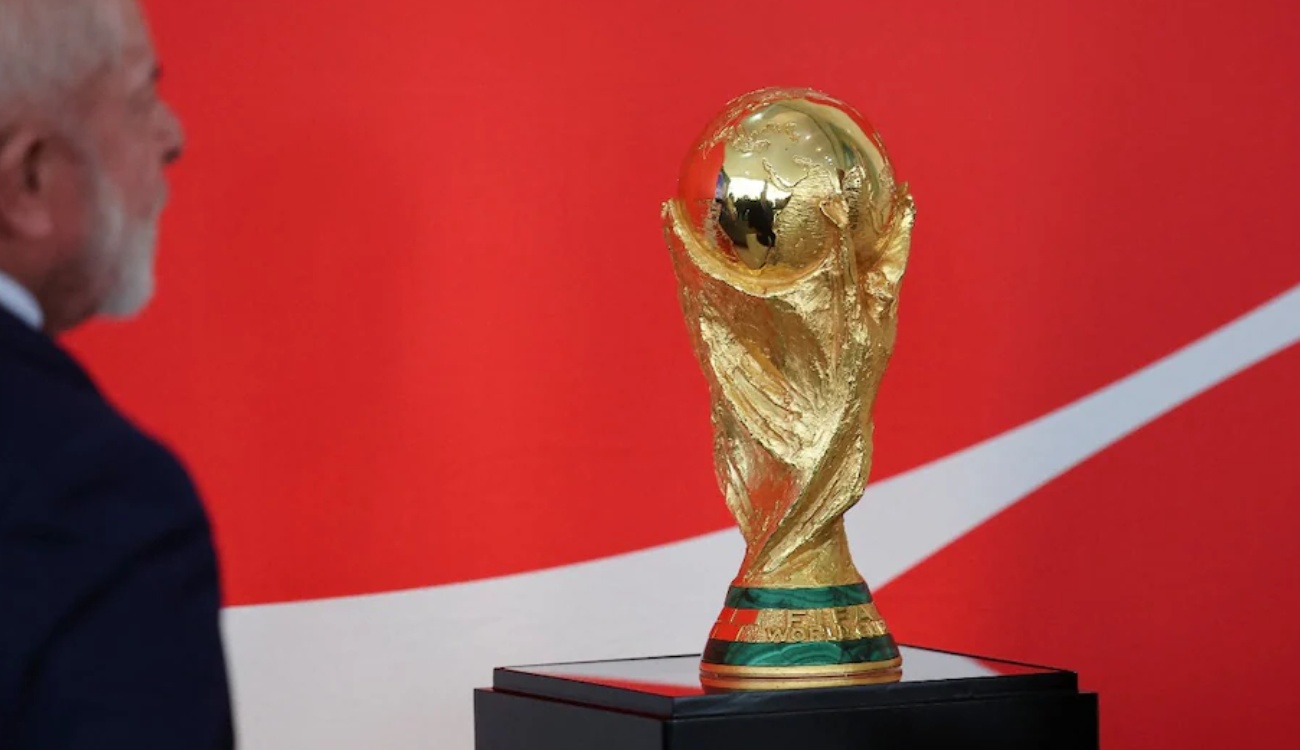
A surprising situation has emerged in India regarding the biggest football tournament, the FIFA World Cup. Despite heavy discounts, no Indian broadcaster has shown interest so far in purchasing the media rights for the upcoming edition.
The 2026 FIFA World Cup, which will be jointly hosted by the United States, Canada, and Mexico, is facing broadcasting challenges in India. According to reports, football’s global governing body FIFA has reduced the media rights price for the 2026 and 2030 World Cups by nearly 65%, from around $100 million to $35 million. However, even after this significant price cut, Indian broadcasters have not shown interest.
This situation is very different from the 2022 FIFA World Cup held in Qatar, where Viacom18 spent approximately $62 million for a single edition.
One major reason is the timing of matches. Since the tournament will be held in North America, matches in India will be broadcast between midnight and early morning (12 AM to 7 AM), which could significantly impact both TV and digital viewership.
Additionally, the football advertising market in India is not very strong. The ban on Real-Money Gaming (RMG) has further reduced sponsorship budgets. After the merger of Star India and Viacom18, the newly formed company JioStar is leading the market. However, JioStar’s valuation is around $25 million, which is still lower than FIFA’s asking price.
Will FIFA Stream Matches Itself?
The 2022 FIFA World Cup attracted around 10 million digital viewers in India, while 32 million people watched the final between Argentina national football team and France national football team. This shows that India remains a large and important market for football.
There is still a possibility that FIFA and JioStar may reach a deal later. Sony could also be an option, though the chances are considered low. Smaller platforms like FanCode or Eurosport may also enter the race. If no deal is finalized, FIFA could stream the matches on its own platform, FIFA+.
The lack of a broadcaster in India for a major tournament like the FIFA World Cup highlights that not just popularity, but also timing, advertising, and market structure play a crucial role. Now, the focus is on whether FIFA will further reduce the media rights price or if the way India watches the World Cup will change entirely.