

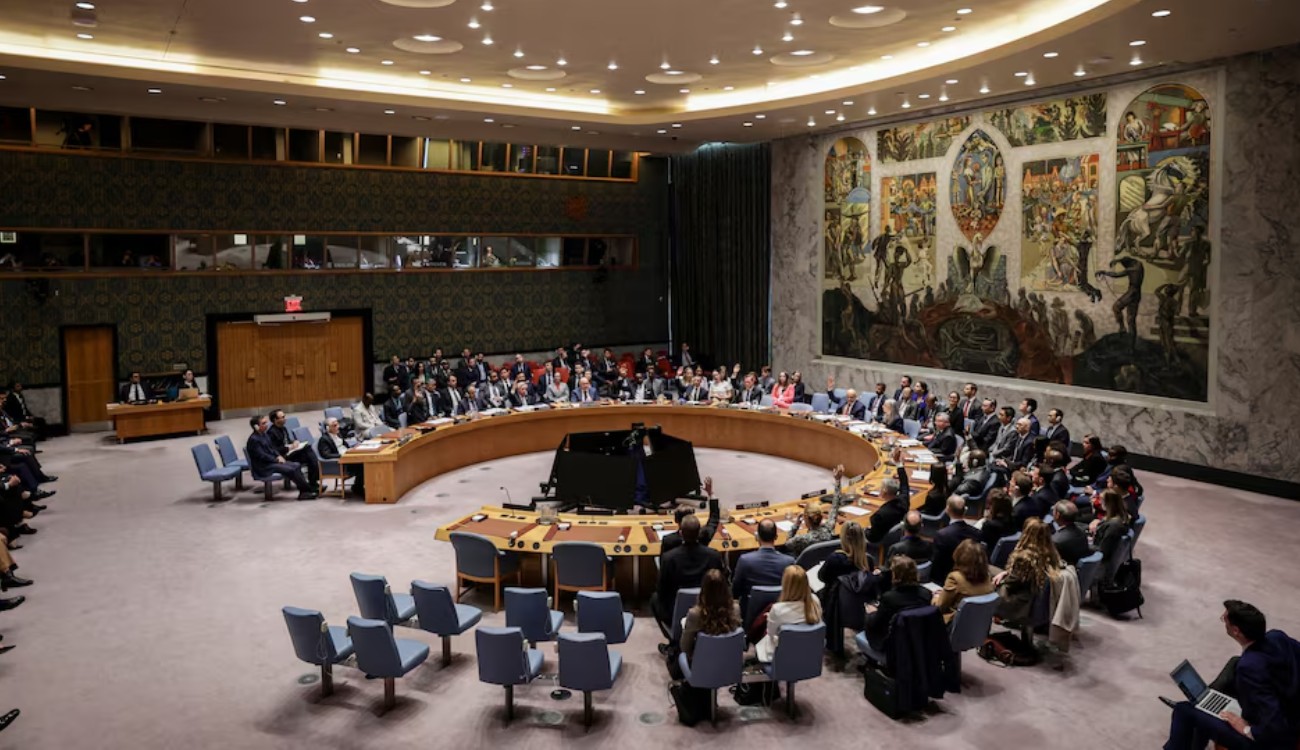
UN Security Council Fails to Pass Strait of Hormuz Resolution After China and Russia Veto
April 7 (Reuters): A major diplomatic standoff unfolded at the U.N. Security Council as China and Russia vetoed a resolution aimed at urging countries to coordinate efforts to protect commercial shipping in the Strait of Hormuz. The two nations argued that the proposal was biased against Iran, while the United States pushed for stronger global action to secure the crucial waterway.
The 15-member Security Council saw 11 votes in favor, with two against – China and Russia, and two abstentions, ultimately blocking the resolution introduced by Bahrain.
Rising Tensions Over Strait of Hormuz Crisis
Amid escalating tensions, U.S. President Donald Trump issued a stark warning, stating that “a whole civilization will die tonight” if Iran failed to comply with demands to reopen the Strait of Hormuz. However, Tehran showed no indication of backing down.
The situation has had a direct impact on global markets, as oil prices have surged following strikes by the U.S. and Israel on Iran in late February. The conflict, now stretching beyond five weeks, has significantly disrupted global energy flows. The strait, which previously handled about a fifth of global oil and liquefied natural gas, remains largely restricted.
U.S. Condemns China and Russia Vetoes
The U.S. ambassador to the United Nations, Mike Waltz strongly criticized the vetoes, calling them “a new low” and accusing both countries of enabling Iran’s actions.
He emphasized that Iran’s closure of the waterway was blocking medical aid and supplies from reaching crisis-hit regions such as the Congo, Sudan and Gaza.
Waltz warned, “They are holding the global economy at gunpoint”, adding that Russia and China had effectively supported a regime attempting to intimidate the Gulf region.
He further urged nations to act, stating that countries should join the U.S. in securing the Strait of Hormuz, ensuring it remains open for lawful commerce, humanitarian goods, and global trade.
France and Allies React to Diplomatic Deadlock
France expressed disappointment over the outcome, with its envoy stressing that the resolution was intended to promote strictly defensive measures to ensure safety in the region without escalating tensions.
Meanwhile, Russia and China said the resolution was biased against Iran, arguing that it failed to present a balanced approach to the crisis.
China’s U.N. envoy Fu Cong warned that passing such a resolution while the U.S. was issuing extreme threats could send the wrong message globally.
Russia’s ambassador Vasily Nebenzya revealed that both nations are working on an alternative resolution addressing broader Middle East concerns, including maritime security.
Iran Welcomes Veto, Calls Move Justified
Iran’s U.N. ambassador Amir Saeid Iravani praised the decision by China and Russia, stating that their action today prevented the Security Council from being misused to legitimize aggression.
He also confirmed that a U.N. secretary-general’s personal envoy is currently en route to Tehran for diplomatic consultations.
Resolution Details and Key Changes
Despite efforts by Bahrain to revise the proposal, including removing any authorization of the use of force, the resolution failed to gain unanimous support.
The updated draft strongly encouraged states to coordinate efforts focused on defensive actions to maintain the safety and security of navigation across the Strait of Hormuz.
It also proposed measures such as escort of merchant and commercial vessels and initiatives to deter attempts to close or obstruct international navigation.
Global Impact and What Lies Ahead
The failure to pass the resolution highlights deep divisions among global powers at a time of rising geopolitical tension. With the Strait of Hormuz remaining a critical chokepoint for global energy supplies, uncertainty continues to loom over international trade and security.
As diplomatic efforts continue, the world watches closely to see whether negotiations can ease tensions or if the crisis will escalate further.