

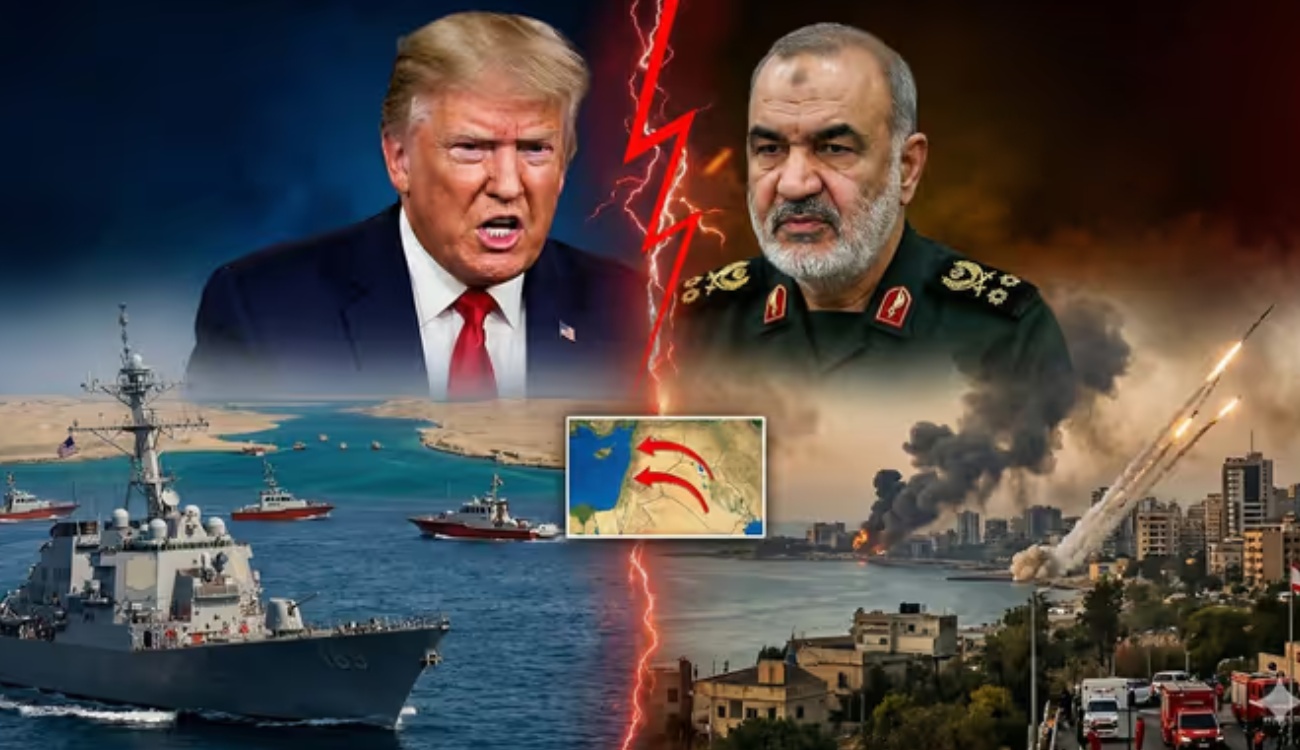
The ceasefire between the United States and Iran appears to be collapsing within just 24 hours. The Strait of Hormuz has been shut again, and rising Israeli strikes in Lebanon have further escalated tensions. Ahead of crucial talks scheduled for April 11, the situation seems to be deteriorating, raising fears of deeper regional instability.
Ceasefire Already Under Threat
The temporary peace initiative, reportedly backed by Donald Trump, is already showing signs of failure. One of the key conditions of the ceasefire was reopening the Strait of Hormuz, but Iran has now shut it again.
Iran has clearly stated that this move is a response to ongoing attacks in Lebanon. This has put the agreement at risk even before the critical April 11 talks in Pakistan.
Why Has Lebanon Become the New Flashpoint?
The Israel Defense Forces carried out one of its largest airstrikes targeting Hezbollah positions.
- Around 182 people were killed and over 800 injured in a single day
- Nearly 100 missiles were fired within 10 minutes
- Major strikes hit Beirut, southern Lebanon, and the Beqaa Valley
Israel claims Hezbollah operates from civilian areas, while local residents deny these allegations.
Disagreement Over Ceasefire Terms
Iran’s Islamic Revolutionary Guard Corps and Foreign Minister Abbas Araghchi insist that stopping the war in Lebanon was part of the ceasefire agreement.
However:
- Benjamin Netanyahu
- and the United States
have made it clear that the ceasefire does not apply to Lebanon.
Meanwhile, US Vice President JD Vance, who will lead the Islamabad talks, stated that if Iran chooses to disrupt negotiations over Lebanon, it is their decision.
Pressure on Hormuz, Rising Economic Concerns
The situation in the Strait of Hormuz is already impacting global shipping:
- Only 11 ships passed through on Wednesday
- Iran reportedly turned several vessels back
- A toll of up to $1 per barrel is being charged on oil shipments
Since supertankers can carry up to 3 million barrels of oil, this could significantly increase transportation costs and affect global oil prices.
What’s Next?
Conflicting claims over Lebanon have weakened the ceasefire. Now, all eyes are on the April 11 meeting in Pakistan, which will determine whether the agreement survives or completely collapses.