





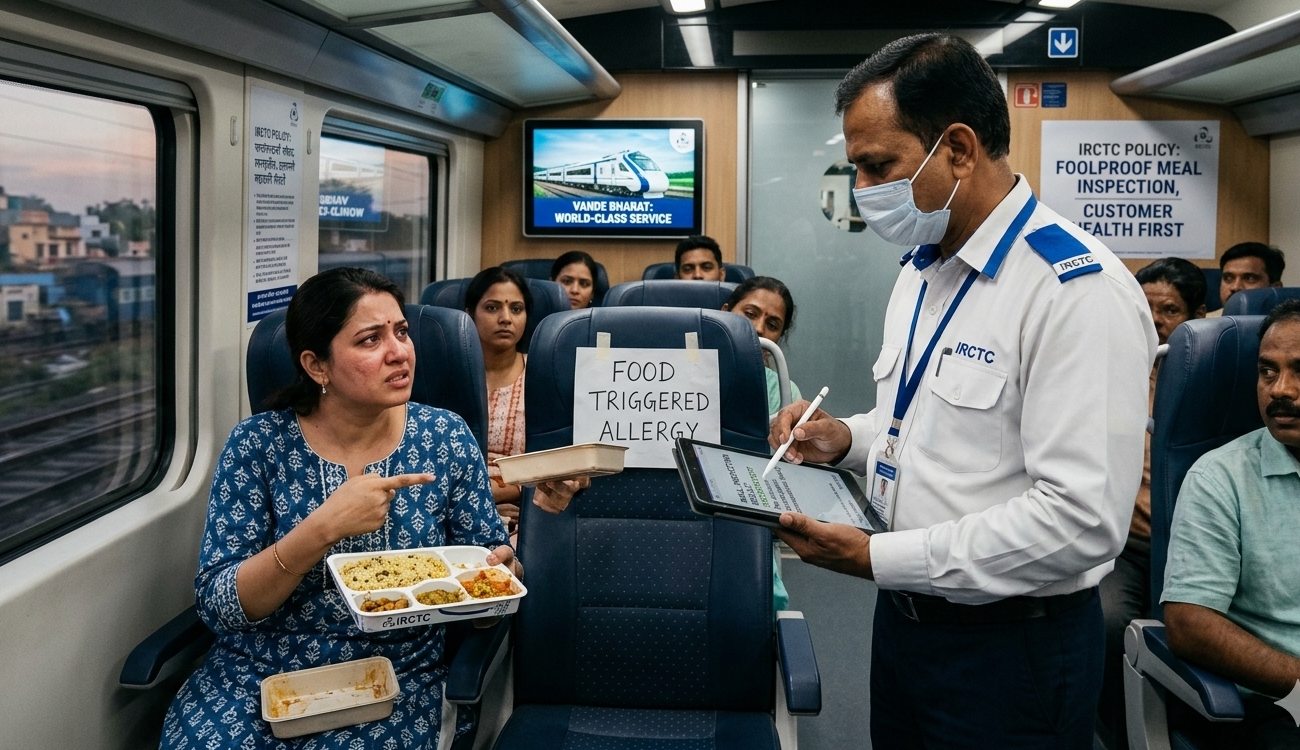
A recent incident involving a passenger on India’s premium Vande Bharat Express has sparked a debate over food safety and quality in railway catering services. A woman alleged that the meal served onboard triggered an allergic reaction, raising concerns among travelers about hygiene and ingredient transparency. However, the Indian Railway Catering and Tourism Corporation (IRCTC) responded swiftly, stating that an inspection found the food to be “satisfactory” and safe for consumption.
This incident has once again highlighted the importance of food safety standards, passenger awareness, and accountability in public transport systems. In this article, we explore the full story, responses from authorities, passenger concerns, and the broader implications for railway catering in India.
What Happened on the Vande Bharat Train?
According to reports, a female passenger traveling on a Vande Bharat Express train experienced an allergic reaction after consuming the meal served onboard. She later took to social media to share her experience, claiming that the food may have contained ingredients that triggered her allergy.
Key Allegations:
- The passenger developed symptoms shortly after eating the meal
- She suspected contamination or undisclosed ingredients
- Concerns were raised about labeling and food safety
Her post quickly gained attention online, prompting discussions about the quality and safety of food served on high-speed trains like Vande Bharat.
IRCTC’s Response to the Allegations
The IRCTC, which is responsible for catering services on Indian trains, responded promptly to the claims.
Official Statement Highlights:
- An immediate inspection of the food was conducted
- The meal was found to be “satisfactory” and safe
- No contamination or hygiene issues were detected
- Food preparation followed standard protocols
IRCTC also emphasized that meals served on Vande Bharat trains are prepared under strict quality control measures and are regularly monitored.
Food Safety Standards on Vande Bharat Trains
Vande Bharat Express is known for its modern infrastructure and upgraded passenger experience, including improved catering services.
Food Safety Measures Include:
- Hygienic kitchens and certified vendors
- Regular quality checks and inspections
- Use of sealed and labeled food packages
- Compliance with food safety regulations
Despite these measures, isolated incidents can still occur, especially in cases involving individual allergies.
Understanding Food Allergies: A Growing Concern
Food allergies are becoming increasingly common and can be triggered by even small quantities of certain ingredients.
Common Food Allergens:
- Nuts
- Dairy products
- Gluten
- Soy
- Shellfish
For individuals with allergies, even properly prepared food can cause reactions if specific allergens are present.
Was It a Food Safety Issue or an Allergy Case?
The key question in this case is whether the incident was due to:
- Food contamination or poor hygiene
- Undisclosed ingredients
- A personal allergic reaction
Since IRCTC’s inspection found the food to be satisfactory, it is likely that the reaction was related to individual sensitivity rather than food quality.
Passenger Reactions and Social Media Buzz
The incident quickly went viral, with mixed reactions from the public.
Some Users Said:
- Food quality on trains needs stricter monitoring
- Ingredient labeling should be mandatory
- Passenger safety must be prioritized
Others Argued:
- Allergies are personal and not always the provider’s fault
- IRCTC acted responsibly by conducting an inspection
This debate reflects a broader concern about food transparency in public services.
Importance of Food Labeling in Public Transport
One major takeaway from this incident is the need for better food labeling.
Why Labeling Matters:
- Helps passengers identify allergens
- Builds trust and transparency
- Reduces risk of medical emergencies
Many experts suggest that railway catering services should include clear ingredient lists and allergen warnings on meal packaging.
IRCTC’s Role in Passenger Safety
IRCTC plays a crucial role in ensuring food safety across India’s vast railway network.
Responsibilities Include:
- Maintaining hygiene standards
- Monitoring vendors and suppliers
- Addressing passenger complaints
- Conducting regular inspections
In this case, IRCTC’s quick response helped prevent further escalation of the issue.
How Passengers Can Stay Safe
While service providers must ensure safety, passengers also need to take precautions—especially those with known allergies.
Safety Tips for Travelers:
- Inform staff about allergies before meals are served
- Carry personal medication (like antihistamines)
- Avoid unknown or unlabeled food items
- Check ingredients whenever possible
Being proactive can significantly reduce risks during travel.
Impact on Vande Bharat’s Reputation
The Vande Bharat Express is seen as a symbol of modern Indian railways, offering speed, comfort, and improved services.
Potential Impact of the Incident:
- Temporary concerns about food safety
- Increased scrutiny of catering services
- Opportunity for improvement in transparency
However, since the issue appears to be isolated, it is unlikely to significantly damage the train’s overall reputation.
Lessons for Railway Authorities
This incident serves as an important learning opportunity.
Key Takeaways:
- Improve allergen labeling on food items
- Enhance communication with passengers
- Introduce customizable meal options
- Strengthen feedback and complaint systems
These steps can help prevent similar incidents in the future.
Future of Catering Services in Indian Railways
Indian Railways is continuously upgrading its services, including onboard catering.
Expected Improvements:
- Digital meal tracking systems
- Better packaging and labeling
- Health-conscious meal options
- Integration of passenger preferences
Such advancements will enhance both safety and customer satisfaction.
Conclusio
The incident involving a woman claiming an allergic reaction from food served on the Vande Bharat Express has sparked important discussions around food safety, transparency, and passenger awareness. While IRCTC’s inspection confirmed that the meal met quality standards, the case highlights the growing need for better allergen information and proactive communication.
As India moves toward modern, high-speed rail travel, ensuring passenger safety must remain a top priority. Both service providers and passengers share responsibility in preventing such incidents. With improved systems, better labeling, and increased awareness, Indian Railways can continue to offer a safe and comfortable travel experience for millions.
Ultimately, this episode is not just about one complaint—it is a reminder that even in advanced systems, continuous improvement is key to building trust and ensuring safety.